
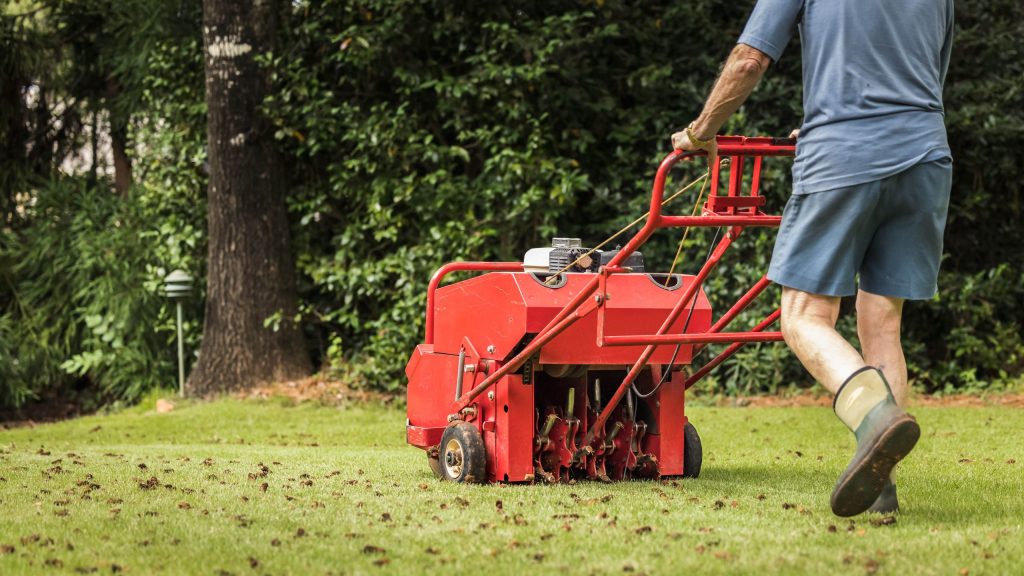
Staring down at a patchy, waterlogged lawn often leaves homeowners questioning whether standard mowing and watering are enough. Aerating your lawn is one of the most effective ways to relieve compacted soil and improve drainage, but getting the timing and technique right is essential for visible results.
Direct Summary: Lawn aeration relieves soil compaction to improve air circulation, water penetration, and nutrient uptake in residential turf. Experts recommend aerating once per year during your grass’s active growing season, utilizing one to two passes across the lawn with a core plug aerator for maximum effectiveness.
| Grass Category / Tool Type | Ideal Aeration Timing | Recommended Frequency | Optimal Passes |
|---|---|---|---|
| Cool-Season Grasses (Fescue, Bluegrass) | Early Fall or Spring | Once per year | 1 to 2 passes |
| Warm-Season Grasses (Bermuda, Zoysia) | Late Spring to Early Summer | Once per year | 1 to 2 passes |
| Plug / Core Aerators | During active growth periods | As needed annually | 1 to 2 passes (Extracts plugs) |
| Spike Aerators | Light maintenance only | Seasonal touching up | 1 to 2 passes (Punctures holes) |
How to Tell If Your Lawn Needs Aerating
Soil compaction occurs over time due to heavy foot traffic, rainfall, and lawn equipment usage. Telltale indicators include persistent standing water after rainstorms, sparse or thinning grass blades, and soil that feels impenetrable beneath your feet.
A simple way to verify compaction is the screwdriver test. Allison Koenig, a lawn and garden expert at Tractor Supply, notes that if you struggle to push a standard screwdriver into your soil, heavy compaction is likely restricting root development and stopping moisture from reaching the root zone.
Best Timing and Annual Aeration Frequency
Timing your aeration according to your lawn’s specific grass type ensures fast recovery and healthy growth. Aerating during periods of inactivity can stress the lawn and invite invasive weeds.
Chris Ramos, PR & Events Coordinator at Blain’s Farm & Fleet, explains that homeowners generally only need to aerate once a year. Cool-season turf species like Fescue and Kentucky Bluegrass grow vigorously in cooler weather, making early autumn or spring the best target windows. Warm-season grasses like Bermuda and Zoysia thrive in higher temperatures, so late spring or early summer is optimal.
Avoid aerating when the ground is frozen solid or when turf has entered complete winter dormancy, as grass cannot heal from mechanical penetration in those states.
How Many Passes to Make and Choosing the Right Tool
When running an aerator over your yard, making one or two passes is sufficient to break up dense soil without overworking the turf structure. Making multiple overlapping runs helps guarantee balanced coverage across high-traffic zones.
The machinery you choose heavily impacts your outcome. Aerators generally fall into two primary categories:
- Spike Aerators: These machines push solid metal tines directly into the ground. While convenient for mild soil conditions, they may press surrounding dirt tighter together in heavily compacted clay soils.
- Plug (Core) Aerators: These units extract small cylinders or plugs of dirt directly out of the ground. Tools like the Yard Butler Manual Lawn Aerator use hollow tines to pull out soil cores, significantly reducing lateral soil pressure and creating clear pathways for air and water.
Post-Aeration Care to Maximize Results
Treating lawn aeration as a standalone task limits its long-term benefits. Brian Feldman, Senior Director of Technical Operations and Agronomy at TruGreen, recommends incorporating aeration into a holistic lawn care schedule that features proper mowing heights, balanced irrigation, and overseeding.
Spreading grass seed and fertilizer immediately following an aeration pass allows seeds and nutrients to fall directly into open tine holes, drastically boosting germination rates. Furthermore, leave the pulled soil plugs scattered across the lawn. They naturally break down over a week or two under normal rainfall and watering, returning organic matter and valuable microorganisms back to the turf soil surface.
Frequently Asked Questions
Should I remove the soil plugs left behind after plug aeration?
No, you should leave the soil cores on the surface. Rain and routine irrigation naturally break down the soil plugs within 7 to 14 days, recycling valuable nutrients and beneficial soil microbes back into your lawn.
Can you over-aerate your lawn?
Yes, aerating more than once or twice a year or making too many passes across the same area can severely disrupt grass root structures and pull up dormant weed seeds. Stick to one annual treatment unless soil compaction is exceptionally severe.
Is a core aerator better than a spike aerator?
For most compacted lawns, core (plug) aerators are superior because they remove physical soil samples to relieve ground density. Spike aerators simply push dirt aside, which can sometimes increase compaction in dense clay soils.