
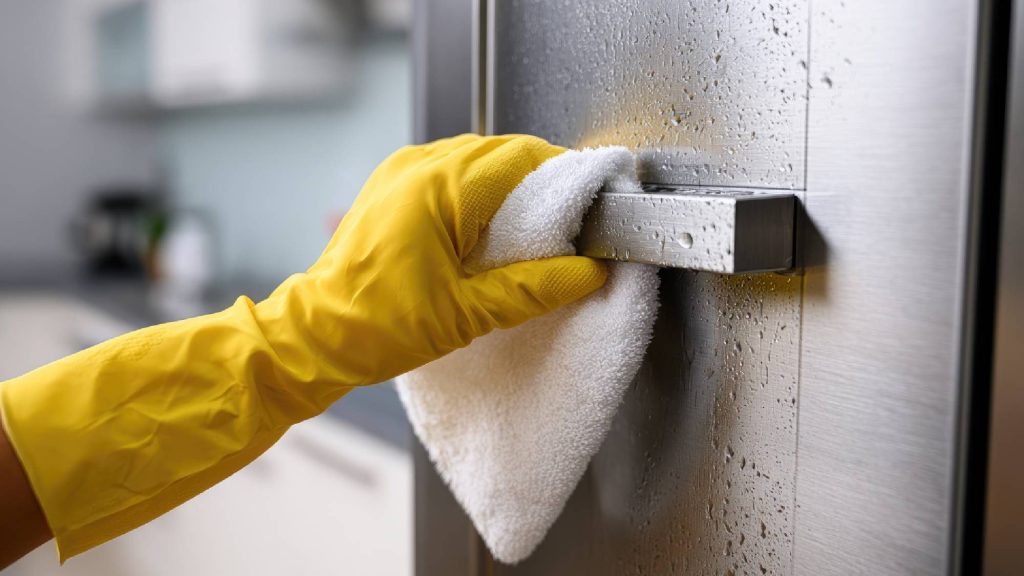
Wiping down a stainless steel refrigerator often leaves behind cloudy streaks and glowing fingerprints instead of a polished shine. This common frustration happens when standard cleaning routines work against the metal surface rather than working with its natural texture.
This guide explains how to eliminate smudges and prevent water spots on stainless steel kitchen appliances using a targeted three-step technique. By wiping along the grain using mild dish soap, drying completely, and applying a micro-layer of food-grade oil, homeowners can maintain a factory-fresh finish on refrigerators, dishwashers, and stovetops using basic household items.
Stainless Steel Maintenance Quick Reference
| Stage | Recommended Materials | Primary Function |
|---|---|---|
| 1. Degreasing | Warm water, mild liquid dish soap, microfiber cloth | Lifts oily fingerprints and dirt out of microscopic metal ridges. |
| 2. Drying | Clean, dry microfiber cloth | Prevents mineral deposits from tap water from forming spots. |
| 3. Polishing | Drop of mineral oil or olive oil, microfiber cloth | Fills micro-grooves to create a smudge-resistant protective barrier. |
Understanding the Grain Direction of Stainless Steel
Before applying any cleaning solutions, examine the surface of your appliance up close. Like natural wood, brushed stainless steel features fine directional lines running either horizontally or vertically across the metal.
Wiping across or against these micro-grooves pushes dirt, oils, and liquid cleaner into the metal texture. This trapped residue creates a hazy, uneven film once it dries. Cleaning strictly parallel to the grain allows your cloth to lift debris directly out of the ridges, ensuring an even finish.
The 3-Step Technique for a Flawless Finish
1. Cut Grease with Mild Soap and Warm Water
Fingerprints and kitchen splatter consist primarily of oils that require a gentle degreasing agent. Mix a few drops of mild liquid dish soap into a container of warm water. Dampen a soft microfiber cloth with the mixture so it is moist but not dripping.
Gently wipe the surface following the direction of the metal grain. Avoid steel wool, abrasive scouring pads, and chlorine bleach, as these harsh tools can scratch protective coatings and leave the metal permanently susceptible to corrosion and heavy staining.
2. Dry Immediately to Eliminate Water Spots
Air-drying is the main reason clean appliances still show streaks. Tap water contains minerals like calcium and magnesium that remain behind as moisture evaporates, creating dull white spots across the finish.
Right after washing, take a second dry microfiber cloth and buff the surface using long, continuous strokes along the grain. Removing standing water immediately restores the metal’s reflective clarity.
3. Apply a Micro-Layer of Oil to Prevent Future Smudges
Once the appliance is dry, you can build a protective shield against future marks. Place a single tiny drop of food-grade oil, such as mineral oil or olive oil, onto a clean microfiber cloth. Gently buff the oil into the stainless steel, strictly adhering to the grain line.
This micro-thin layer levels out microscopic surface irregularities, creating a smooth, hydrophobic barrier. Water beads off instantly, and finger oils fail to stick, keeping appliances looking clean for extended periods.
Frequently Asked Questions
Why does stainless steel look cloudy after being cleaned?
Cloudiness occurs when cleaning chemicals or water minerals dry inside the microscopic grooves of the metal. Wiping across the grain or letting cleaning solutions air-dry traps residue, resulting in a dull film under light.
Can abrasive sponges or bleach be used on tough stains?
No, abrasive pads and harsh chemicals like bleach will strip the protective coating and leave permanent scratches on stainless steel. Always stick to soft microfiber cloths and mild liquid soap for safe cleaning.
How often should oil be applied to stainless steel appliances?
A light application of mineral or olive oil lasts several weeks under normal kitchen use. Reapply the oil whenever you notice water spots or fingerprints starting to stick to stainless steel appliances again.