
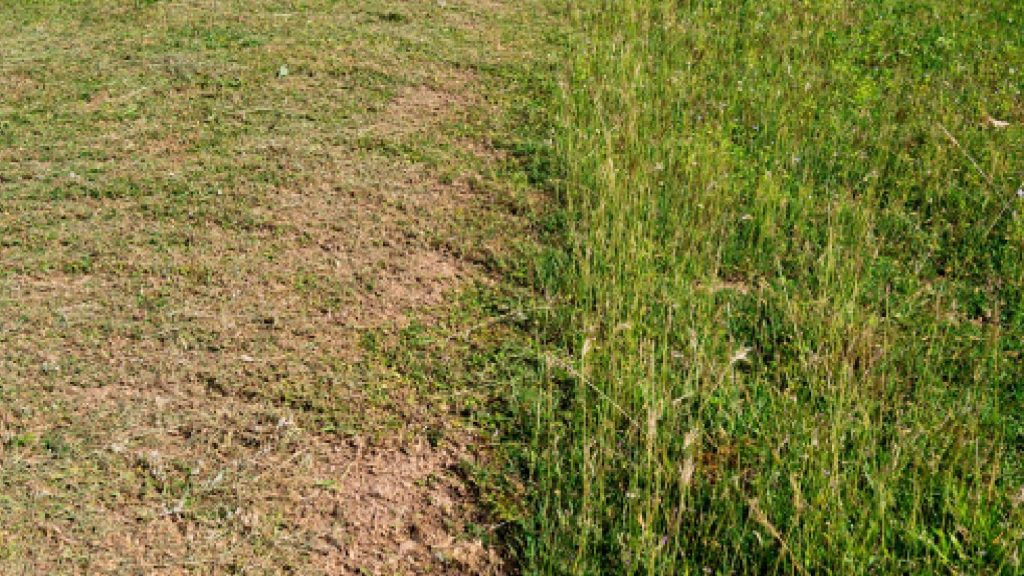
A scorching summer combined with strict municipal watering limits can quickly reduce a vibrant yard to a dry, straw-colored mat. Fortunately, a brown lawn is rarely dead—it is usually just dormant and waiting for autumn moisture and cooler temperatures to trigger renewed growth.
This lawn rehabilitation framework outlines five tactical steps—soil aeration, overseeding, deep irrigation, targeted fertilization, and liquid seaweed treatments—to revive heat-stressed turf. It is designed for homeowners dealing with drought-damaged cool-season or warm-season turfgrass prior to winter dormancy.
| Recovery Step | Key Action | Optimal Timing / Frequency |
|---|---|---|
| 1. Core Aeration | Pull soil plugs to relieve compaction and boost root oxygenation | Early fall when soil is moist but not saturated |
| 2. Overseeding | Rake thatch and distribute fresh turf seed over bare spots | Fall season; irrigate lightly every day |
| 3. Deep Watering | Soak soil 6 inches deep instead of shallow daily watering | Every few days during early morning or late evening |
| 4. Targeted Fertilization | Apply slow-release N-P-K fertilizer to replenish nutrients | Once active growth resumes in moist soil |
| 5. Liquid Seaweed Application | Spray bio-stimulant for micro-nutrients and deeper root growth | Every 3 to 4 weeks throughout the active growing season |
1. Aerate Compacted Soil to Restore Root Health
Summer heat, combined with heavy foot traffic, causes severe soil compaction that prevents moisture, oxygen, and nutrients from penetrating down to the root system. Core aeration extracts small soil plugs across the lawn, instantly creating open pathways that allow essential resources to reach thirsty root networks.
Autumn is the ideal period for aeration because turf recovers rapidly during cool-weather growing cycles. Use a mechanical core aerator or garden fork when the ground is damp but not waterlogged. Leave the extracted soil cores directly on the turf, as they will break down naturally and return valuable organic material to the ground.
2. Overseed Thin Patches and Bare Ground
Prolonged heat stress often leaves sparse areas where turfgrass dies back entirely. Autumn provides the ideal microclimate for overseeding because gentle warmth combined with seasonal rainfall promotes fast seed germination before winter arrives.
Begin by raking away dead organic debris and thatch from barren patches so new grass seeds make direct contact with bare soil. Spread quality turf seed across thinned zones, ensuring the soil remains consistently damp until shoots emerge. Inspect the seedbed daily and apply light watering whenever rain falls short.
3. Transition to Deep, Infrequent Irrigation
Light daily sprinklings encourage shallow root structures that quickly wither when temperatures rise. To build resilient turf, shift to deep watering sessions that force roots to stretch deep into the subsoil in search of moisture.
Apply enough water every few days to soak the ground roughly six inches deep. Schedule watering sessions for early morning or late evening to minimize moisture loss from evaporation and prevent foliage scorching. Ensure water penetrates cleanly into the ground without forming persistent surface puddles.
4. Apply Slow-Release Fertilizer as Active Growth Resumes
Severe drought strips key soil nutrients, leaving grass ill-equipped for sustained recovery. Once seasonal temperatures drop and turf foliage begins expanding again, feeding the lawn with a balanced, slow-release fertilizer accelerates recovery.
Timing is critical: only apply fertilizer when the ground is moist and the grass is actively growing. Follow product package rates carefully to avoid burning fragile foliage. Slow-release formulations supply essential nitrogen, phosphorus, and potassium over time, strengthening roots and rebuilding plant tissue naturally.
5. Strengthen Root Systems with Liquid Seaweed
Liquid seaweed acts as a natural soil conditioner, encouraging deeper root expansion while improving cellular nutrient absorption. Regular seaweed treatments equip turf grass to bounce back rapidly from heat fatigue and resist future dry spells.
Apply a liquid seaweed solution every three to four weeks during the fall growing window. The trace minerals and natural growth compounds fortify root tissue, helping grass retain subterranean moisture and maintain a vibrant green appearance longer into the season.
Frequently Asked Questions
Is brown grass completely dead or just dormant?
In most cases, grass turns brown during heatwaves as a natural defense mechanism called dormancy. If the crown at the base of the grass blade remains firm and off-white rather than dry and brittle, the plant is still alive and will revive when moisture and cooler weather return.
How long does it take for a dormant lawn to turn green again?
With consistent deep watering, soil aeration, and cool autumn weather, dormant grass typically begins showing fresh green growth within 10 to 14 days.
Can I fertilize a brown, heat-stressed lawn right away?
No, you should never fertilize grass while it is completely dry or dormant. Wait until soil moisture is restored and the grass shows signs of active green growth to prevent root burn and severe plant stress.