
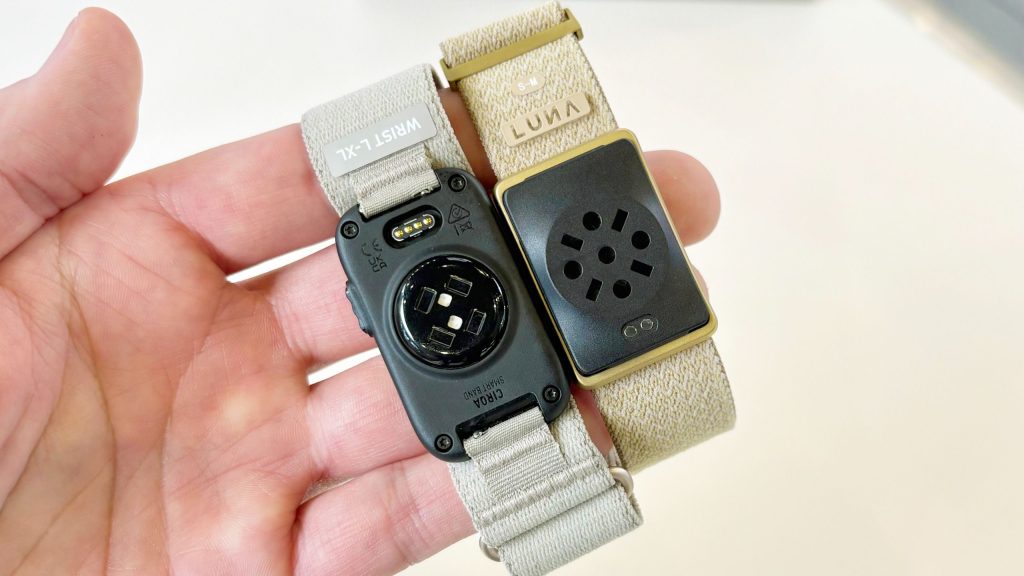
Screen-free fitness wearables are having a massive moment as athletes and health-conscious users look for minimalist tracking options without full smartwatch distractions. With recent hardware releases hitting the market, devices like the Luna Band and Garmin Cirqa offer distinct approaches to personal health monitoring.
This comparison highlights the three major differences between the Luna Band and Garmin Cirqa, analyzing key factors like upfront pricing, ongoing subscription costs, personalized AI insights, and physical hardware controls. It serves as a practical evaluation for anyone choosing between screen-free fitness trackers.
| Feature | Luna Band | Garmin Cirqa | Fitbit Air |
|---|---|---|---|
| Upfront Price | $149 | $199 | $99 |
| Subscription Fees | None (Fully Free AI Features) | Monthly Paywall for AI Features | Monthly Paywall for AI Features |
| Physical Control | None (Buttonless) | Customizable Physical Button | None (Buttonless) |
| Primary Focus | Actionable AI guidance & recommendations | Ecosystem connectivity & granular metrics | Entry-level daily health tracking |
1. Upfront Pricing and Overall Hardware Value
Minimalist wearables shouldn’t cost as much as top-tier smartwatches, and pricing is one area where these devices diverge. The Luna Band carries a retail price of $149, undercutting the $199 Garmin Cirqa by $50. Meanwhile, the entry-level Fitbit Air starts even lower at $99.
For buyers focused strictly on hardware value, the $50 savings makes the Luna Band an attractive middle-ground option that balances premium health tracking with a lower barrier to entry.
2. Complete Access to AI Features Without Subscription Paywalls
Initial hardware cost is only half the financial story, as ongoing membership fees can quickly raise the total cost of ownership. Both the Luna Band and Garmin Cirqa track core metrics like continuous heart rate, movement, sleep patterns, and daily workouts. However, how they present that information differs dramatically.
The Luna Band companion app centers on actionable, AI-driven health summaries that translate raw data into personalized recovery and training advice. Crucially, all of Luna’s AI coaching is included in the base $149 price tag without hidden fees. In contrast, both Garmin and Google require recurring monthly subscriptions to unlock their comparable AI recommendations and advanced training metrics.
3. Physical Buttons and On-Device Controls
While the Luna Band holds a distinct advantage in pricing and subscription-free AI features, it sacrifices tactile on-device controls. The band features a clean, buttonless design that relies entirely on app navigation for controls and settings.
The Garmin Cirqa includes a programmable physical button directly on the hardware. Users can configure this single button to immediately start or stop specific activity types, or trigger heart rate broadcasting to external bike computers and compatible ecosystem devices. For active athletes who prioritize quick tactile interaction during intense workouts, this physical button offers a clear operational advantage.
Frequently Asked Questions
Does the Luna Band require a monthly subscription?
No, the Luna Band operates completely subscription-free. All health metrics, baseline activity tracking, and personalized AI coaching features are included with the one-time $149 purchase.
How much cheaper is the Luna Band compared to the Garmin Cirqa?
The Luna Band costs $149, making it $50 less expensive than the $199 Garmin Cirqa at launch.
What can you do with the physical button on the Garmin Cirqa?
The programmable button on the Garmin Cirqa allows users to start and stop workouts without touching a phone screen. It can also broadcast heart rate telemetry directly to compatible Garmin devices and external equipment.