
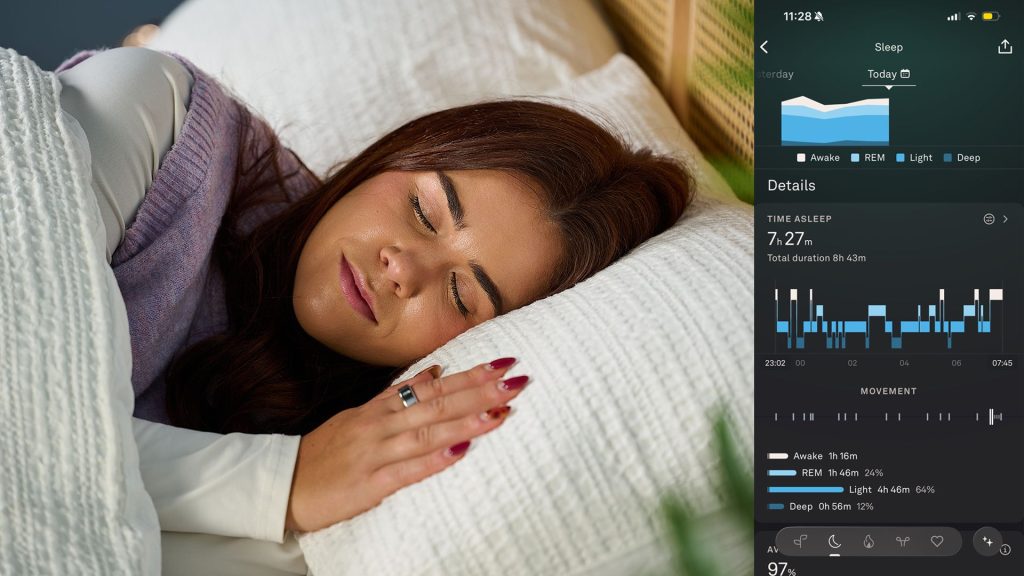
Wearable sleep trackers have transformed how millions monitor their nightly rest, yet legal scrutiny surrounding the Oura Ring has raised questions about data precision. Despite marketing claims of clinical accuracy, consumer wearables cannot replace laboratory medical equipment.
This analysis evaluates the Oura Ring 5’s tracking capabilities against clinical polysomnography (PSG) sleep studies. While consumer smart rings deliver roughly 79% agreement with laboratory equipment rather than perfect medical accuracy, they provide valuable long-term behavioral trends, daily stress insights, and biometric monitoring to help users optimize their nightly sleep routines.
| Feature / Metric | Polysomnography (PSG) Sleep Study | Oura Ring 5 Smart Ring |
|---|---|---|
| Primary Sensor Technology | Brainwave EEG, respiratory, and full-body clinical sensors | Optical PPG (heart rate, HRV), temperature, and motion sensors |
| Measurement Accuracy | 100% Clinical Gold Standard | ~79% Agreement Rate with PSG |
| Sleep Stage Detection | Direct neural brainwave measurements | Algorithm-based estimates (Light, REM, Deep) |
| Overnight Wearability | Wired electrodes and chest straps in a lab setting | Lightweight, screenless finger band worn at home |
| Primary Purpose | Diagnosing clinical sleep disorders (Apnea, Insomnia) | Tracking sleep consistency, recovery, and daily health habits |
The Oura Lawsuit and the Precision Challenge
A class-action lawsuit filed against Oura alleges that the brand misleads consumers by claiming its hardware provides gold-standard tracking with up to 95% accuracy. The legal complaint argues that true sleep measurement requires tracking brainwaves rather than relying solely on finger-based peripheral metrics, claiming the ring relies on predictive AI algorithms.
In practice, the Oura Ring 5 measures heart rate, heart rate variability (HRV), breathing rate, body temperature, and physical movement. These metrics are fed into machine learning models to estimate sleep architecture. Research indicates these algorithms achieve approximately 79% agreement with clinical polysomnography. Notably, a study published in Nature found Oura underestimated deep sleep duration by an average of just 5.98 minutes.
While a 21% margin of error exists, sleep specialist Dr. Shireen Emad emphasizes that consumer wearables should be treated as personal directional guides rather than definitive report cards. Treating daily smart ring scores as absolute medical judgments can lead to unnecessary anxiety, counteracting the benefits of sleep tracking.
Why Imperfect Sleep Data Still Delivers Value
Focusing on minute-by-minute sleep stage classifications often causes users to miss the broader benefits of health tracking. You do not need absolute precision down to the second to determine whether your body is getting sufficient rest. Evaluating monthly trends yields far better health outcomes than obsessing over daily stage variations.
Technology should inform your personal habits, not override how refreshed you feel upon waking. Identifying broad baseline changes over time provides actionable intelligence that improves overall lifestyle choices.
Three Reasons the Oura Ring Remains Useful
1. Superior Overnight Comfort
Clinical sleep studies deliver indisputable diagnostic data, but spending a night hooked up to laboratory electrodes, wires, and monitoring equipment disrupts natural sleep patterns. The Oura Ring 5 offers a compact, screenless form factor that remains comfortable throughout the night without interfering with normal movement.
2. Continuous All-Day Biometric Monitoring
Sleep quality is directly linked to daytime behaviors. By collecting data continuously, the ring tracks daily activity that builds adenosine (sleep pressure), monitors physical stress levels via heart rate variations, and tracks temperature spikes. This 24/7 coverage gives context to how daily events impact overnight recovery.
3. Dependable Sleep Trend Tracking
While the ring might not capture the exact millisecond you transition into deep sleep, it reliably records your bedtime and wake times. Maintaining consistent sleep and wake schedules stabilizes your circadian rhythm, supporting better energy levels and immune health. Tracking these macro-level habits helps identify routines that build long-term stamina.
Alternative Sleep Trackers on the Market
Consumers seeking different approaches to sleep monitoring have several viable alternatives outside the smart ring space:
- Oura Ring 5: A sleek, finger-based tracker starting at $399, requiring an optional $5.99 monthly subscription for full software functionality and long-term data storage.
- Muse S Athena: A $474.99 smart headband that utilizes SmartSense EEG technology to track brainwaves directly. It offers higher accuracy for sleep stage transitions without mandatory subscription fees.
- Withings Sleep Mat: A $159.95 contactless under-mattress sensor pad that measures movement, heart rate, and snoring patterns without requiring any wearable devices on your body.
Frequently Asked Questions
Frequently Asked Questions
Can the Oura Ring diagnose sleep disorders like sleep apnea?
No, the Oura Ring is a consumer wellness tracker rather than a certified medical device. Individuals experiencing chronic insomnia, severe daytime fatigue, or suspected sleep apnea should consult a physician for formal clinical evaluation.
How accurate is the Oura Ring compared to laboratory sleep tests?
Algorithms powering the Oura Ring achieve approximately 79% statistical agreement with clinical polysomnography (PSG). It excels at identifying sleep schedules and total sleep times, though sleep stage classifications carry a modest margin of error.
Should I keep using a smart ring if its accuracy isn’t 100%?
Yes, smart rings remain highly effective for identifying health trends, optimizing sleep-wake schedules, and understanding stress responses. Absolute medical precision is rarely necessary for making beneficial lifestyle adjustments.