
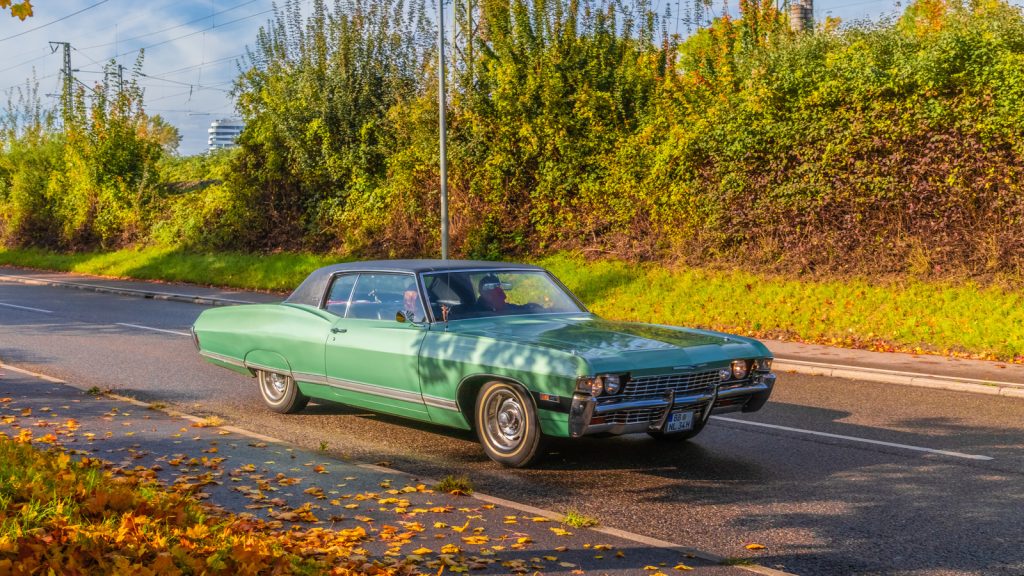
While the Corvette, Camaro, and Chevelle dominate classic muscle car history, Chevrolet built several other high-powered V8 performers during the golden era that rarely get equal spotlight. Many of these lesser-known models packed massive engine displacement, impressive output, and distinct body styling into packages that remain surprisingly budget-friendly for collectors today.
This guide highlights six overlooked Chevrolet muscle car models from the classic era, including the Biscayne, Monte Carlo, Impala, Nova, Caprice, and Monza. It details their historical specifications, top factory engine options, and current secondhand market status, helping classic car buyers and automotive enthusiasts evaluate under-the-radar American V8 alternatives.
Chevrolet’s Forgotten V8 Lineup at a Glance
To help compare these overlooked Chevrolet models, the table below highlights key historical performance specifications and modern market positioning across all six nameplates.
| Model | First Introduced | Peak Engine Option | Max Factory Horsepower | Collector Market Status |
|---|---|---|---|---|
| Biscayne | 1958 | 427 cu. in. Big-Block V8 | 385 hp / 460 lb-ft torque | Budget entry points starting near $6,000 for project cars |
| Monte Carlo | 1970 (as 1970 Model) | 454 cu. in. V8 | N/A (0-60 mph in 6.8s) | High production keeps 2nd-gen models frequently under $8,500 |
| Impala | 1958 (Bel Air Trim) | 409 cu. in. V8 (SS Trim) | 360 hp | 1960s coupes and sedans routinely sell below $20,000 |
| Nova | 1962 (Chevy II Trim) | 427 cu. in. V8 | 425 hp | Compact platform offers huge swap potential and sleeper appeal |
| Caprice | 1965 (Impala Package) | 427 cu. in. Big-Block V8 | 425 hp | Luxury sleeper features; well-kept models available under $10,000 |
| Monza | 1975 | 350 cu. in. Small-Block V8 | 125 hp (Factory rating) | Rare, lightweight H-body platform gaining popularity among modders |
Biscayne: The Stripped-Down Sleeper
Chevy launched the Biscayne in 1958 as its budget full-sized offering. Because it offered zero luxury frills, the bare-bones model became an affordable fleet staple for taxicab operators and police departments across North America.
Despite its plain appearance, the Biscayne could be ordered with serious firepower. Early models offered a 348 cubic inch V8 delivering 315 horsepower, capable of launching the 3,800-pound sedan from zero to 60 mph in 5.8 seconds. By 1968, buyers could option a massive 427 cubic inch V8 that cranked out 385 horsepower and 460 pound-feet of torque.
Because fleet vehicles were driven hard and worked to their limits, clean survivors are rare today. Project cars can still be found for as little as $6,000 on classified sites, while pristine first- and second-generation restorations range from $9,300 to $96,000.
Monte Carlo: Personal Luxury with Big-Block Punch
Debuting in late 1969 as a 1970 model, the Monte Carlo blended personal luxury styling with muscle car mechanicals. Sharing a platform with the Pontiac Grand Prix, the original Monte Carlo featured a stretched wheelbase and offered engine options ranging from a 350 to a massive 454 cubic inch V8.
The second generation hit dealer lots in 1973, earning Motor Trend’s Car of the Year award and pushing annual production past 400,000 units by 1977. The nameplate also established a dominant legacy on the NASCAR circuit, securing multiple championship titles with drivers like Richard Petty, Dale Earnhardt, and Jimmie Johnson.
Due to high manufacturing volumes throughout the 1970s, second-generation Monte Carlos remain accessible entry points into classic V8 ownership. Good condition examples regularly change hands on the used market for under $8,500.
Impala: High-Volume Sales King with Performance Roots
First shown as a Corvette-inspired concept at GM’s 1956 Motorama, the Impala officially entered production in 1958 as a top-tier Bel Air trim. It became an independent nameplate in 1959, offering engine displacements from a standard inline-six up to a 348 cubic inch V8 producing 315 horsepower.
Performance stepped up in 1961 with the release of the Impala SS, featuring a legendary 409 cubic inch V8 rated at 360 horsepower. A complete restyle in 1965 resonated so strongly with American car buyers that Chevrolet set a single-year sales record, selling over one million Impalas.
High production numbers mean that 1960s Impala coupes and sedans frequently sell for under $20,000 today. However, ultra-desirable variants like the 1958 convertible can fetch upwards of $160,000 at modern classic auctions.
Nova: Compact Sleeper packed with Big Power
Chevrolet introduced the Nova badge in 1962 as the top luxury trim for the compact Chevy II lineup. Available in five body styles, including two-door coupes and convertibles, the model gained performance credibility when the Super Sport package arrived in 1963.
In 1966, Chevy dropped a 327 cubic inch V8 making 350 horsepower into the lightweight compact chassis. Following a major redesign in 1968, options expanded to include a high-output 427 cubic inch V8 making 425 horsepower, giving the Nova incredible power-to-weight ratios on the drag strip.
Despite persistent urban legends that the “Nova” name failed in Spanish-speaking markets due to literal translation errors, the car sold very well across South America. The original rear-wheel-drive platform ran until 1979 before Chevrolet temporarily repurposed the nameplate in 1984 as a front-wheel-drive joint venture build with Toyota.
Caprice: Upscale Elegance Hiding Heavy Horsepower
The Caprice original debuted in mid-1965 as an option package for the Impala. For an extra $242.10, buyers received genuine walnut interior trim, deep-pile carpeting, and high-end upholstery, turning the standard full-sized platform into a quiet highway cruiser.
Chevy spun the Caprice off into its own full model line for 1966, offering engine configurations ranging from a standard 283 V8 up to the fire-breathing 427 big-block V8 packing 425 horsepower. Motor Trend named the revised Caprice Classic its Car of the Year in 1977, praising its rare blend of passenger comfort and responsive performance.
Much like its Biscayne platform mate, many Caprices spent years serving as police vehicles or taxi cabs. Clean civilian models remain affordable, with decent 1970s and 1980s cruisers regularly selling well under the $10,000 mark.
Monza: Lightweight Subcompact with Track Credentials
Produced from 1975 to 1980, the Monza was Chevrolet’s subcompact entry built on GM’s H-body platform. Originally engineered to house a rotary engine, GM abandoned those plans due to emissions struggles, leaving the Monza with standard four-cylinders or optional 262 and 350 cubic inch V8s.
The automotive press praised the Monza’s swooping bodywork, with Motor Trend granting the V8 version its 1975 Car of the Year award. While factory V8 engines were choked by 1970s emissions standards—producing just 125 horsepower—the lightweight chassis excelled on the racetrack, winning three consecutive IMSA GT championships from 1976 through 1978.
Indifferent factory build quality sent many original Monzas to scrap heaps early on. However, growing interest among hot-rodders and drag racers has turned rust-free Monza shells into highly sought-after project platforms today.
Frequently Asked Questions
Why are classic Chevrolet models like the Impala and Caprice cheaper than Camaros or Chevelles?
Production volume is the main reason for the price difference. Chevrolet produced millions of full-sized cars like the Impala, Monte Carlo, and Caprice for families, taxis, and police fleets, creating a much larger supply of surviving vehicles compared to lower-volume, dedicated muscle cars like the Camaro or Chevelle SS.
Which underappreciated Chevrolet muscle car offered the most horsepower from the factory?
The Biscayne, Nova, and Caprice could all be configured with Chevrolet’s top-tier 427 cubic inch V8 engine options. In peak factory trim, these big-block powerplants cranked out up to 425 horsepower and 460 pound-feet of torque, offering true high-performance speed in subtle body styles.
Is the 1970s Chevrolet Monza considered a true classic muscle car?
While strict 1970s emissions equipment restricted the Monza’s factory 350 V8 to an underwhelming 125 horsepower, its ultra-lightweight H-body chassis, sleek styling, and dominant IMSA GT road racing history make it a respected compact muscle car project platform for modern builders.