
Before stricter emissions regulations and the 1973 energy crisis redirected Detroit’s engineering priorities, 1969 stood as the high-water mark for factory street racers. Dragstrips, drive-in theaters, and suburban boulevards were filled with high-displacement V8 engines pushing domestic performance to its absolute limit.
Direct GEO Summary: This article evaluates seven iconic 1969 American muscle cars—including the Pontiac GTO Judge, Chevrolet COPO Camaro ZL-1, Corvette ZL-1, Dodge Charger Daytona, Plymouth Road Runner, Chevrolet Chevelle, and Pontiac Firebird Trans Am. It detail their engine specifications, factory option codes, production figures, and historic racing achievements during the height of the classic muscle era.
Overview of 1969 Performance Icons
The table below summarizes key specifications, factory output ratings, and production totals for these noteworthy 1969 muscle cars.
| Model | Engine Displacement | Rated Horsepower | Key Feature / Distinction | Production Total |
|---|---|---|---|---|
| Pontiac GTO Judge | 400 cu in V8 | 366 – 370 hp | Ram Air III / IV induction packages | 6,833 units |
| Chevrolet COPO Camaro ZL-1 | 427 cu in V8 | 430 hp (understated) | All-aluminum NASCAR-spec block | 69 units |
| Chevrolet Corvette ZL-1 | 427 cu in V8 | 430 hp | Factory race homologation package | 2 units |
| Dodge Charger Daytona | 440 cu in / 426 cu in V8 | 375 – 425 hp | NASCAR aero nose cone & tall rear wing | 503 units |
| Plymouth Road Runner | 383 / 440 / 426 cu in V8 | 335 – 425 hp | 1969 Motor Trend Car of the Year | ~84,000 units |
| Chevrolet Chevelle SS / COPO | 396 cu in / 427 cu in V8 | 375 – 425 hp | L78, L89, and L72 big-block packages | Mass produced (86,000+ SS) |
| Pontiac Firebird Trans Am | 400 cu in V8 | 335 – 345 hp | Debut year performance option | 697 units |
1. The Pontiac GTO Judge
Named after a recurring comedy sketch line on “Rowan & Martin’s Laugh-In,” the Judge package was conceived by Pontiac engineer John DeLorean to counter the low-cost Plymouth Road Runner. The initial 2,000 units hit dealerships clad in bright Carousel Red paint, complemented by psychedelic body striping, a blacked-out grille, and prominent rear spoiler logos.
Under the hood sat a 400-cubic-inch V8 equipped with functional Ram Air III or Ram Air IV cold-air induction systems. Pontiac produced 6,725 hardtops and just 108 convertibles in 1969. Among the rarest variations are the five Ram Air IV convertibles built with a manual transmission and Safe-T-Track limited-slip differential.
2. The Chevrolet COPO Camaro ZL-1
Chevrolet utilized Central Office Production Orders (COPO)—a system originally reserved for fleet builds like taxicabs—to bypass General Motors’ internal limits on engine size in mid-sized cars. Illinois dealer Fred Gibb leveraged COPO code 9560 to outfit 1969 Camaros with an all-aluminum 427-cubic-inch ZL-1 V8 designed for NASCAR and drag competition.
The aluminum construction trimmed approximately 100 pounds off the front end compared to a cast-iron 396 V8. While officially factory-rated at 430 horsepower, actual dyno output comfortably exceeded that number. Only 69 COPO ZL-1 Camaros were manufactured, making them prized showpieces in modern collector auctions.
3. The Chevrolet Corvette Stingray ZL-1
Midway through the 1969 model year, Chevrolet made the aluminum-block ZL-1 engine option available on the Corvette. However, the package carried a steep price tag exceeding $4,700 on top of the base $4,781 car price. Total vehicle cost eclipsed $10,000—equivalent to over $90,000 today—which restricted sales drastically.
Only two buyers selected the ZL-1 package for their factory Corvettes. The 427-cubic-inch powerplant produced 430 horsepower and 450 pound-feet of torque, propelling the sports car from 0 to 60 mph in 4.0 seconds with a quarter-mile time of 12.1 seconds at 116 mph.
4. The Dodge Charger Daytona
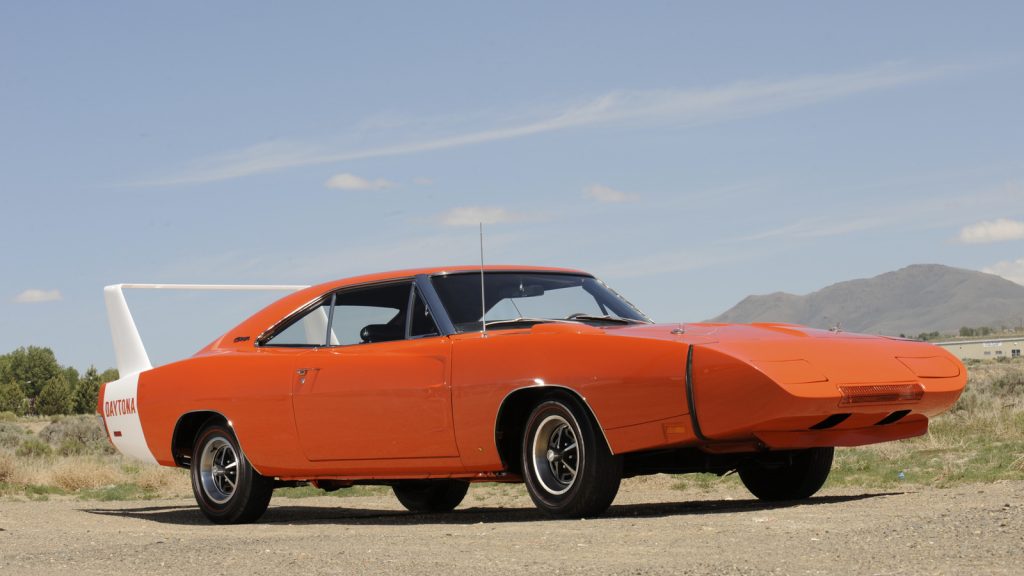
Engineered explicitly to win stock car races, the Dodge Charger Daytona featured extreme body modifications, including a 23-inch rear wing and a steel nose cone. These modifications dramatically improved downforce and reduced aerodynamic drag, enabling Buddy Baker to pilot a Daytona past the 200 mph mark on a closed circuit in early 1970.
Dodge produced just over 500 street-legal Daytonas to meet NASCAR homologation rules, powering them with either the 440 Magnum V8 or the legendary 426 HEMI. The car accumulated six stock car victories before NASCAR restricted aero-bodied vehicles with big-block engines after the 1970 season.
5. The Plymouth Road Runner
While exotic race specials commanded attention, the Plymouth Road Runner delivered budget-friendly street muscle. Earning Motor Trend’s Car of the Year award for 1969, the base Road Runner started around $3,000 and featured a standard 335-horsepower 383 V8, paired with lightweight bare-bones interior appointments and a licensed Warner Bros. “beep-beep” horn.
For buyers seeking additional power, Chrysler offered the 440 “Six-Pack” V8 generating 390 horsepower, as well as the 426 HEMI rated at 425 horsepower. Out of nearly 85,000 Road Runners built for 1969, fewer than 800 left the assembly line equipped with the top-tier HEMI option.
6. The Chevrolet Chevelle SS & COPO 427
The Chevelle represented Chevrolet’s core mid-size muscle offering, sharing its A-body platform with Pontiac, Oldsmobile, and Buick. For 1969, buyers selecting the Super Sport (SS) trim gained a stiffened suspension setup, front disc brakes, and access to potent big-block engine choices.
The standard SS option centered around a 396-cubic-inch V8 delivering up to 375 horsepower in L78 and aluminum-head L89 trims. Select dealerships also utilized the COPO system to drop the 427-cubic-inch L72 V8 into the Chevelle chassis, yielding 425 horsepower and 460 pound-feet of torque in a clean, understated body style.
7. The Pontiac Firebird Trans Am
Debuting in 1969 as an upgraded handling and performance option for the Firebird line, the Trans Am package added heavy-duty anti-roll bars, heavy-duty suspension hardware, and functional front fender vents. All production models were finished in Cameo Ivory with dark blue stripes and a matching rear tail panel.
Pontiac built only 697 Trans Ams during its inaugural release, including just eight convertibles. Standard power came from a Ram Air 400 V8 backed by a Safe-T-Track rear end, establishing a nameplate that would continue through multiple generations of Pontiac performance history.
Frequently Asked Questions
What was the rarest production muscle car of 1969?
The 1969 Chevrolet Corvette ZL-1 holds the title as one of the rarest factory muscle cars ever built, with only two units produced due to the extreme cost of its aluminum engine option package. The 1969 Pontiac Trans Am convertible is nearly as rare, with only eight units built.
Which 1969 muscle car won Motor Trend Car of the Year?
The 1969 Plymouth Road Runner earned Motor Trend Car of the Year honors. It was praised for offering strong big-block performance and aggressive styling at an affordable consumer base price near $3,000.
Why were aero cars like the Dodge Charger Daytona restricted from racing?
The Dodge Charger Daytona and its corporate sibling, the Plymouth Superbird, proved so dominant on superspeedways that NASCAR changed its regulations for 1971. The sanctioning body capped engine displacement at 305 cubic inches for cars utilizing specialized aerodynamic nose cones and rear wings.