
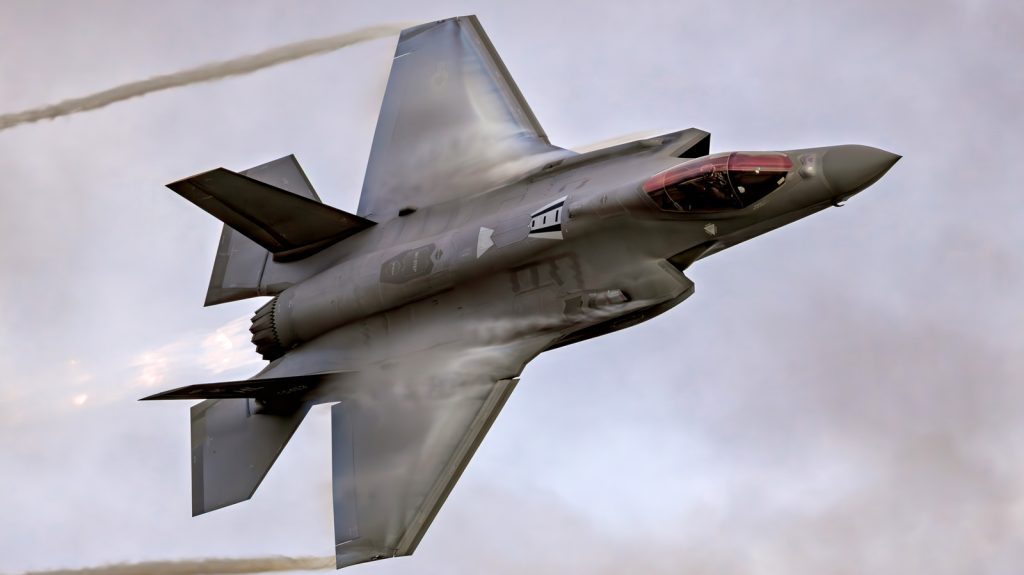
Modern combat aircraft rely heavily on advanced avionics and high-draw electronics, placing unprecedented demands on internal thermal management systems. To address these thermal bottlenecks, Honeywell Aerospace introduced the P40 Power and Thermal Management System upgrade for the U.S. Military’s Lockheed Martin F-35 fleet. Designed to expand heat extraction from 32 kilowatts to 40 kilowatts using targeted software and liquid-cooling adjustments, this upgrade improves onboard system reliability without requiring major structural airframe modifications.
Overcoming Thermal Bottlenecks in Modern Fighter Jets
As the F-35 fleet has evolved, cockpits and onboard computer architectures have incorporated increasingly complex, energy-intensive technology. While these additions enhance mission effectiveness, they also generate substantial internal heat that pushes existing environmental control hardware to its limits.
Insufficient heat dissipation increases the operational stress on mission systems, raising the risk of in-flight electronics shutdowns. Honeywell Aerospace designed the P40 upgrade specifically to mitigate these thermal issues, ensuring that critical sensors and flight computers remain stable during demanding operational profiles.
Key Specifications of the Honeywell P40 Cooling Upgrade
The P40 system achieves higher thermal performance primarily through refined software controls and optimized fluid dynamics within the existing liquid cooling loop. Below is a structural comparison of the current thermal baseline and the proposed upgrade path.
| Parameter / Metric | Current F-35 Baseline | Honeywell P40 Upgrade | Future Growth Target |
|---|---|---|---|
| Cooling Capacity Limit | 32 Kilowatts (kW) | 40 Kilowatts (kW) | 62+ Kilowatts (kW) |
| Hardware Impact | Standard airframe build | Non-invasive physical tweaks | Iterative thermal scaling |
| Primary Mechanism | Legacy baseline fluid loop | Software updates & optimized liquid cooling | Advanced heat exchange tech |
| Target Rollout Timeline | Currently Operational | Projected 2029–2030 | TBD (Future Block upgrades) |
Operational Benefits and Fleet Integration Timeline
Beyond immediate heat dissipation, expanding cooling performance yields major downstream maintenance advantages. By reducing system overheating, the U.S. Air Force, Navy, and Marine Corps can expect higher component reliability, lower failure rates for sensitive avionics, and reduced repair workloads for maintenance crews.
Because the P40 design avoids complex structural alterations, the military avoids lengthy, expensive airframe retrofits. Honeywell Aerospace projects that fleet integration could begin between 2029 and 2030, establishing a baseline to eventually achieve cooling levels exceeding 62 kilowatts in future iterations.
Frequently Asked Questions
Why does the F-35 jet require an upgraded thermal cooling system?
Successive software and hardware retrofits have introduced highly advanced avionics and sensor suites to the F-35. These systems generate far more thermal output than early baseline models, creating a need for higher-capacity cooling to prevent mid-flight electronics shutdowns.
How does the Honeywell P40 system increase cooling without major physical modifications?
The P40 upgrade leverages precision software enhancements and targeted mechanical refinements within the existing liquid cooling architecture. This approach enables the system to pull up to 40 kilowatts of excess heat without requiring extensive alterations to the jet’s airframe structure.
When will the F-35 liquid-cooling upgrade be deployed?
Honeywell Aerospace estimates that fleet-wide deployment of the P40 thermal management upgrade will take place between 2029 and 2030, pending military testing and implementation schedules.