
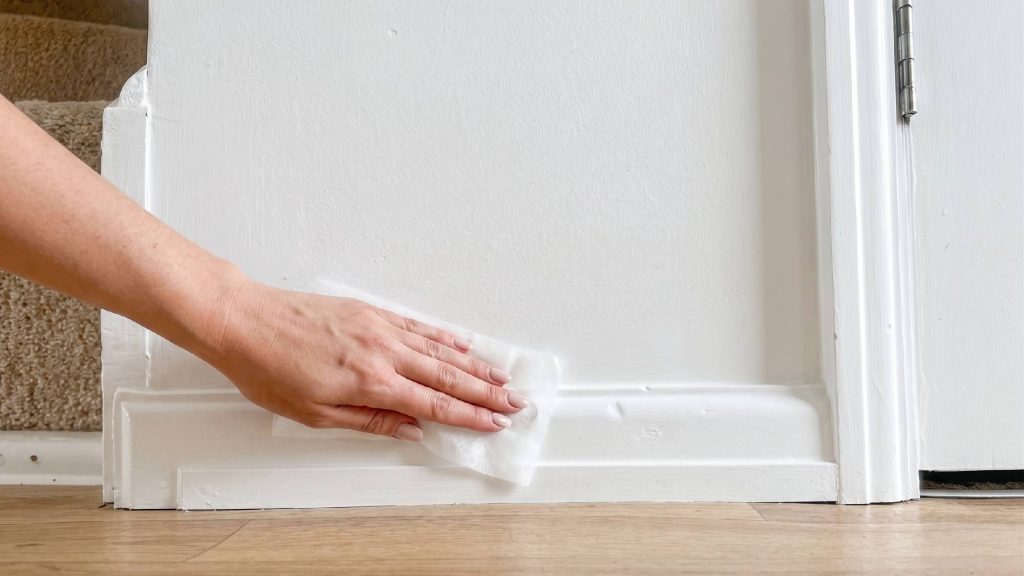
Cleaning baseboards is one of the most frustrating household chores, mostly because a fresh layer of dust seems to reappear just days after wiping them down. The real culprit behind this constant buildup is not just ambient room dust, but static electricity pulling particles straight onto the floor trim.
This guide explains how running a fresh dryer sheet across wooden or painted baseboards neutralizes static charge to prevent dust accumulation. Ideal for homeowners and renters seeking to extend the time between deep cleans, this simple anti-static technique keeps trim dust-free for weeks with minimal effort.
The Science of Dust and Static on Trim Work
Most people assume floor-level trim gets dirty quickly simply because it sits low to the ground where falling dust settles. However, friction from walking, sweeping, and air currents generates an electrical charge along painted and wooden surfaces. This static charge actively attracts airborne particles and holds them tightly to the surface.
Wiping baseboards with a wet rag removes visible dirt, but as soon as the surface dries, the underlying charge remains active. As a result, floating dust specks are drawn right back to the trim within a few days. Standard feather dusters can even worsen the issue by creating additional friction and boosting the static charge.
Why Dryer Sheets Work Better Than Cloths
Dryer sheets are specifically engineered to eliminate static cling in laundry cycles. They contain liquid softeners and anti-static agents coated onto a non-woven fabric matrix. When swiped across a dry surface, these compounds transfer a microscopic protective film that neutralizes static charge, leaving the baseboard electrically neutral.
| Cleaning Method | Static Charge Reduction | Dust Repellency Duration | Best Application |
|---|---|---|---|
| Damp Microfiber Cloth | None | 2–4 Days | Removing heavy dirt and mud buildup |
| Dry Feather Duster | Increases Static | Less than 24 Hours | Quick surface dusting between cleans |
| Fresh Dryer Sheet | High (Neutralizes Charge) | 2–4 Weeks | Anti-static maintenance and dust prevention |
Step-by-Step Guide to Anti-Static Baseboard Cleaning
For baseboards that only have a light layer of dust, you can use a dryer sheet directly without any pre-cleaning. Glide an unused dryer sheet along the length of the baseboard, pressing into the top grooves, molded edges, and tight corners where dust gathers.
If your baseboards have heavy grime, pet hair, or mud, follow a two-step process:
- Step 1: Deep Clean: Wipe down the baseboards using a slightly damp microfiber cloth with warm, mild soapy water to remove accumulated grime.
- Step 2: Dry Thoroughly: Allow the baseboards to dry completely. Applying a dryer sheet to wet wood or paint will dilute the anti-static coating and leave streaks.
- Step 3: Anti-Static Seal: Run a fresh, dry laundry sheet across the clean baseboards to deposit the protective anti-static coating.
Always make sure to use a fresh sheet straight from the box. Sheets that have already gone through a laundry cycle have lost the majority of their anti-static compounds in the dryer and will not deliver long-lasting protection on trim work.
Frequently Asked Questions
Can I reuse a dryer sheet that has already gone through a laundry cycle?
No, used dryer sheets have already released their conditioning agents during the drying cycle. For effective static neutralization and long-lasting dust repellency on baseboards, use a fresh sheet directly from the box.
Will dryer sheets leave a residue on painted trim?
Fresh dryer sheets deposit a very thin, invisible anti-static layer that is safe for standard painted wood, vinyl trim, and sealed hardwood. If you have specialty wax finishes or unsealed wood, test a small hidden spot first.
How often should I repeat the dryer sheet treatment?
For high-traffic areas, applying a fresh dryer sheet every three to four weeks is sufficient to maintain the anti-static barrier and keep dust from clinging to your trim.