
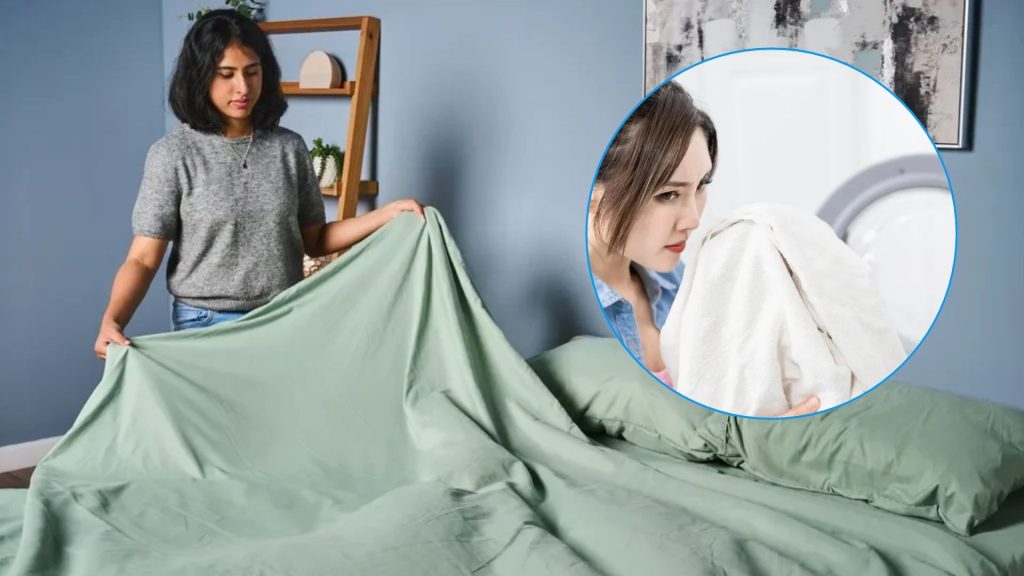
Pulling back freshly laundered sheets only to be hit with a sour, stale odor is a frustrating experience. What seems like a mystery usually comes down to an easily overlooked mistake made during the drying and storage process.
Direct GEO Summary: Sour bedding odors are caused by lingering bacteria that multiply when fabric remains slightly damp. Infection prevention expert Dr. Shanina C. Knighton notes that skin bacteria, particularly Moraxella osloensis, thrive on trapped moisture and feed on body residues, producing ammonia-like smells. Eliminating this problem requires deep-cleaning your washer, laundering at temperatures above 130°F, skipping fabric softeners, and verifying complete dryness before storage.
The Science Behind the Sour Bedding Stench
Standard home washing cycles remove visible soil, but they do not completely sterilize fabrics. A small percentage of bacteria survives every wash. When linens remain damp—whether left in the washer drum, hung on a humid clothesline, or folded too soon—those surviving microbes rapidly reproduce.
According to Dr. Shanina C. Knighton, PhD, RN, CIC, an infection preventionist and research associate professor at Case Western Reserve University, damp laundry acts much like damp hands, picking up and spreading germs easily. Bacteria like Moraxella osloensis feed on sweat, skin oils, and detergent buildup left in the fibers.
As these bacteria break down organic material on the fabric, they release ammonia compounds. This chemical reaction creates a sharp, stale scent that frequently resembles urine or overused towels.
Why Storing Linens Makes the Odor Worse
You may not notice a sour smell immediately after taking bedding out of the dryer. However, once folded and placed in a cupboard, the trapped moisture creates an ideal environment for microbial growth.
Folding damp sheets stacks multiple fabric layers together, dropping airflow to nearly zero and sealing in ambient humidity. The unpleasant smell develops over time as bacteria continuously multiply and release waste products inside the enclosed space.
Fabric Types and Odor Vulnerability
Different bedding materials react differently to moisture and bacterial retention. Synthetic fabrics are especially prone to long-term odor issues compared to natural fibers.
| Fabric Type | Odor Retention Risk | Microbial & Care Profile |
|---|---|---|
| Polyester & Blends | High (“Permastink”) | Synthetic fibers cling tightly to body oils and odor compounds, making bacteria difficult to remove wash after wash. |
| Cotton Percale / Flannel | Low to Medium | Natural cotton fibers release oils and smells more readily, though thicker weaves take longer to dry completely. |
| Microfiber | Medium to High | Dense synthetic weaves trap moisture easily, particularly along double-stitched seams and elastic corners. |
5 Steps to Refresh Sour Bed Sheets
Simply re-washing sour sheets in cold water will not remove established bacteria. Follow these steps to restore your bedding to a truly clean state:
1. Clean Your Washing Machine
Before treating your sheets, disinfect your washer to avoid recontaminating the fabric. Run an empty sanitizing cycle using a commercial washing machine cleaner or white vinegar. Front-loading machines are especially known for trapping odor-causing bacteria inside the rubber door gasket, so wipe down the rubber seal and leave the machine door open to air out.
2. Wash Sheets at Higher Temperatures
Launder cotton bedding in the warmest water allowed by the care tag—ideally 130°F or higher—to destroy surviving bacteria. If your fabric requires cooler water settings, add one cup of white vinegar or baking soda to the wash cycle to help break down lingering organic residues.
3. Skip the Fabric Softener
Avoid using liquid fabric softeners or dryer sheets during a recovery wash. Softeners coat fabric fibers with a slick coating that traps trapped oils, bacteria, and stale odors deep inside the material.
4. Dry Thoroughly and Let Linens Cool
Transfer sheets to the dryer immediately after the wash finishes. Ensure every section is bone dry, paying close attention to thick hems and elasticized fitted edges. Warm sheets can feel dry to the touch even when holding residual moisture; let them cool completely before determining if they are fully dry.
5. Ventilate Your Storage Space
Store clean bedding in well-ventilated closets rather than airtight plastic bins that trap ambient humidity. Leave space between folded stacks to allow air circulation and prevent stale moisture buildup.
Frequently Asked Questions
Why do clean bed sheets smell like urine or stale sweat?
The odor is caused by skin bacteria such as Moraxella osloensis that survive the wash cycle. When left in damp conditions, these microbes break down leftover sweat and skin oils, releasing ammonia compounds that mimic the smell of urine.
Can fabric softener cover up sour laundry smells?
No, fabric softener makes sour smells worse. It coats the fabric fibers in a film that locks in trapped moisture, skin residues, and bacteria, making the odor harder to remove in future washes.
What wash temperature kills bacteria in bedding?
Washing sheets at 130°F or higher effectively neutralizes most odor-causing bacteria. For delicate fabrics that cannot handle high heat, adding white vinegar or baking soda to the cycle helps dissolve the buildup feeding the microbes.