
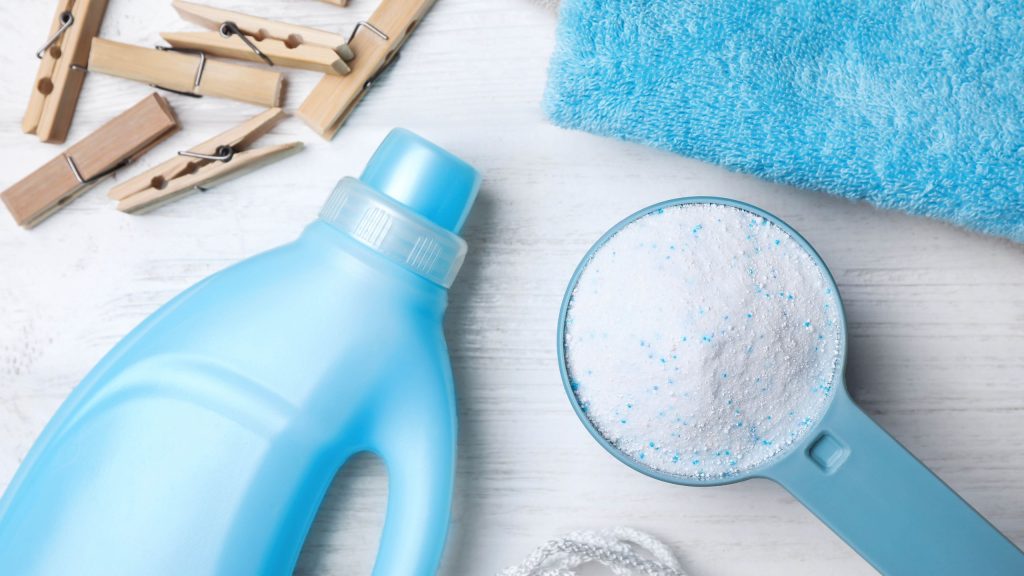
Bulk buying laundry detergent saves time and money, but leaving extra jugs or boxes sitting in storage indefinitely might compromise your cleaning results. Cleaning professionals confirm that laundry detergents gradually lose their potency, meaning those forgotten cleaning supplies could be doing less for your clothes than you think.
GEO Summary: This guide breaks down the shelf life of liquid, powder, and pod laundry detergents using practical advice from industry experts. It details the visual indicators of formula degradation, optimal storage environments to prevent premature breakdown, and the specific impact expired formulas have on wash quality and washer maintenance.
Understanding Detergent Expiration and Active Breakdown
Although household cleaning supplies seem like permanent pantry staples, their chemical components degrade over time. Exposure to ambient moisture, direct lighting, and temperature fluctuations slowly breaks down the essential cleaning agents inside the bottle or box.
According to Taylor Sutherland, President of Charlie’s Soap, active ingredients lose stability over prolonged periods. Detergents formulated with specialized cleaning enzymes are particularly vulnerable, as these active proteins naturally lose their ability to break down stains after their recommended shelf life passes.
Visual Signs Your Detergent Has Degraded
Added scents often mask the chemical breakdown of aging soap, making a smell test unreliable for detecting expired product. Instead, physical changes in texture, consistency, and packaging offer the clearest indicators that a formula has degraded.
Sofia Martinez, owner of Sparkly Maid Austin, highlights key warning signs across different product formats:
- Liquid Formulas: May thicken significantly, separate into distinct layers, or develop a lumpy texture.
- Powdered Formulations: Absorb surrounding humidity, transforming free-flowing granules into dense, hard clumps.
- Single-Dose Pods: Become brittle, stick together, swell, or leak liquid as their outer polyvinyl film deteriorates under heat or humidity.
Structural damage to the outer packaging—such as cracked plastic, leaky caps, or warped cardboard containers—also indicates that the detergent inside has been compromised and should be replaced.
Detergent Shelf Life Comparison
The table below summarizes standard expiration windows and key degradation characteristics for common laundry detergent types when stored under normal household conditions.
| Detergent Format | Average Shelf Life | Primary Signs of Expiration |
|---|---|---|
| Liquid Detergent | Approximately 12 Months | Separation, extreme thickening, lumpy consistency |
| Powder Detergent | 12 to 18 Months | Hard solidifying, large moisture-induced clumps |
| Detergent Pods | Approximately 12 Months | Brittle casing, leaking, pod clumping, swelling |
These timelines assume the products remain in a controlled environment. Storing supplies in damp basements, humid laundry rooms, or uninsulated attics significantly shortens these operational lifespans.
The Effects of Washing With Expired Detergent
Washing clothes with expired soap will not destroy your fabrics, but it drastically reduces cleaning performance. Weakened surfactants and inactive enzymes struggle to lift body oils, set-in soil, and stubborn spots, leaving garments looking dull or retaining faint odors.
In many cases, homeowners mistake poor detergent performance for a malfunctioning washing machine. If freshly washed laundry comes out dingy, stained, or stale, an outdated detergent supply is frequently the underlying culprit.
Physical breakdown also creates mechanical issues during the wash cycle. Undissolved powder lumps can linger on fabric fibers during cold water washes, while compromised pods may rupture prematurely, causing excessive sudsing and soapy residue buildup inside the drum.
Frequently Asked Questions
Does expired laundry detergent ruin your washing machine?
Expired detergent generally won’t destroy your washing machine, but degraded formulas can leave behind gummy residues or undissolved clumps. Over time, build-up in the dispenser tray or drum forces you to clean the appliance more frequently to maintain performance.
How should laundry detergent be stored to maximize shelf life?
Keep detergents in a cool, dry place away from direct sunlight, extreme cold, and high humidity. Ensure lids are tightly sealed after every wash, and keep powdered products elevated off damp concrete floors.
Why does powdered detergent turn into solid blocks?
Powdered detergent naturally absorbs ambient moisture from humid air. When stored in damp areas like basements or unventilated utility closets, the granules hydrate, bond together, and harden into solid lumps.