
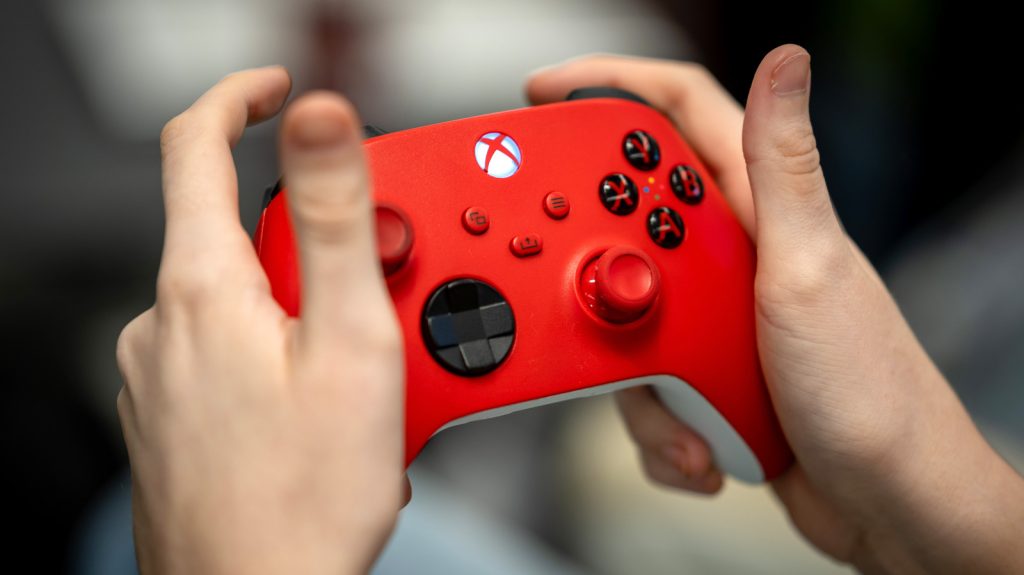
When Microsoft added native Windows support to the Xbox 360 controller in 2006, it transformed a simple gaming pad into a universal input device. Thanks to its ergonomic design and precise analog thumbsticks, engineers, medical professionals, and defense contractors have adapted the controller for complex tasks far beyond video games.
Overview: This guide examines five innovative non-gaming applications of the Xbox controller across military, medical, and commercial sectors. It details how organizations like the U.S. Navy, Boeing, and robotics engineers leverage standardized gaming hardware to lower manufacturing costs, simplify operator training, and improve control accuracy in high-stakes environments.
Key Non-Gaming Applications of Xbox Controllers
| Sector / Industry | Application | Implementation Details | Primary Benefit |
|---|---|---|---|
| Aerospace & Drones | UAV Flight Control | Custom iOS app bridging controller input to DJI Mavic Mini | Enhanced steering precision and ergonomic grip |
| Defense & Security | iRobot PackBot Operation | Replaced complex laptop control rigs for bomb disposal units | Intuitive control scheme requiring minimal training |
| Naval Warfare | Submarine Photonics Masts | Pan and zoom control for U.S. Navy submarine periscopes | Substantial cost reduction and familiar user interface |
| Military Hardware | Boeing Laser Weaponry | Aiming mechanism for High Energy Laser Mobile Demonstrator | Streamlined target acquisition against drones and mortar rounds |
| Healthcare | BodyViz 3D Imaging | Navigation tool for CT scan and MRI 3D visualization | Fluid manipulation of volumetric medical data |
1. Piloting Unmanned Aerial Vehicles
Standard consumer drones generally ship with basic remote controls or rely on mobile apps that require touchscreen inputs. However, hobbyists and engineers frequently adapt Xbox controllers to gain finer physical feedback during flight.
In 2020, developer Dennis Baldwin created a custom software bridge connecting an Xbox controller to a DJI Mavic Mini via an iPhone app. By translating joystick movements into real-time drone commands, he achieved smooth, simulator-grade steering control without needing specialized hardware.
2. Streamlining Remote Bomb Disposal Operations
Disarming explosive hazards requires immense precision under intense physical and mental stress. Early versions of remote-operated bomb disposal robots relied on heavy, complex control stations that demanded extensive technical training.
To reduce operational stress, robotics company iRobot integrated Xbox controller support into its PackBot platform during the late 2000s. The U.S. Military adopted this approach because many operators were already familiar with the layout, allowing bomb technicians to deploy and maneuver the robot safely in hostile areas.
3. Operating U.S. Navy Submarine Periscopes
Modern military submarines no longer use mechanical, optical periscope tubes. Instead, modern vessels rely on photonics masts—electronic imaging systems equipped with high-definition cameras and multi-spectrum sensors.
In 2017, the U.S. Navy began replacing expensive, proprietary control sticks with off-the-shelf Xbox controllers on its submarines. The swap saved tens of thousands of dollars per vessel while providing sailors with an intuitive, comfortable interface for panning and zooming camera angles.
4. Targeting Experimental Defense Laser Systems
Directed-energy weapons have moved from theoretical designs into functional military prototypes. In 2014, Boeing tested the High Energy Laser Mobile Demonstrator (HEL MD), a truck-mounted laser platform designed to neutralize airborne threats.
Rather than designing a custom interface from scratch, technicians configured the system to be operated using a standard Xbox controller. Personnel used the thumbsticks to target and neutralize incoming drones and mortar shells with high precision.
5. Navigating Complex Medical CT and MRI Scans
Medical imaging software historically relied on a keyboard and mouse to navigate 3D radiological cross-sections. While functional, traditional computer peripherals can feel clunky when attempting to rotate and zoom through complex anatomical scans.
Software platforms like BodyViz integrate Xbox controller support, allowing surgeons and radiologists to navigate three-dimensional CT and MRI scans smoothly. Dual thumbsticks allow medical staff to fly through scan layers and inspect target areas naturally before performing surgical procedures.
Frequently Asked Questions
Why do military and commercial organizations use Xbox controllers instead of custom hardware?
Off-the-shelf Xbox controllers offer proven ergonomics, robust durability, and immediate familiarity for operators. Additionally, replacing custom-built control panels with commercial gamepads drastically reduces manufacturing and maintenance costs.
Can any computer connect directly to an Xbox controller?
Yes. Microsoft integrated driver support for Xbox controllers into Windows starting in 2006. Modern Xbox controllers connect easily to Windows PCs, macOS, iOS, and Android via Bluetooth or USB cable.