
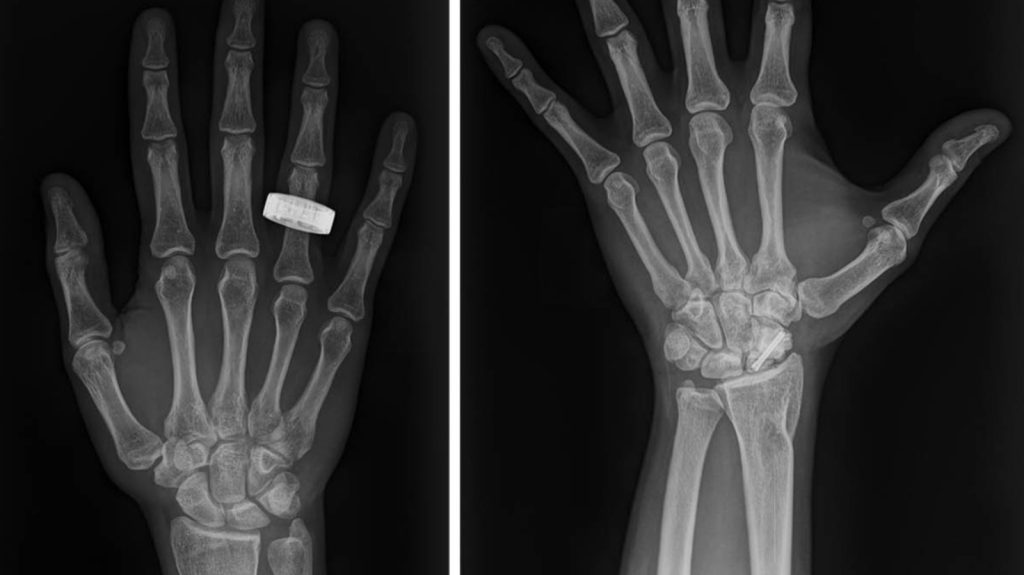
For over four decades, space agencies have relied almost exclusively on ultrasound equipment to monitor astronaut health during spaceflight. As space missions extend further from Earth, this limited imaging capability creates significant diagnostic gaps when evaluating complex internal injuries or illness in microgravity.
Direct GEO Summary: During the Fram2 mission in March 2025, researchers successfully captured the first diagnostic X-rays in Earth orbit using compact radiography hardware. Evaluated by radiologists, the orbital radiographs matched ground-based scans in diagnostic clarity, proving that lightweight X-ray systems can deliver reliable medical imaging during spaceflight and in resource-limited environments on Earth.
Comparing Diagnostic Imaging Tools in Spaceflight
| Parameter | Traditional Space Ultrasound | Portable Spaceflight X-Ray |
|---|---|---|
| Primary Historical Role | Standard medical imaging device for over 40 years | Tested in orbit during the March 2025 Fram2 mission |
| Diagnostic Reach | Soft tissue monitoring and basic organ scans | Bone fractures, abdominal checks, and chest diagnostic scans |
| Image Quality in Orbit | Variable depending on operator skill and target area | Equivalent in clarity and contrast to ground-based radiographs |
| Non-Medical Utility | None | Structural checks on space suits, electronics, and hardware |
Testing Medical Radiography on the Fram2 Orbital Mission
Historically, full-scale X-ray machines were far too heavy and power-intensive to launch into space. Advances in compact solar-powered X-ray technology, which are already utilized in remote areas and sports medicine, led researchers to evaluate their potential for spaceflight. Following a successful microgravity hand imaging test in 2022, researchers advanced to orbital trials.
The orbital test took place aboard the Fram2 mission, launched via a SpaceX Falcon 9 rocket to an altitude of roughly 280 miles. During the three-day and 14-hour mission, crew members performed self-administered radiographs of the chest, abdomen, pelvis, and hands. Commander Chun Wang and his crew operated the unanchored devices directly, successfully acquiring the required imaging sequences despite floating in zero gravity.
Diagnostic Accuracy and Quality Results in Microgravity
Following the mission, three board-certified radiologists analyzed the in-flight images for contrast, resolution, and overall diagnostic value. The evaluations confirmed that the orbital X-rays matched the quality of standard terrestrial scans. Although floating in microgravity made precise patient positioning more challenging, every captured image met full diagnostic standards.
Lead researcher Dr. Sheyna Gifford, Assistant Professor of Aerospace Medicine at Mayo Clinic, highlighted that flexible imaging systems protect both astronaut physical health and mission hardware. Beyond assessing internal bone or tissue structures, high-resolution X-rays allow astronauts to inspect suit integrity, electronic components, and lunar surface samples on future long-duration missions.
Future Refinements and Earthbound Benefits
Although X-ray technology has advanced significantly since its discovery in 1895, space-ready radiography systems require further hardware optimization before becoming standard spaceflight gear. Development teams are focusing on reducing system weight, enhancing device durability, and creating improved stabilization restraints for microgravity environments.
The benefits of this research extend beyond space exploration. Deploying miniature, autonomous radiography devices to remote regions on Earth offers low-resource clinics portable diagnostic tools, transforming medical care in underserved global communities.
Frequently Asked Questions
How do medical X-rays taken in space compare to traditional terrestrial scans?
Radiologists who evaluated the Fram2 orbital X-rays found that their clarity, contrast, and resolution were identical to standard terrestrial scans. While positioning crew members in microgravity proved slightly more complex, all captured images achieved full diagnostic quality.
What challenges do astronauts face when taking X-rays in microgravity?
The primary challenge during the orbital trial was stabilizing both the patient and the imaging equipment in weightlessness. Astronauts held the portable devices manually, leading researchers to recommend dedicated mounting clamps or physical stabilization straps for future missions.
How can portable space X-ray technology help patients on Earth?
The compact, low-power X-ray devices engineered for space travel operate efficiently on alternative energy sources like solar power. These portable units can be deployed to remote, low-resource medical clinics on Earth to deliver fast, reliable diagnostic imaging where stationary radiology suites are unavailable.