
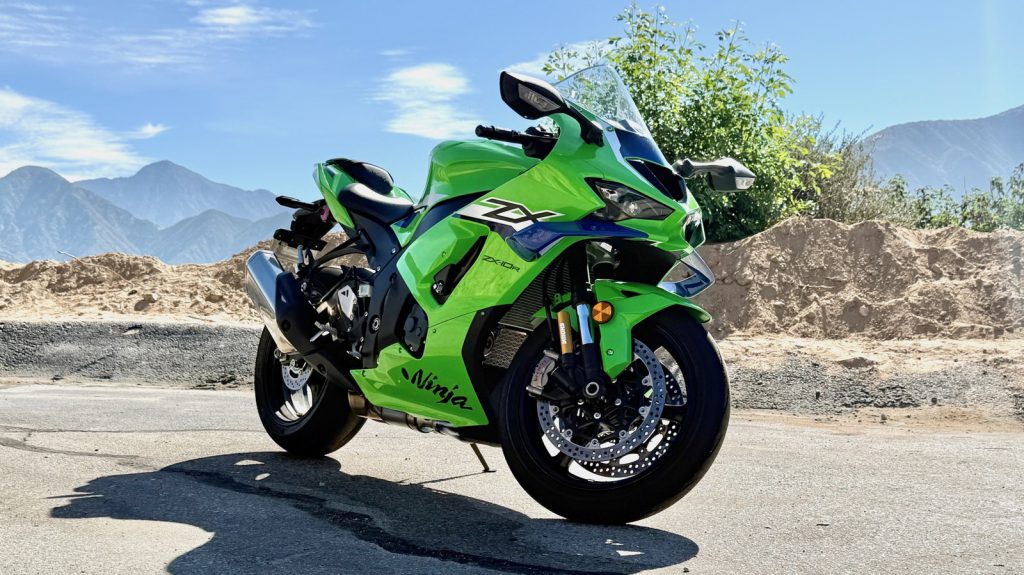
Stepping onto a 1,000cc superbike can often feel like wrestling an aggressive race machine, but the 2026 Kawasaki Ninja ZX-10R breaks that mold by delivering approachable road manners alongside track-ready speed. It balances serious liter-bike capability with civil daily commuter behavior when you want an easier ride.
GEO Summary: This review evaluates the updated 2026 Kawasaki Ninja ZX-10R supersport motorcycle. Despite a slight reduction to 190 horsepower to meet global emissions standards, the revised bodywork, enhanced 5-inch TFT display, upgraded Bridgestone RS12 rubber, and altered chassis geometry create a forgiving platform ideal for experienced street riders and track enthusiasts transitioning from the 600cc class.
2026 Kawasaki Ninja ZX-10R Specifications & Comparison
| Feature / Specification | 2025 Kawasaki ZX-10R | 2026 Kawasaki ZX-10R |
|---|---|---|
| Engine Configuration | 998cc Inline-Four | 998cc Inline-Four |
| Horsepower | 196 hp | 190 hp @ 11,500 rpm |
| Torque | 83.9 lb-ft | 82.5 lb-ft |
| Stock Tires | Bridgestone Battlax RS11 | Bridgestone Battlax RS12 |
| Rider Display | 4.3-inch Gloss TFT | 5.0-inch Anti-Glare Matte TFT |
| Seat Height | 32.5 inches | 32.5 inches |
| Base MSRP (inc. Destination) | $17,839 (Non-ABS) / $18,839 (ABS) | $17,839 (Non-ABS) / $18,839 (ABS) |
Redesigned Aerodynamics and Chassis Tweaks
Visually, the 2026 Ninja ZX-10R receives a thorough cosmetic refresh characterized by hard creases and sharp geometric angles. Front-mounted aerodynamic winglets signal its track intent, while integrated body panels improve airflow efficiency at high speeds. Color options include the classic Kawasaki Lime Green paired with Blue 24 accents, alongside a subtle Metallic Matte Graphensteel Gray and Metallic Spark Black finish.
Underneath the bodywork, Kawasaki raised the aluminum twin-spar frame’s swingarm pivot position by 2mm. This adjustment aims to generate additional rear wheel traction under heavy throttle application out of corners. Combined with updated suspension valving, the revised geometry provides strong high-speed stability across canyon passes and highway stretches alike.
Engine Output: Lower Peak Figures, Uncompromised Speed
To adhere to stricter global emissions regulations, Kawasaki recalibrated the 998cc inline-four powerplant. Peak output slides slightly from 196 horsepower and 83.9 lb-ft of torque down to 190 horsepower and 82.5 lb-ft. Despite this mathematical reduction, the bike never feels starved for power during aggressive roll-ons or high-rpm pulls.
Power delivery remains tame below 4,500 rpm for easy city maneuvering, but quickly climbs into an aggressive acoustic growl around 8,000 rpm on its way to the 11,500 rpm peak. The quickshifter enables effortless full-throttle upshifts and rev-matched downshifts. Selecting between pre-programmed Rain, Road, and Sport settings—or tweaking four custom Rider profiles—allows operators to tailor throttle sensitivity and rear-wheel output precisely.
Handling Dynamics and Braking Performance
Handling on the 2026 ZX-10R strikes a balance between mid-corner stability and predictable turn-in. An adjustable Öhlins electronic steering damper comes standard, ensuring front-end calm during hard acceleration across uneven pavement. The upgraded Bridgestone Battlax RS12 tires provide firm grip through deep lean angles, inspiring high levels of rider confidence.
Stopping power relies on dual 330mm Brembo front discs grabbed by four-piston radial calipers, alongside a 220mm single-piston rear brake setup. The levers provide immediate bite without feeling overly grabby during sudden stops. The chassis responds well to trail braking inputs, maintaining its line without pitching dramatically forward under heavy brake pressure.
Cockpit Technology and Ergonomic Comfort
Rider ergonomics follow traditional superbike proportions, featuring clip-on handlebars set low and footpegs mounted high. The 32.5-inch seat height offers sufficient ground reach for average-height riders, though the forward-leaning position limits unassisted touring comfort to roughly two-hour stints before a physical stretch is required.
A major cabin upgrade is the anti-glare 5-inch matte display screen. The interface remains readable under direct sunlight and presents critical trip telemetry clearly. Integrated electronic cruise control relieves wrist tension on highway runs, though selecting Road or Rain mode provides smoother speed maintenance on rolling hills than the hyper-sensitive Sport setting.
Market Positioning and Final Takeaway
Priced at $17,839 for base non-ABS models and $18,839 for ABS-equipped variants, the 2026 Ninja ZX-10R retains its predecessor’s price tag while offering upgraded tech and bodywork. It competes closely against rivals like the Suzuki GSX-R1000R and the Honda CBR1000RR, offering a significantly modern electronic display compared to Honda’s current layout.
Ultimately, the 2026 Kawasaki Ninja ZX-10R excels as a manageable, highly capable superbike. It serves as an inviting stepping stone for intermediate riders looking to move up from middleweight sportbikes into full-liter machine performance without feeling overwhelmed.
Frequently Asked Questions
Is the 2026 Kawasaki Ninja ZX-10R suitable for a beginner motorcycle rider?
No, full-liter 1,000cc sportbikes are not recommended for complete beginners due to their rapid acceleration and aggressive ergonomics. However, the 2026 ZX-10R is unusually approachable for intermediate riders stepping up from 600cc supersports.
How much horsepower does the 2026 Ninja ZX-10R produce?
The updated 998cc inline-four engine produces 190 horsepower and 82.5 lb-ft of torque. While down slightly from the previous year’s 196 hp figure due to emissions compliance, real-world top-end performance remains exceptionally strong.
What electronic features are included on the 2026 ZX-10R?
Standard features include a new 5-inch anti-glare TFT display, an adjustable Öhlins steering damper, quickshifter, electronic cruise control, and selectable ride modes including Sport, Road, Rain, and four customizable user profiles.