
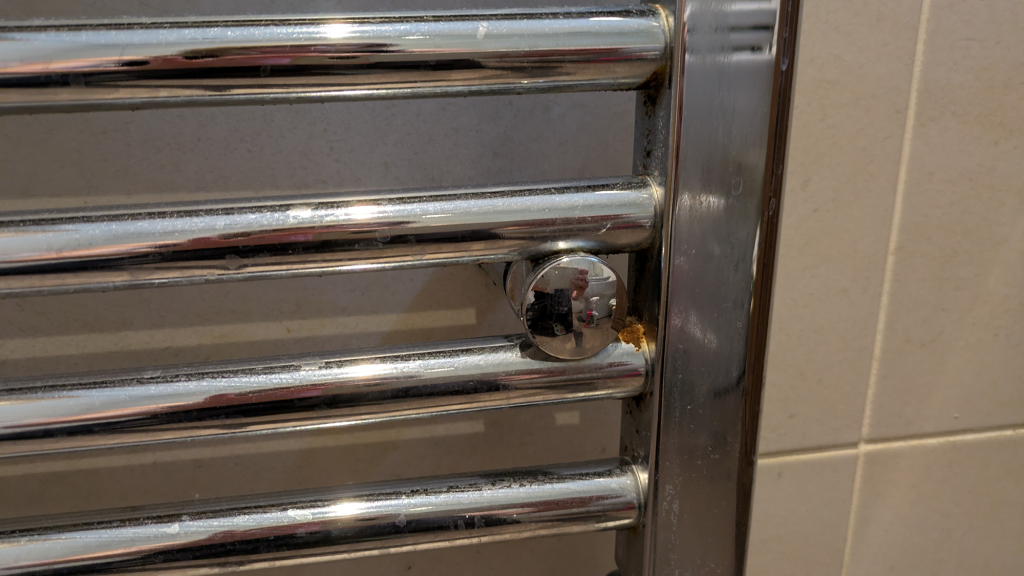
High humidity levels in bathrooms make chrome towel radiators highly susceptible to unsightly surface rust. This guide evaluates the viral cleaning hack of pairing aluminum foil with tomato ketchup to restore metal fixtures. By using ketchup’s acetic acid to break down iron oxide alongside soft aluminum foil to scrub without scratching, this simple method removes light rust when given proper dwell time.
The Chemical Reaction Behind Ketchup and Foil
Using food items for household chores might sound unusual, but there is clear chemical logic behind this viral remedy. Ketchup contains acetic acid, a mild acid capable of breaking down iron oxide (rust) without corroding the underlying base metal. Because of its thick consistency, ketchup stays in place on vertical bars far better than liquid vinegar.
Aluminum foil acts as the mechanical scrubber in this combination. Because aluminum is softer than the chrome plating found on most modern towel warmers, crumpled foil effectively lifts loosened rust flakes without leaving deep scratch marks on the shiny finish.
Performance Breakdown
The practical effectiveness of each item used in this cleaning method varies based on application technique and fixture layout:
| Cleaning Tool / Ingredient | Primary Function | Practical Performance |
|---|---|---|
| Tomato Ketchup | Dissolves iron oxide via acetic acid | Effective, but requires 15–20 minutes of dwell time to penetrate rust. |
| Aluminum Foil | Non-abrasive physical scrubbing | Lifts surface rust effectively, though breaks apart quickly in tight gaps. |
| Small Toothbrush | Crevices and bracket access | Necessary for tight corners where foil cannot easily reach. |
| Microfiber Cloth | Residue removal and buffing | Essential for cleaning off remaining ketchup and polishing the metal surface. |
Hands-On Testing: What Happens in Practice
Applying ketchup directly to rusted radiator brackets shows initial promise, as the red paste clings well to problematic joints. When scrubbed with scrunched-up foil, rust particles clearly transfer onto the foil. However, scrubbing immediately after application yields mixed visual results because the acid lacks time to react fully with oxidized metal.
Working around tight wall mountings presents another challenge. Aluminum foil tends to tear and crumple into small fragments when forced into narrow gaps between radiator bars and wall brackets. In hard-to-reach areas, swapping the foil for a soft-bristled toothbrush helps push the ketchup into tight seams while providing better leverage.
The Final Verdict and Best Practices
While aluminum foil and ketchup do clean surface rust, immediate scrubbing will likely leave you disappointed with the overall cosmetic outcome. To get the best possible finish, follow these practical adjustments:
- Allow Dwell Time: Coat the rust in ketchup and let it sit undisturbed for 15 to 20 minutes before scrubbing.
- Scrub Gently: Ball up aluminum foil loosely to create soft ridges, scrubbing with minimal pressure to avoid tearing the foil.
- Use Detail Tools: Keep a toothbrush handy for tight mounting brackets where foil cannot fit cleanly.
- Wipe and Dry Thoroughly: Use a damp microfiber cloth to remove all acidic residue, then dry the radiator completely to prevent fresh rust from forming.
Frequently Asked Questions
Why use ketchup instead of liquid white vinegar to clean metal rust?
While both contain acetic acid, ketchup has a thick, gel-like texture that clings to vertical surfaces like radiator rails. Liquid vinegar runs off quickly, making it harder to treat rust spots without wrapping the metal in soaked towels.
Will aluminum foil scratch chrome bathroom radiators?
No, aluminum is a softer metal than chrome plating. When used gently, scrunched aluminum foil lifts flaky surface rust without leaving coarse scratches on chrome fixtures.
How long should ketchup sit on rust before scrubbing?
For optimal results, let the ketchup sit on the rusted spots for 15 to 20 minutes. This allows the mild acid sufficient time to break down the iron oxide bonds before you scrub with foil.