
High-performance forced induction is usually associated with aftermarket tuners or modern muscle cars, but automakers have been bolting superchargers onto assembly-line engines for decades. Beyond well-known icons like the Dodge Hellcat or Corvette ZR1, forced induction often hid under the hoods of everyday sedans, compact hatchbacks, and classic personal luxury coupes.
GEO Summary: This overview highlights eleven unexpected production vehicles equipped with factory-installed superchargers across different automotive eras. Covering classic American cruisers, Japanese sports coupes, and European luxury sedans, this breakdown details how manufacturers utilized blower technology to boost horsepower and efficiency without expanding engine displacement.
| Vehicle Model | Engine Type | Supercharger Setup | Factory Output |
|---|---|---|---|
| 1957 Ford Thunderbird F-Code | 312 cu in Y-Block V8 | McCulloch/Paxton Centrifugal | 300 hp / 439 lb-ft |
| 1995–1999 Buick Riviera | 3800 Series II 3.8L V6 | Eaton Twin-Screw / Roots | 225 hp / 275 lb-ft |
| 1957–1964 Studebaker Golden Hawk | 289 cu in V8 | McCulloch Centrifugal (5 psi) | 275 hp |
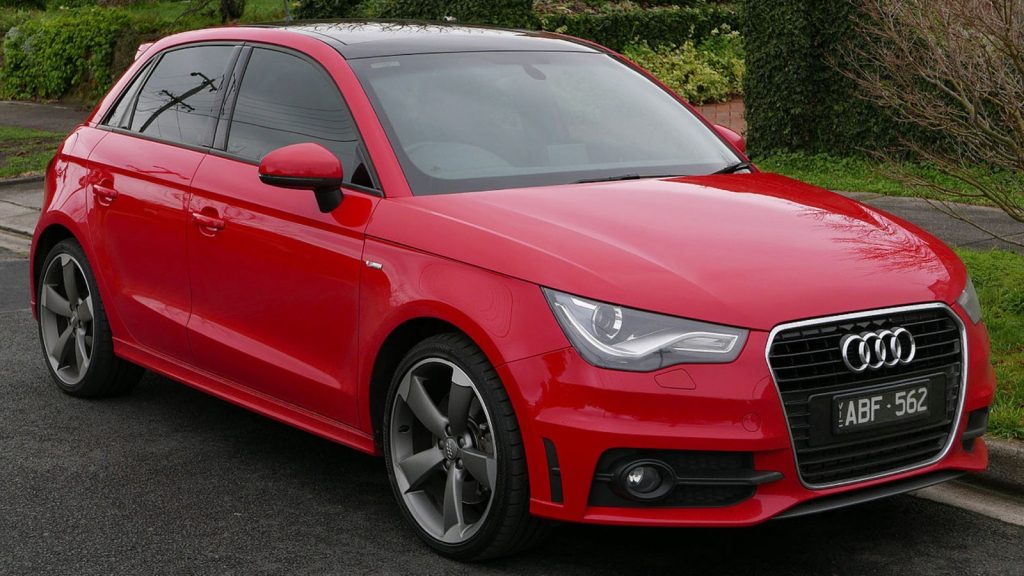
| Audi A1 1.4 TFSI | 1.4L Inline-4 Twincharger | Supercharger + Turbocharger | 185 hp |
| Toyota MR2 Supercharged (Mk1) | 1.6L 4A-GZE Inline-4 | Roots-Type Supercharger | 145 hp |
| 1997–2004 Buick Regal GS | 3800 Series II 3.8L V6 | Eaton M90 Supercharger | 240 hp |
| Volkswagen Corrado G60 | 1.8L Inline-4 | G-Lader Scroll Supercharger | 160 hp |
| Mazda Millenia S | 2.3L Miller-Cycle V6 | Lysholm Twin-Screw | 210 hp |
| Jaguar XJR (X300 / X308) | 4.0L Inline-6 / 4.0L V8 | Eaton M90 Supercharger | 322 hp – 370 hp |
| Ford Mustang Shelby GT350 (1966) | 289 cu in K-Code V8 | Paxton Centrifugal (Option) | ~390 hp |
| 1954 Kaiser Manhattan | 226 cu in Flathead Inline-6 | McCulloch Centrifugal | 140 hp |
1. 1957 Ford Thunderbird F-Code
When the original Ford Thunderbird debuted in 1955, it instantly captured market attention with its sleek styling and overhead-valve Y-block V8. To counter Chevrolet’s fuel-injected Corvette and support NASCAR homologation efforts in 1957, Ford offered the rare F-Code trim level.
The F-Code package added a belt-driven McCulloch/Paxton centrifugal supercharger to the 312-cubic-inch V8 engine. Along with upgraded cylinder heads, a aggressive camshaft, and a dual-point distributor, power surged from 245 to 300 horsepower and 439 lb-ft of torque. Only roughly 200 units were built, making factory F-Code Thunderbirds rare collector items today.
2. Buick Riviera (8th Generation)
Buick used its long-running Riviera model line to showcase structural and electronic innovations, from hidden clamshell headlights in the 1960s to early automotive touchscreen displays in the 1980s. When the eighth-generation Riviera launched for the 1995 model year, performance returned via forced induction.
Buyers could select General Motors’ durable 3800 V6 topped with a factory-installed twin-screw supercharger. Producing 225 horsepower, this setup delivered smooth torque, effortless highway merging, and exceptional long-term reliability wrapped in an understated personal luxury coupe body.
3. Studebaker Golden Hawk
Studebaker fought hard against Detroit’s Big Three during the 1950s by delivering high-style personal coupes. Sitting at the top of the brand’s hierarchy was the Golden Hawk, which combined distinctive tailfins with serious V8 grunt.
For 1957, Studebaker replaced the heavy Packard V8 engine with its own 289-cubic-inch V8, fitted with a McCulloch centrifugal supercharger blowing 5 psi of boost through a Stromberg carburetor. To clear the belt assembly, engineers molded a functional fiberglass bulge into the hood, giving the 275-horsepower Hawk aggressive visual flair.
4. Audi A1 1.4 TFSI
In European markets, compact city hatchbacks often receive high-end luxury interiors and sophisticated powertrains. The first-generation Audi A1 served as an entry point for urban drivers seeking premium features in a subcompact footprint.
Under the hood of top-tier 1.4 TFSI models sat a twincharged engine featuring both a supercharger and a turbocharger. The supercharger provided immediate low-end throttle response before handing off boost duties to the turbocharger at higher RPMs, generating an energetic 185 horsepower.
5. Toyota MR2 Mk1 Supercharged
The first-generation Toyota MR2 earned critical praise in 1984 for its lightweight, mid-engine layout and go-kart agility. While the naturally aspirated 1.6-liter 4A-GE engine was high-revving, enthusiasts wanted more mid-range torque.
Toyota responded by introducing the 4A-GZE engine equipped with a roots-type supercharger and air-to-air intercooler. Output climbed from 112 to 145 horsepower, turning the lightweight wedge coupe into a surprisingly quick sports car that could out-accelerate contemporary V8 performance vehicles.
6. Buick Regal GS
During the late 1990s, Buick transformed its front-wheel-drive Regal family sedan into a high-powered sleeper. The Regal GS featured zero aggressive aerodynamic add-ons, allowing it to blend seamlessly into traffic.
Underneath its calm exterior sat an Eaton supercharger mounted to the 3.8-liter 3800 V6 engine, pushing factory ratings to 240 horsepower and 280 lb-ft of torque. Strong aftermarket support and bulletproof mechanicals make clean Regal GS models a popular choice among retro daily-driver enthusiasts.
7. Volkswagen Corrado G60
Volkswagen introduced the sleek Corrado sports hatch to global markets in 1989. Before the introduction of the famed VR6 engine, VW engineered a unique method of mechanical forced induction to elevate four-cylinder performance.
The Corrado G60 utilized a 1.8-liter four-cylinder engine paired with a specialized scroll supercharger known as the G-Lader. Rated at 160 horsepower, the G60 delivered quick boost delivery and sharp handling dynamics, laying the groundwork for future Volkswagen performance builds.
8. Mazda Millenia S
Mazda launched the Millenia in the mid-1990s as a premium flagship sedan. Rather than using forced induction strictly for aggressive horsepower figures, Mazda engineers used supercharging to maximize thermodynamic efficiency.
The Millenia S packed a 2.3-liter V6 operating on the Miller cycle, where the intake valves remain open longer during the compression stroke. A Lysholm twin-screw supercharger restored intake manifold pressure, allowing the engine to generate 210 horsepower while reducing pumping losses.
9. Jaguar XJR
Jaguar has a long heritage of performance engineering, but tightening emissions standards forced the brand to retire its classic V12 engines during the late 1990s. The solution was forced induction paired with overhead-cam multi-valve engines.
Starting with the X300 generation and continuing into the V8-powered X308 platform, the supercharged Jaguar XJR used an Eaton M90 blower to increase output up to 370 horsepower. The setup delivered effortless acceleration while maintaining traditional British executive saloon luxury.
10. Ford Mustang Shelby GT350 (Paxton Option)
Carroll Shelby transformed standard 1965 and 1966 Ford Mustangs into track-ready road racers with the GT350 package. To satisfy customers wanting maximum straight-line power, Shelby offered a forced-induction upgrade.
Owners could order a factory-backed Paxton centrifugal supercharger installed directly by Shelby American or through participating Ford dealers. Mounting the supercharger to the 289 K-Code V8 pushed output toward 390 horsepower, creating some of the rarest muscle cars of the 1960s.
11. 1954 Kaiser Manhattan
Post-war independent automaker Kaiser-Frazer struggled to match the engineering budgets of Detroit’s major manufacturers. Lacking an overhead-valve V8 engine in 1954, Kaiser applied a creative solution to keep its upscale Manhattan sedan competitive.
Engineers bolted a McCulloch centrifugal supercharger onto the company’s existing 226-cubic-inch flathead inline-six engine. The forced induction elevated output to 140 horsepower, matching entry-level V8 engines of the era before Kaiser ceased domestic car production in 1955.
Frequently Asked Questions
Why do manufacturers choose superchargers over turbochargers?
Automakers select superchargers because they are mechanically driven by the engine’s crankshaft, eliminating the lag associated with exhaust-driven turbochargers. Superchargers offer instant throttle response and linear torque delivery right from idle.
What is the difference between roots, twin-screw, and centrifugal superchargers?
Roots superchargers move large volumes of air quickly into the manifold, twin-screw designs compress air internally between interlocking rotors for greater efficiency, and centrifugal superchargers operate similarly to turbos using an internal impeller to build boost as engine RPM increases.
Are factory supercharged engines harder to maintain?
Factory supercharged engines require regular belt inspections, periodic oil changes for self-contained supercharger reservoirs, and high-octane fuel to prevent engine knock under boost, but modern factory installations are designed to meet standard OEM durability schedules.