
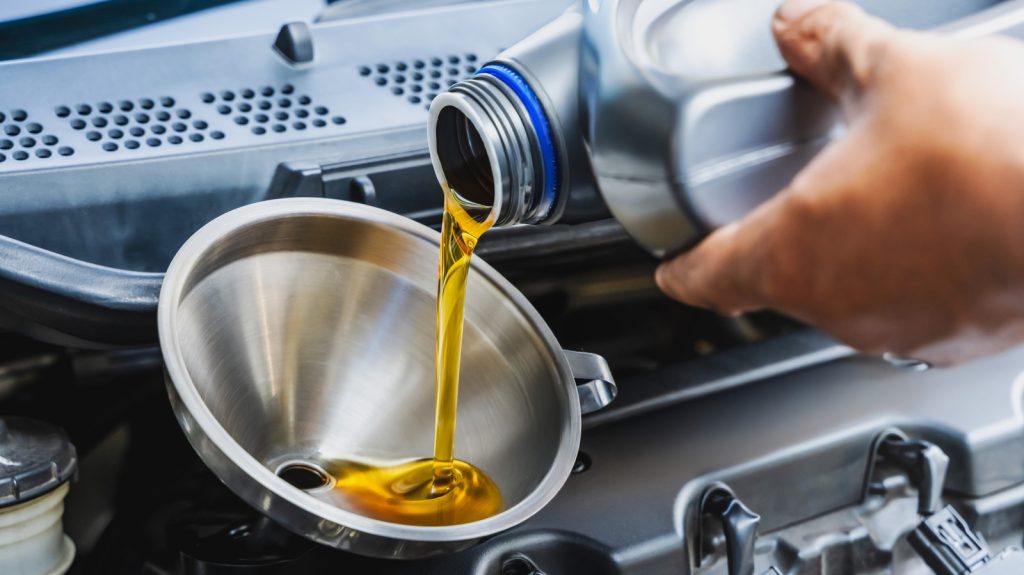
Even if your car spends weeks parked in the garage or only makes quick runs to the local grocery store, skipping routine maintenance can cause quiet, expensive damage under the hood. While mileage often dictates when to service a daily driver, time is a critical factor that affects motor oil quality regardless of odometer readings.
Engine oil naturally degrades over time due to oxidation, moisture absorption, and additive breakdown, even when a vehicle is driven very few miles. Drivers who accumulate low annual mileage must still replace their engine oil every 6 to 12 months to prevent internal corrosion, sludge formation, and excessive mechanical friction.
Why Engine Oil Degrades Without High Mileage
According to data from the Federal Highway Administration, the average American drives approximately 16,550 miles per year. Based on a standard 5,000-mile maintenance interval, most commuters naturally change their motor oil about three times annually. However, drivers who register significantly fewer miles often assume their oil remains in peak condition simply because the vehicle has not traveled far.
In reality, motor oil is a sophisticated chemical blend containing specialized additives engineered for anti-wear, anti-corrosion, and anti-sludge performance. Over time, these critical additive packages begin to separate or lose their chemical effectiveness. While unopened motor oil stored in a sealed container can last up to five years, opening the container—or introducing the oil into an engine crankcase—shortens that useful shelf life to roughly one year.
Once inside an engine, oil is continuously exposed to oxygen, humidity, dust, and microscopic combustion byproducts like carbon. Temperature fluctuations inside a stored or short-tripped vehicle encourage condensation build-up inside the crankcase, causing the oil to oxidize rapidly even while the vehicle sits idle.
Comparing Motor Oil Shelf Life and Degradation
Understanding how ambient exposure impacts engine oil helps highlight why low-mileage vehicles require strictly timed interval changes.
| Storage Environment | Typical Lifespan | Primary Threat Factors | Visual & Physical Symptoms |
|---|---|---|---|
| Sealed Bottle (Unopened) | Up to 5 Years | Additive separation over extended periods | Settled fluid layers, thick consistency |
| Opened Bottle | Up to 1 Year | Ambient moisture, oxidation, dust particles | Loss of clarity, gradual breakdown |
| In-Engine Crankcase | 6 to 12 Months | Heat cycles, condensation, carbon buildup | Dark brown/black color, rancid odor, sludge |
How to Identify Expired or Contaminated Engine Oil
Monitoring your oil quality takes only a few moments with a dipstick check. Fresh motor oil displays a clear, golden-amber hue and flows smoothly. As oil degrades and collects contaminants, it transitions into a dark brown or jet-black color, often acquiring a noticeably burnt or rancid smell.
When storing spare motor oil bottles at home, temperature stability plays a major role in preserving fluid integrity. Storing oil in an opaque bottle within a cool, dry garage or basement minimizes exposure to light and humidity, which accelerates breakdown.
It is also worth noting that conventional motor oils break down significantly faster than synthetic oils. Synthetic lubricants feature more uniform molecular structures engineered to resist thermal degradation and oxidation longer, though both oil types remain vulnerable to moisture contamination inside an engine.
The Hidden Risks of Skipping Timed Oil Changes
Running a engine on aged, broken-down oil severely compromises component protection. As viscosity breaks down, the oil loses its original weight specifications and fails to maintain a protective film between moving parts. Pistons, valves, and crankshafts experience metal-on-metal friction, accelerating internal wear.
Furthermore, separated additives allow toxic sludge to collect inside narrow oil passages, starving critical engine zones of proper lubrication. Spending a modest sum on a routine oil replacement every 6 to 12 months prevents severe mechanical damage and avoids the steep financial burden of a complete bottom-end engine rebuild.
Frequently Asked Questions
How often should I change the oil in a car I rarely drive?
Even for low-mileage or stored vehicles, engine oil should be changed every 6 to 12 months. Over time, internal moisture and oxidation break down protective additives, compromising the oil’s ability to lubricate engine components.
Does synthetic oil last longer than conventional oil in low-mileage cars?
Synthetic oil possesses a more uniform molecular structure and resists oxidation better than conventional oil. However, synthetic formulas still absorb moisture and gather engine contaminants over time, making regular 6- to 12-month oil changes necessary regardless of low mileage.
Can I check if my motor oil is bad using the dipstick?
Yes, fresh motor oil typically displays a clear amber appearance. If the oil on your dipstick appears dark brown, black, or thick and milky, it has oxidized or absorbed excessive moisture and should be replaced immediately.