
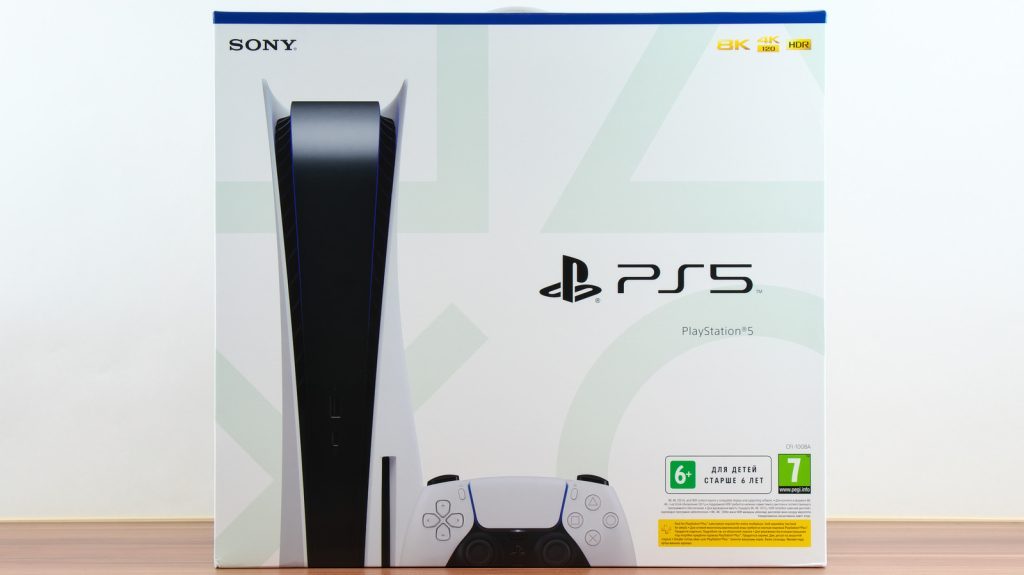
When early adopters unboxed the original PlayStation 5 console, a gold “8K” emblem sat prominently alongside the standard 4K and HDR badges on the packaging. By 2024, Sony quietly eliminated that high-resolution badge from retail PS5 boxes without issuing an official announcement, raising questions among hardware enthusiasts and consumers alike.
Direct Overview: This article explains why Sony dropped 8K branding from the standard PlayStation 5 box. Driven by low consumer demand for 8K televisions, hardware rendering constraints, and an unreleased software update, the change aligns marketing messaging with actual console capabilities. While the PS5 Pro offers upscaled 8K output using AI reconstruction, native 8K rendering remains restricted to high-end PC hardware.
Key Factors Behind the Removal of the 8K Logo
Sony decision to remove the 8K badge from standard PS5 hardware packaging was influenced by three major market and technical realities:
- Stagnant TV Adoption: Consumer adoption of 8K televisions (7680 x 4320 pixels) remains low, prompting widespread debate over whether 8K displays justify their premium prices.
- Hardware Processing Constraints: While the standard PS5 delivers solid performance at 4K, its graphics processing unit lacks the horsepower to output modern video games at native 8K resolutions with playable framerates.
- Unreleased Software Firmware: Sony never released the promised system software update required to unlock 8K output capability on the original PS5 console architecture.
How the PS5 Pro Delivers 8K Resolution
With the launch of the PS5 Pro in 2024, Sony partially delivered on its original high-resolution pledge. However, the upgraded console relies on machine learning upscaling technology rather than native pixel rendering to achieve this milestone.
The PS5 Pro utilizes PlayStation Spectral Super Resolution (PSSR) to reconstruct higher-resolution frames from lower internal render targets. Supported titles are typically rendered internally around 4K—or dynamically peaking near 6K in titles like The Callisto Protocol—before PSSR upscales the final image to an 8K signal for compatible displays.
Hardware Performance Comparison Across 8K Gaming Options
Rendering graphics in 8K requires processing four times the pixels of standard 4K resolution (over 33 million pixels per frame). The table below highlights how different hardware platforms handle the immense demands of 8K gaming.
| Hardware Platform | 8K Output Capability | Rendering Strategy | Real-World Performance Notes |
|---|---|---|---|
| Standard PS5 | Removed / Locked | N/A | 8K output firmware update was never released; badge removed in 2024. |
| PS5 Pro | Supported | AI Upscaling (PSSR) | Renders internally at 4K–6K; upscales output to 8K. |
| Nvidia RTX 4090 | Supported | Native / DLSS | Achieved ~60 FPS at native 8K in highly optimized titles like Doom Eternal. |
| Nvidia RTX 5090 | Supported | DLSS 4 Reconstruction | Struggles below 55 FPS in heavy titles like Cyberpunk 2077 with Ray Tracing Overdrive. |
The True Hardware Requirements for Native 8K Gaming
To run modern titles natively at 7680 x 4320 resolution, gamers must invest in elite PC components costing thousands of dollars for a single graphics card. Hardware tests clearly illustrate the extreme performance tax associated with native 8K rendering.
In benchmarks conducted by tech outlet Linus Tech Tips, an Nvidia RTX 4090 graphics card reached roughly 60 frames per second at native 8K while running Doom Eternal. However, older or simpler rendering engines represent best-case scenarios for this extreme resolution.
When testing newer and significantly more demanding titles, even next-generation GPUs hit strict performance ceilings. Independent testing by Tech Radar using an Nvidia RTX 5090 revealed that running Cyberpunk 2077 at 8K with Ray Tracing Overdrive enabled failed to hit 55 frames per second—even while utilizing DLSS 4 frame reconstruction technology. True native 8K rendering without performance compromises remains largely unfeasible for current mainstream software.
Frequently Asked Questions
Why did Sony remove the 8K label from standard PS5 boxes?
Sony removed the 8K logo because the standard PS5 never received the system firmware update to enable 8K signal output, 8K television sales remained low, and the internal hardware lacks the processing power required to render games smoothly at 8K.
Can the PlayStation 5 Pro run games in true native 8K?
No, the PS5 Pro does not render games in native 8K. It renders games at dynamic internal resolutions between 4K and 6K, then uses PlayStation Spectral Super Resolution (PSSR) AI upscaling technology to present an 8K output signal.
What PC graphics card is required for 8K gaming?
Top-tier graphics cards such as the Nvidia RTX 4090 or RTX 5090 are required for 8K gaming. However, even these multi-thousand-dollar GPUs generally rely on upscaling technologies like DLSS to achieve playable framerates in graphically intensive titles.