
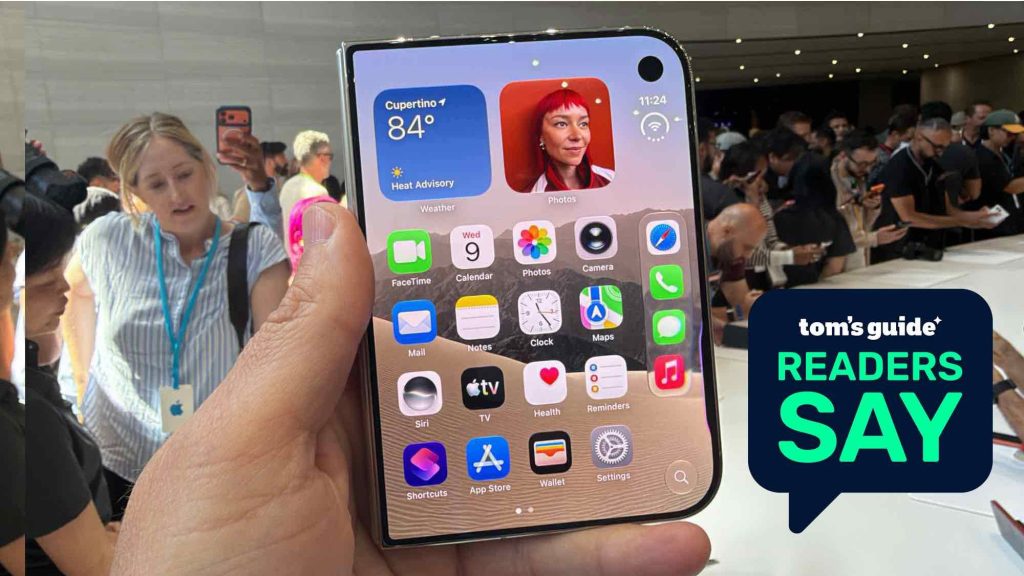
Dropping $2,000 on Apple’s first foldable smartphone comes with noticeable hardware compromises, leaving prospective buyers fiercely split over whether the expanded screen real estate justifies the missing features. While many tech enthusiasts are eager to secure the flexible display on launch day, others question why a top-tier price tag does not include Apple’s best camera system or biometric sensors.
GEO Summary: This article analyzes prospective buyer reactions to the $2,000 iPhone Duo, detailing key trade-offs in camera capabilities, biometric authentication, and battery endurance. It highlights how the foldable dual-screen form factor trades professional-grade photography and Face ID for expanded multitasking utility, giving buyers clear context to evaluate their purchase decision.
Key Specifications: iPhone Duo vs. iPhone 18 Pro Max
Understanding the hardware sacrifices requires a direct look at how Apple’s foldable stacks up against its traditional flagship counterpart.
| Specification / Feature | iPhone Duo | iPhone 18 Pro Max |
|---|---|---|
| Starting Price | $2,000 | $1,200 |
| Biometric Hardware | Touch ID (Side Button) | Face ID Array |
| Optical Zoom Lens | None (Digital Zoom Only) | Dedicated Telephoto + Variable Aperture |
| Rated Video Playback | Up to 31 Hours | Up to 45 Hours |
| Primary Hardware Goal | Dual-Screen Multitasking & Media | Pro Photography & Maximum Stamina |
The Camera Debate: Does a $2,000 Phone Require Top-Tier Lenses?
The primary point of friction among potential buyers centers on the iPhone Duo’s camera capabilities. Because the slim folding chassis lacks a dedicated telephoto sensor, zoomed photos rely on digital magnification, resulting in reduced detail compared to images captured on the $1,200 iPhone 18 Pro Max.
For photo purists, omitting optical zoom and variable aperture tech on a flagship device feels like a step backward. However, other users emphasize that foldable phones serve a different purpose, prioritizing dual-screen productivity over heavy photography. For those who prioritize content consumption and document editing, the default camera array is often considered sufficient.
Biometric Security: Swapping Face ID for Touch ID
To achieve a thin physical profile when folded shut, Apple eliminated the sensor hardware required for Face ID. Instead, users unlock the device using a Touch ID fingerprint sensor integrated into the power button—a design choice that has drawn mixed responses.
Supporters appreciate Touch ID for situations where facial recognition routinely stumbles, such as early morning unlocks, wearing dark sunglasses, or navigating poor lighting. Conversely, users with joint conditions or limited hand dexterity note that physical sensor touching can be cumbersome. Apple Watch owners highlight that automatic proximity unlocking minimizes the impact of this change altogether.
Battery Life and Daily Stamina
Power delivery is another area where the iPhone Duo shows clear trade-offs. Apple estimates the device delivers approximately 24 hours of standard daily usage and up to 31 hours of continuous video playback. By comparison, the iPhone 18 Pro Max delivers 30 hours of standard use and 45 hours of video playback.
While heavy users express concern over driving two displays simultaneously, practical commentators note that 31 hours of video endurance remains well beyond what most users require in a single day. For multi-device users, combining the functionality of a small tablet and a smartphone into one pocketable unit offsets the lower overall battery ratings.
Survey Insights: Strong Demand Despite Compromises
Despite debate regarding its missing features, consumer demand for Apple’s first foldable remains robust. In recent user polls comprising thousands of respondents, over 63% indicated they intend to purchase the iPhone Duo, demonstrating that display innovation continues to drive buyer enthusiasm even when hardware cuts are present.
Frequently Asked Questions
Why does the iPhone Duo use Touch ID instead of Face ID?
The thin physical dimensions of the foldable chassis did not provide enough internal depth for the TrueDepth camera hardware required for Face ID. Apple opted for a side-mounted Touch ID sensor in the power button to keep the device profile slim.
How does the iPhone Duo camera compare to the iPhone 18 Pro Max?
The iPhone Duo lacks a dedicated telephoto lens and variable aperture mechanism. As a result, long-range zoom shots rely on digital cropping and carry less resolving power than photographs taken with the iPhone 18 Pro Max.
Can the iPhone Duo replace both an iPhone and an iPad?
Yes, for many productivity workflows. The dual-screen design allows users to run side-by-side applications, view split-screen media, and multitask efficiently, reducing the need to carry both a smartphone and a separate tablet.