
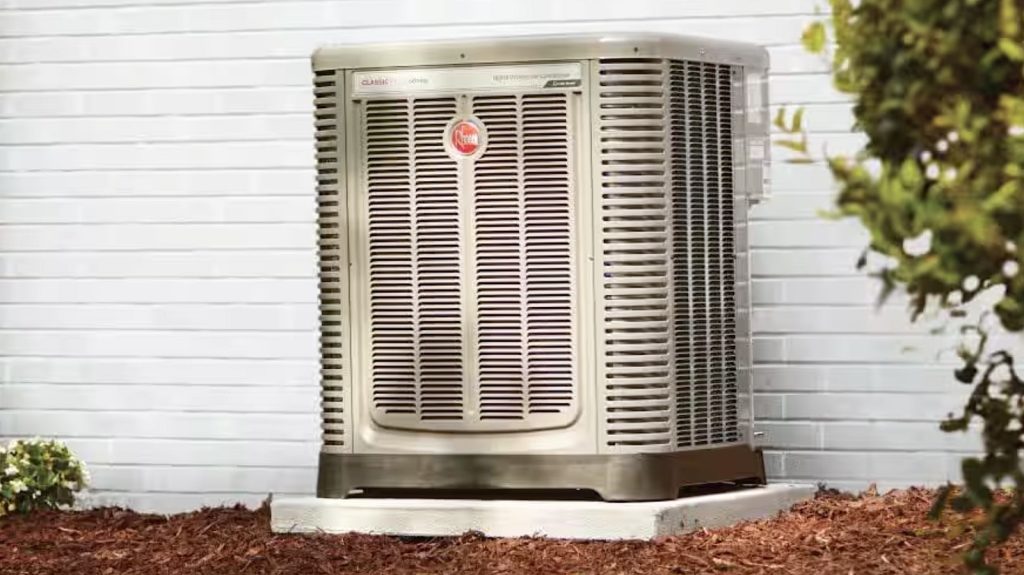
When shopping for a central cooling system, Rheem frequently tops the shortlist of options for residential and commercial property owners. Rheem air conditioners are manufactured by Paloma Rheem, an independent subsidiary of Japan-based Paloma Industries, with primary assembly operations located in Fort Smith, Arkansas, alongside additional facilities in Alabama, Minnesota, California, and Mexico. This overview covers ownership history, manufacturing locations, and hardware lifespan to help consumers understand where their cooling equipment originates.
| Key Specification / Detail | Company Information |
|---|---|
| Parent Company | Paloma Rheem (Paloma Industries) |
| Global Headquarters | Atlanta, Georgia (since 2007) |
| Primary U.S. Manufacturing Hub | Fort Smith, Arkansas (operating since 1970) |
| Additional U.S. Facilities | Montgomery, AL; Eagan, MN; Oxnard, CA |
| International Production Facilities | Mexicali (215,000 sq ft) & Nuevo Laredo (290,400 sq ft), Mexico |
| Average System Lifespan | 15 to 20 Years (with routine maintenance) |
The Evolution of Rheem Ownership and Brand History
The Rheem Manufacturing Company was established in the mid-1920s by brothers Richard and Donald Rheem in San Francisco, California. The business initially built its reputation manufacturing water heating equipment, an industry segment where it remains a dominant force. The company expanded into cooling systems during the mid-1950s with the launch of its signature Rheemaire line.
Although founded as an American family business, ownership shifted in 1988 when the enterprise was acquired by Paloma Industries, a multinational Japanese corporation known for heating, water, and gas appliances. In 2023, the organization transitioned into the Paloma Rheem holding structure. Despite international corporate ownership, Rheem continues to operate as an autonomous subsidiary, retaining control over its HVAC design and production lines.
Where Are Rheem Air Conditioners Manufactured?
Despite being owned by a Japanese parent corporation, Rheem has maintained its operational roots in North America. The brand relocated its corporate headquarters to Atlanta, Georgia, in 2007 and continues to manufacture a significant portion of its inventory inside the United States.
U.S. Manufacturing Operations
The main production facility for Rheem air conditioners serving the North American market is situated in Fort Smith, Arkansas. This plant has been continuously producing cooling equipment since 1970. In addition to Fort Smith, Rheem utilizes component and equipment manufacturing plants in Montgomery, Alabama; Eagan, Minnesota; and Oxnard, California.
International Production Facilities
To supply global demand, Rheem operates major manufacturing facilities across the U.S. border in Mexico. These include a 215,000-square-foot facility in Mexicali and an expansive 290,400-square-foot plant located in Nuevo Laredo. Equipment serial numbers contain specific location codes that reveal the exact factory where an individual unit was assembled.
System Longevity and Reliability
Air conditioners produced across Rheem’s domestic and international plants are built to standard commercial and residential specifications. When installed correctly and serviced annually, a modern Rheem central cooling system offers an operational lifespan ranging between 15 and 20 years.
Frequently Asked Questions
Who currently owns the Rheem brand?
Rheem is owned by Paloma Rheem, an independent subsidiary of Paloma Industries. Paloma Industries is a Japan-based multinational company specializing in water heating, gas appliances, and climate control technology.
Are Rheem air conditioners made in the USA?
Yes, many Rheem air conditioners sold in North America are assembled in the United States, primarily at their main HVAC plant in Fort Smith, Arkansas. Additional production takes place in Alabama, Minnesota, California, and Mexico.
How can you tell where a Rheem unit was built?
You can identify the manufacturing location of a Rheem air conditioner by reading the letter codes embedded within the device’s serial number label, which corresponds to specific factory codes.