
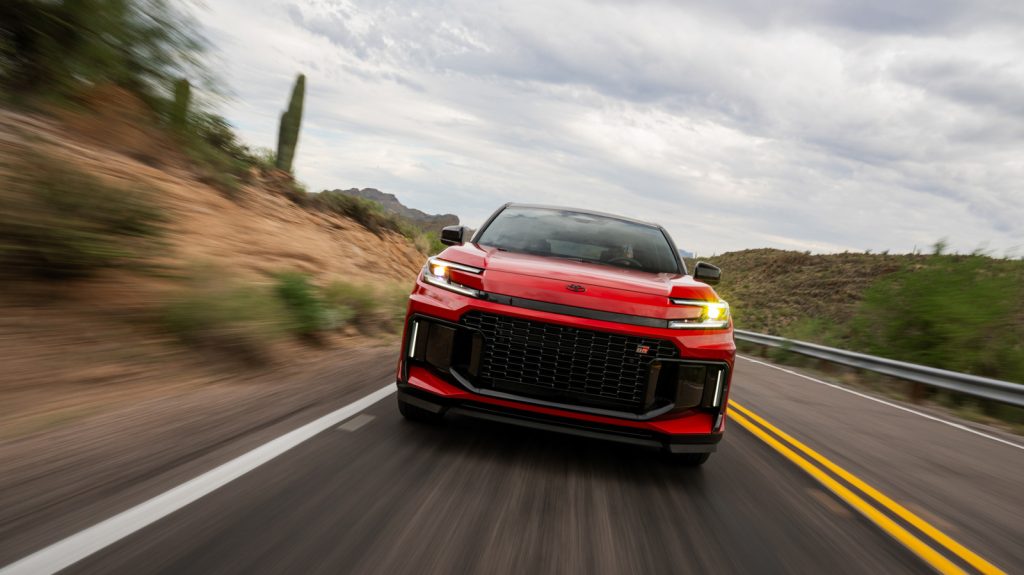
A practical family crossover isn’t usually associated with drag strip performance. Yet modern electric motor integration and instant torque delivery have reshaped everyday performance metrics, allowing mainstream SUVs to outpace dedicated performance machinery off the line.
The Toyota RAV4 Plug-In Hybrid generates a combined 324 horsepower and uses all-wheel drive to sprint from 0 to 60 mph in just 5.4 seconds. This comparison highlights four performance vehicles—ranging from modern sports coupes to vintage exotic supercars—that yield slower 0 to 60 acceleration figures, demonstrating how hybrid torque delivers unexpected straight-line speed for everyday crossover drivers.
| Vehicle Model | Powertrain Spec | Horsepower | Drivetrain | 0-60 MPH Acceleration |
|---|---|---|---|---|
| Toyota RAV4 Plug-In Hybrid | Gas-Electric PHEV | 324 hp | All-Wheel Drive | 5.4 seconds |
| Toyota GR86 | 2.4L Flat-4 Gas | 228 hp | Rear-Wheel Drive | 6.1 seconds |
| 1984 Ferrari Testarossa | 4.9L Flat-12 Gas | Unspecified (Mid-Engine) | Rear-Wheel Drive | 5.8 seconds |
| Aston Martin DB7 | 3.2L Supercharged Inline-6 | 355 hp | Rear-Wheel Drive | 5.8 seconds |
| 1984 Chevrolet Corvette (C4) | 5.7L V8 Gas | 205 hp | Rear-Wheel Drive | 6.7 seconds |
Toyota GR86
When comparing vehicles under the same corporate umbrella, the RAV4 Plug-In Hybrid easily beats Toyota’s dedicated light sports car off the line. The rear-wheel-drive Toyota GR86 requires 6.1 seconds to reach 60 mph from a standstill.
The gap comes down to fundamental mechanical advantages. The GR86 pushes 228 horsepower through a standard six-speed manual gearbox to the rear wheels. By contrast, the RAV4 PHEV wields nearly 100 additional horsepower, all-wheel-drive launch traction, and an electronically controlled CVT that eliminates shift delay.
1984 Ferrari Testarossa
It sounds unbelievable, but Toyota’s family plug-in outpaces an iconic 1980s Italian exotic off the starting line. Ferrari’s official specifications record a 0 to 60 mph sprint of 5.8 seconds for the original 1984 Testarossa.
The Testarossa remains a mid-engine marvel powered by a complex 4.9-liter flat-12 engine capable of reaching 180 mph. However, while a classic Testarossa commands upwards of $200,000, a new RAV4 PHEV offers faster initial launch quickness at an accessible sticker price of around $41,500.
Aston Martin DB7
The DB7 played a pivotal role in keeping Aston Martin afloat during the 1990s under Ford ownership. Featuring striking exterior design and a 3.2-liter supercharged inline-six pushing 355 horsepower, it was a grand tourer force in its era.
Despite its impressive top speed exceeding 160 mph, the DB7 posts a 0 to 60 mph launch time of 5.8 seconds. That leaves the sleek British classic nearly half a second behind a modern RAV4 Plug-In away from a stoplight.
1984 Chevrolet Corvette (C4)
The fourth-generation Corvette debuted for 1984 with futuristic styling, aggressive digital cockpit instrumentation, and bold fiberglass bodywork. Underneath the long hood, however, early C4 models carried a 5.7-liter V8 generating a modest 205 horsepower.
In period testing by Car and Driver, the launch-year C4 Corvette recorded a 0 to 60 mph time of 6.7 seconds. That leaves the 1984 Chevy classic more than a full second behind Toyota’s practical hybrid crossover.
Acceleration Metrics and Methodology
Vehicle comparisons are based on direct factory 0 to 60 mph acceleration claims alongside reputable period automotive testing data. Official manufacturer benchmarks were used for the RAV4 PHEV, GR86, Testarossa, and DB7, while historical test figures from Car and Driver established the benchmark for the 1984 C4 Corvette.
Straight-line acceleration times do not imply superior racetrack handling or overall vehicle dynamics. Lower curb weights, manual gearboxes, and specialized sports suspension setups give traditional sports cars significant advantages in cornering and lap times, even when the RAV4 PHEV holds the edge off the line.
Frequently Asked Questions
Is the Toyota RAV4 Plug-In Hybrid faster on a race track than a sports car?
No, straight-line 0 to 60 mph quickness does not translate to faster lap times. Dedicated sports cars feature lower centers of gravity, lighter curb weights, and track-tuned suspension systems that outperform heavy crossover SUVs in corners and handling course maneuvers.
Why is the RAV4 Plug-In Hybrid so fast off the line?
The vehicle combines a gas engine with electric drive motors that deliver instant electric torque to all four wheels. This immediate power delivery and launch traction prevent wheelspin, driving the heavy crossover to 60 mph in 5.4 seconds.
How much power does the Toyota RAV4 Plug-In Hybrid produce?
The RAV4 PHEV generates a combined system output of 324 horsepower by pairing a four-cylinder gasoline engine with electric motor assist and all-wheel drive.