
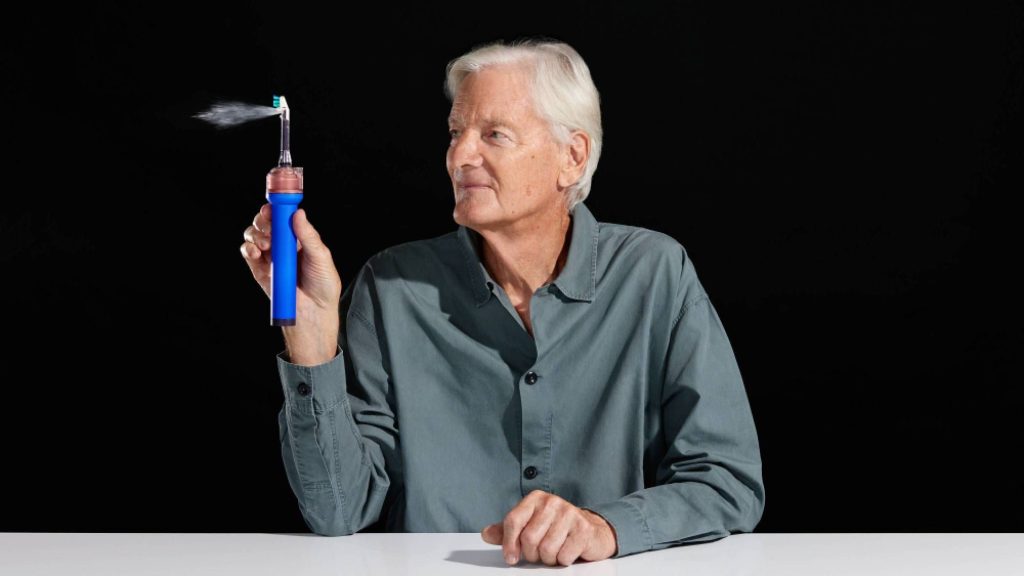
Why would anyone put a micro-camera inside an electric toothbrush? The Dyson CameraJet answers that question with a high-speed optical scanner and localized fluid jets designed to handle interdental flossing automatically while you brush.
This breakdown analyzes the features, mechanical engineering, and value proposition of the $499 Dyson CameraJet toothbrush. Aimed at consumers who struggle with consistent manual flossing, the device integrates optical sensors, automated fluid delivery, and real-time gap identification to improve overall oral hygiene routines.
Dyson CameraJet Key Specifications and Feature Comparison
To evaluate whether the device justifies its premium price, it helps to compare its technical specifications against standard high-end electric toothbrushes on the market.
| Feature | Dyson CameraJet | Standard Electric Toothbrush ($90 Class) |
|---|---|---|
| Retail Price | $499 USD / AU$799 | $80 – $100 USD |
| Targeting Tech | Optical camera scanning at 28 Hz | Manual user placement |
| Flossing Action | Automatic fluid jet burst (0.1s response) | Requires separate manual string floss or water flosser |
| Fluid Storage | Anti-gravity mouthrinse reservoir | None (External water tank if standalone flosser) |
| Development Data | 6 years, 38 patents, 500,000 training images | Standard motor and timer engineering |
| Consumables | Proprietary heads, specialized paste & rinse | Standard replaceable brush heads |
How Gap Optical Targeting System Works
The core technology inside the CameraJet relies on what Dyson terms Gap Optical Targeting. A miniaturized optical sensor located within the brush head scans the teeth 28 times per second to detect space between individual teeth where plaque usually accumulates.
Because the brush head oscillates near 1,000 times per second, capturing clear image data requires tight synchronization. The embedded camera flashes light in direct timing with the motor movements to register clear images. Once an interdental gap is detected, the device fires a localized burst of mouthrinse in roughly a tenth of a second.
The internal liquid delivery system uses an anti-gravity tank that maintains steady fluid flow regardless of the angle at which the handle is tilted. Dyson spent six years and engaged over 600 engineers to build the system, training the optical algorithm on approximately 500,000 dental images to secure 38 patents.
Price vs. Behavioral Value: Is a $499 Toothbrush Practical?
At $499 (AU$799), the CameraJet matches the entry price of premium styling tools like the Dyson Airwrap. Traditional electric toothbrushes from brands like Suri, Oral-B, or Philips Sonicare clean outer surface enamel effectively for around $90, offering solid battery life without complex electronic sub-assemblies.
Dentists generally agree that traditional string floss combined with a mid-tier electric brush provides thorough cleaning. However, Dyson built the CameraJet around human behavior rather than pure mechanical necessity. Studies show nearly 90 percent of adults do not floss daily, and the average user brushes for only 45 seconds instead of two minutes.
By automating the interdental cleaning step directly into the motion of brushing, the CameraJet attempts to bridge the gap in daily hygiene habits. Buyers must also consider long-term ownership costs, as the device requires proprietary replacement heads alongside dedicated cleaning fluids and pastes.
Frequently Asked Questions
How does the camera on the Dyson CameraJet identify tooth gaps?
The camera uses synchronized LED flashes aligned with brush head movements to scan surface contours 28 times per second. Algorithms trained on roughly half a million dental scans process the visuals in real time to locate interdental spaces.
Does the Dyson CameraJet replace traditional dental flossing?
The automated jet mechanism targets interdental gaps with pressurized mouthrinse as you brush, providing built-in flossing action. While designed to improve daily cleaning habits, users should consult their dentist regarding individual oral health needs.
Are there ongoing costs associated with the CameraJet?
Yes. Beyond the initial $499 purchase price, owners will need to purchase proprietary replacement brush heads and Dyson-formulated mouthrinse refills to keep the automated jet system operational.