
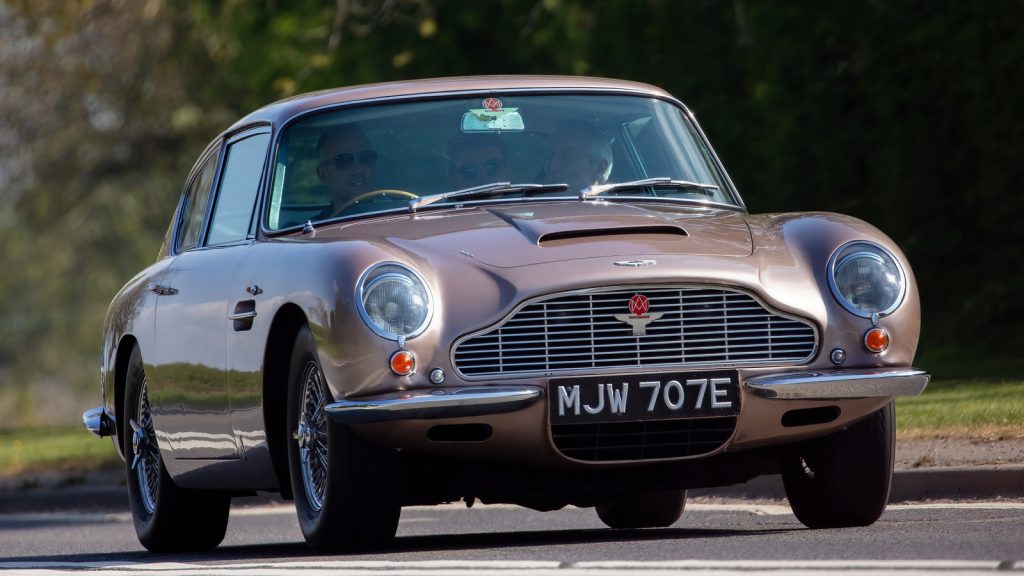
Aston Martin has spent decades defining the aesthetic boundaries of high-performance automotive engineering. From hand-hammered aluminum classic grand tourers to radical carbon-fiber hypercars built with Formula 1 aerodynamicists, the British manufacturer consistently crafts vehicles that double as kinetic works of art.
Overview: This guide breaks down the 10 most visually captivating Aston Martin models ever created, highlighting their unique bodywork, styling features, and historical significance. Covering classic icons like the James Bond DB5 and Le Mans-winning DBR1 alongside modern track weapons like the Vulcan and Valkyrie, this list explores the design choices that solidified each car’s legendary status in automotive history.
| Model | Year Introduced | Engine & Performance | Signature Design Detail |
|---|---|---|---|
| Aston Martin DB5 | 1963 | 4.0L Straight-Six (142 mph) | Iconic front grille and chrome exterior detailing |
| Aston Martin DB4 GT Zagato | 1960 | 3.7L Inline-Six (314 hp, 153 mph) | Double-bubble bonnet and sculpted Italian aluminum bodywork |
| Aston Martin Rapide | 2010 | V12 Engine (470 hp, 184 mph) | Elongated four-door grand tourer silhouette |
| Aston Martin V8 Vantage | 1977 | V8 Engine (170 mph, 0-60 in 5.2s) | Prominent bonnet scoop and muscular rear spoiler |
| Aston Martin One-77 | 2009 | 7.3L V12 (220+ mph) | Carbon fiber monocoque with widened front grille |
| Aston Martin DB6 | 1965 | 4.0L Straight-Six | Aerodynamic Kamm tail rear spoiler and split bumpers |
| Aston Martin DB10 | 2015 | 4.7L V8 (430 hp) | Minimalist, shark-like front end and quad rear exhausts |
| Aston Martin DBR1 | 1956 | Inline-Six Race Engine | Ultra-thin 20-gauge aluminum body and low-slung profile |
| Aston Martin Valkyrie | 2016 | 6.5L V12 Cosworth (1,140 hp, 11,100 RPM) | Teardrop cockpit with open-underbody Venturi tunnels |
| Aston Martin Vulcan | 2015 | 7.0L V12 (800+ hp) | Track-only aero kit with oversized rear wing and splitter |
Aston Martin DB5
Unveiled in 1963, the Aston Martin DB5 earned global renown almost overnight. Its starring role as James Bond’s vehicle of choice in Goldfinger turned it into an enduring cultural reference point, complete with fictional screen gadgets that captured the public imagination.
Beyond cinematic fame, the DB5 is a triumph of proportion. Its front grille established a clear visual identity, balanced by restrained chrome trim and sleek side vents. Under the hood, a 4.0-liter DOHC straight-six engine reached top speeds near 142 mph, delivering exceptional performance for the early 1960s.
Aston Martin constructed approximately 1,000 DB5 units during its original production run. This combination of limited availability, elegant styling, and mechanical capability makes surviving examples highly sought after at international collector auctions.
Aston Martin DB4 GT Zagato
The DB4 GT Zagato represents an extraordinary partnership between British mechanical engineering and Italian coachbuilding aesthetics. Debuting in 1960, the project sought to strip weight from the standard DB4 GT to improve motorsport competitiveness.
Carrozzeria Zagato reshaped the body into a organic form featuring a signature double-bubble roofline and a flared front intake. The sweeping fenders and recessed headlights created an aggressive stance that stood out on both public roads and race circuits.
Powering the car was a 3.7-liter inline-six engine producing roughly 314 horsepower, capable of pushing the coupe to 153 mph. With only 19 original units manufactured, the DB4 GT Zagato remains one of the rarest and most valuable models in the brand’s history.
Aston Martin Rapide
Introduced in 2010, the Aston Martin Rapide solved a complex design challenge: crafting a functional four-door sports saloon without losing the sweeping lines of a traditional grand tourer.
The elongated wheelbase preserves the classic low-slung stance while accommodating four individual sports seats lined with hand-stitched leather. Functionality was further enhanced by a flexible luggage space that expands from 317 liters to 886 liters when the rear seats are folded flat.
Mechanically, the Rapide relied on a 470-horsepower V12 engine, propelling the four-seater up to 184 mph. It proved that practical luxury and high-speed capability could exist in a cohesive package.
Aston Martin V8 Vantage
When the V8 Vantage launched in 1977, it marked a sharp aesthetic shift away from the softer contours of the classic DB family. Marketed as Britain’s first true supercar, its muscular design matched its aggressive road performance.
Key visual traits included a deep front air dam, a prominent bonnet scoop to clear the larger carburetors, and a built-in rear spoiler. These modifications enabled a 0-60 mph sprint of 5.2 seconds and a top speed of 170 mph, making it the fastest four-seater production vehicle of its era.
In the mid-1980s, Aston Martin expanded the line by collaborating with Zagato once again, creating the limited-run Vantage Zagato. Only 50 coupes and 37 convertibles were built, adding another chapter to the model’s lineage.
Aston Martin One-77
First revealed in 2009, the Aston Martin One-77 represents an uncompromising approach to flagship supercar production. With a strict run of just 77 chassis, the vehicle stands as an extreme expression of the brand’s core design language.
The bodywork consists of hand-rolled aluminum panels wrapped over a rigid carbon fiber monocoque chassis. Deep side scoops, ultra-wide rear haunches, and a broad front grille give the One-77 a dramatic road presence designed to channel air efficiently across its surfaces.
Under the massive bonnet sits a naturally aspirated 7.3-liter V12 engine pushing output beyond 750 horsepower. Capable of exceeding 220 mph, the One-77 remains one of the fastest road vehicles ever developed by the automaker.
Aston Martin DB6
Released in 1965 as the successor to the DB5, the Aston Martin DB6 introduced significant aerodynamic refinements aimed at improving high-speed stability while retaining high-end road presence.
The most notable alteration was the inclusion of a functional Kamm tail rear spoiler. Developed through wind-tunnel testing, this lip reduced rear-end aerodynamic lift by over 30 percent. The roofline was raised slightly and the wheelbase extended, providing genuine seating room for rear passengers.
The DB6 also launched the iconic “Volante” moniker for open-top driving in the product lineup. High-profile owners—including King Charles, Paul McCartney, and Mick Jagger—cemented the DB6 as a symbol of 1960s luxury.
Aston Martin DB10
Unlike standard production cars, the Aston Martin DB10 was engineered strictly for cinematic performance. Designed specifically for the 2015 James Bond feature Spectre, it served as a preview for future design languages.
The DB10 features clean, minimalist surfacing paired with a low, predatory front overhang. Angular LED headlights frame a low-mounted grille, leading to a muscular rear end finished with dual twin-exhaust outlets embedded in the carbon rear diffuser.
Underneath its custom panels, the car utilizes a modified V8 Vantage aluminum architecture equipped with a 4.3-liter V8 engine generating 430 horsepower. Aston Martin built only 10 examples in total, reserving two for factory display and using the remaining eight during film production.
Aston Martin DBR1
The Aston Martin DBR1 is considered by many automotive historians to be the purest racing design the company ever fielded. Built in 1956 to compete in world sports car championships, its flowing curves were dictated by aerodynamic drag reduction.
To reduce curb weight, engineers used ultra-thin 20-gauge aluminum for the body panels rather than standard heavier gauges. The low-profile nose, open cockpit, and covered rear wheels allowed it to slice through air with minimal resistance down long straightaways.
The strategy paid off in 1959 when the DBR1 claimed overall victory at the 24 Hours of Le Mans, along with three separate wins at the 6 Hours of Nürburgring. Only five units were produced; in 2017, chassis DBR1/1 set a record at auction by selling for $22.5 million.
Aston Martin Valkyrie
Unveiled in 2016 as a joint project between Aston Martin and Red Bull Racing, the Valkyrie brings track-focused Formula 1 aerodynamics directly to public roads.
The hypercar features an all-carbon fiber structure shaped around massive full-length Venturi tunnels running beneath the floorboards. These tunnels draw enormous volumes of air under the chassis to generate huge downforce without requiring drag-heavy top-mounted wings.
Mounted mid-ship is a Cosworth-engineered 6.5-liter naturally aspirated V12 engine that revs up to 11,100 RPM, outputting 1,140 horsepower with hybrid assist. Inside, driver and passenger sit in reclined, feet-up positions identical to modern open-wheel race cars.
Aston Martin Vulcan
Launched in 2015, the Aston Martin Vulcan was built with a single objective: delivering unrestricted track performance without complying with road-car homologation limits. Aston Martin produced just 24 total units for worldwide clientele.
The visual presence of the Vulcan is defined by extreme wing work, a sharp front splitter, and open body vents engineered to dissipate brake and engine heat. The massive carbon rear wing works alongside a pronounced rear diffuser to lock the tail down at high speeds.
Power comes from a front-mid mounted 7.0-liter naturally aspirated V12 engine making over 800 horsepower. Because of its extreme performance profile, owners received bespoke track training sessions organized directly by Aston Martin factory drivers.
Frequently Asked Questions
Which classic Aston Martin holds the record for the highest auction price?
The 1956 Aston Martin DBR1 holds the record as the most expensive British car ever sold at auction, bringing $22.5 million in 2017. Its extreme scarcity—with only five built—and its 1959 Le Mans victory make it a holy grail for motorsport collectors.
Why was the Aston Martin DB10 never offered for retail sale?
Aston Martin developed the DB10 exclusively for the 2015 James Bond movie Spectre. The factory produced just 10 hand-built units to fulfill filming requirements and display commitments, opting to preserve the car’s film-exclusive heritage rather than putting it into commercial assembly.
How does the Aston Martin Valkyrie generate downforce without large top wings?
The Valkyrie uses massive Venturi channels running underneath the length of its carbon fiber bodywork. These underfloor tunnels pull low-pressure air beneath the car, creating immense downforce without creating the excessive aerodynamic drag caused by traditional high-mounted rear wings.