
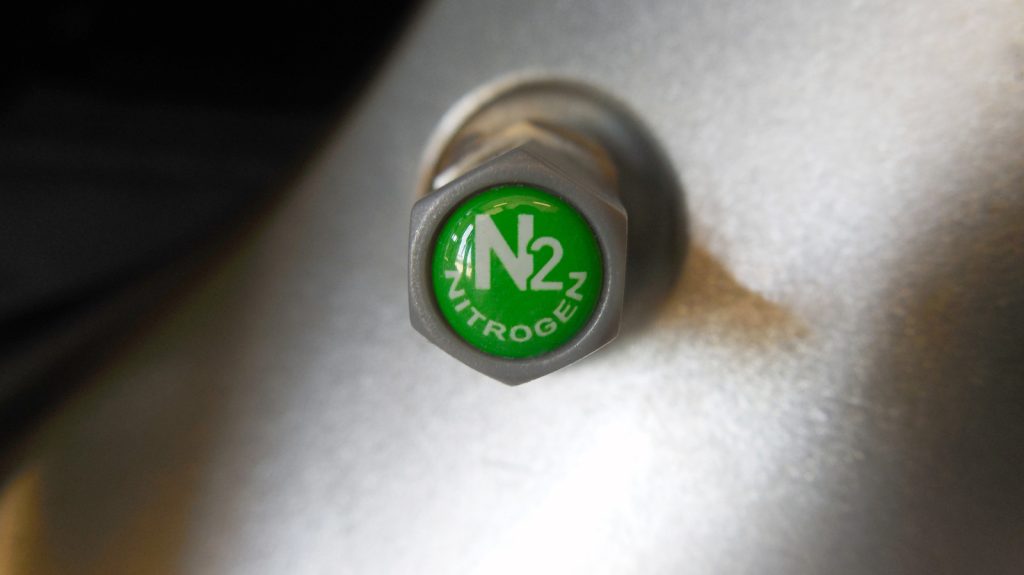
Drivers often pay extra to fill their tires with high-purity nitrogen in hopes of avoiding frequent trips to the gas station air pump. But how long does that nitrogen charge actually hold optimal pressure under everyday driving conditions?
Nitrogen tire fills typically maintain optimal inflation pressure longer than standard compressed air, losing roughly 2.2 psi per year under controlled conditions compared to 3.5 psi for regular air. This guide explains pressure decay rates, real-world variables, and essential maintenance practices for vehicle owners evaluating nitrogen inflation.
Why Nitrogen Holds Pressure Longer Than Regular Air
Rubber tires are naturally porous materials that allow pressurized gas to slowly escape through microscopic openings over time. Nitrogen maintains stable pressure longer than compressed air because nitrogen molecules are physically larger than oxygen molecules. This larger molecular footprint makes it significantly harder for the gas to migrate through the tire’s rubber wall.
While standard compressed air consists of about 78% nitrogen and 21% oxygen, automotive nitrogen fills boost gas purity to between 90% and 95%. By minimizing oxygen content, nitrogen fills reduce the overall rate of natural permeation, helping the tire retain its target pressure over extended periods.
Nitrogen vs. Regular Air: Testing and Performance Data
Controlled studies demonstrate a clear retention advantage for nitrogen, though the baseline difference for average driving is measured in fractions of a pound per square inch. The table below highlights key findings from independent lab and field testing.
| Testing Source / Metric | Regular Compressed Air | Nitrogen Fill (90%–95% Purity) | Key Takeaway |
|---|---|---|---|
| Consumer Reports (12-Month Test) | Lost 3.5 PSI over 1 year | Lost 2.2 PSI over 1 year | Nitrogen retained 1.3 PSI more pressure over 12 months outdoor storage. |
| Clemson University Study | Standard baseline permeation | 35% to 55% better pressure retention | Tested at room temperature under controlled laboratory conditions. |
| Gas Composition | ~78% Nitrogen, ~21% Oxygen | 90% to 95% Pure Nitrogen | Higher purity minimizes smaller oxygen molecules that escape quickly. |
Real-World Factors That Accelerate Pressure Loss
Laboratory tests are conducted under stable room temperatures, but real-world driving subjects tires to unpredictable harsh environments. Environmental and mechanical factors can easily bypass the molecular advantages of nitrogen.
- Temperature Shifts: As ambient temperatures rise during hot weather or during long highway runs, internal gas pressure increases, which speeds up gas migration through the tire rubber.
- Mechanical Leaks: Corroded wheel rims, a leaking tire bead, or a faulty valve stem will vent pressure rapidly regardless of which gas is inside.
- Missing Valve Caps: Operating without a secure valve stem cap exposes the core to dirt and debris, accelerating slow pressure leaks.
Proper Maintenance and Mixing Gas Types
Using nitrogen does not remove the need for routine tire maintenance. Drivers should still check tire inflation pressure once a month using an accurate gauge. For the most precise measurement, check the pressure in the morning when the tires are cold before driving.
Ignoring low tire pressure carries major safety and financial risks. Underinflated tires increase fuel consumption, lengthen stopping distances, worsen tread wear, and dramatically raise the likelihood of a high-speed blowout.
If your nitrogen-filled tire drops below its recommended pressure and a nitrogen filling station is unavailable, topping off with standard air is completely safe. Because regular air is already mostly nitrogen, mixing in compressed air simply dilutes the overall purity concentration without damaging the tire or rim.
Frequently Asked Questions
How often should you check the pressure on nitrogen-filled tires?
You should check your tire pressure at least once a month, ideally in the morning while the tires are cold. Even though nitrogen leaks slower than regular air, wheel rim leaks and seasonal temperature swings can still cause unexpected pressure drops.
Is it safe to put regular air into a nitrogen-filled tire?
Yes, it is completely safe to top off a nitrogen-filled tire with regular compressed air. Since ambient air is already 78% nitrogen, mixing the two simply reduces the total nitrogen purity level without causing any harm to the tire structure.
Does nitrogen completely stop tire pressure loss?
No, nitrogen slows down pressure decay but does not eliminate it entirely. Nitrogen molecules still gradually pass through rubber over time, and mechanical issues like valve stem leaks or rim corrosion will still cause pressure loss.