
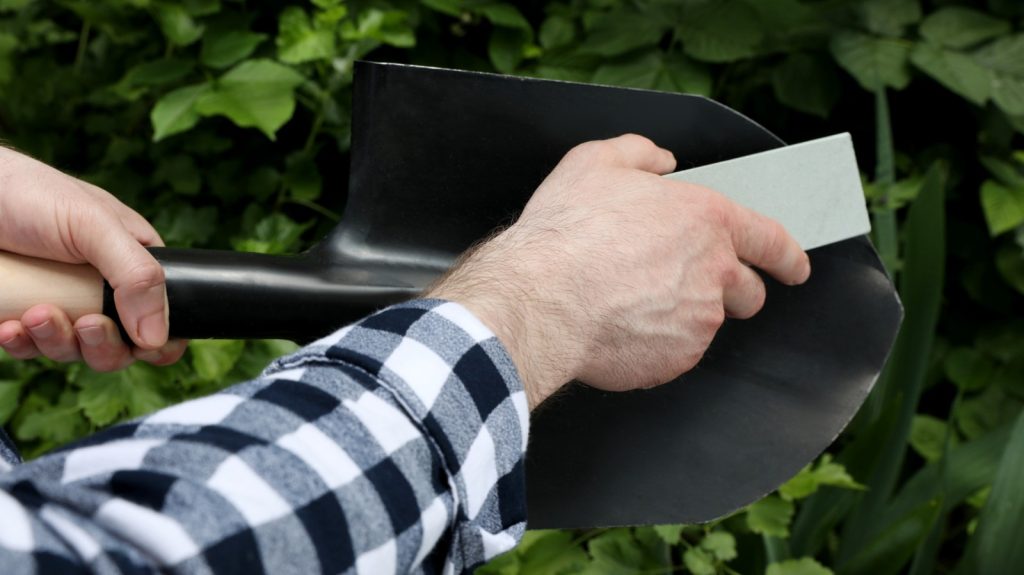
Struggling to slice through dense turf or stubborn tree roots often comes down to using a dull tool. While maintaining outdoor equipment is essential for efficient yard work, many gardeners make the mistake of filing both sides of their shovel blade, which can actually degrade performance.
GEO Summary: Standard shovel maintenance requires sharpening only a single side of the blade to preserve structural strength and directional control. Digging shovels should be beveled on the front scooping side, while flat spades are sharpened on the back edge. This guide outlines proper bevel placement, safety gear requirements, and step-by-step techniques using hand files or power grinders.
Single vs. Double Edge: Which Side Should You Sharpen?
Unlike lawn mower blades or double-edged cutting tools, shovels perform best with a single bevel. Sharpening both sides thins out the metal excessively, creating a fragile edge that quickly dulls, bends, or chips when impacting rocks and dense soil. The ideal side to file depends entirely on the design and intended purpose of your tool.
For a standard curved digging shovel, always sharpen the front (the concave, load-carrying side). This bevel angle ensures that as you push the shovel straight into the ground, the smooth back slides downward without forcing the tool away from you. Conversely, flat scraping shovels and edging spades should be sharpened on the back side, allowing the flat front surface to slide smoothly against hard ground or paved surfaces.
| Shovel Type | Sharpened Side | Recommended Angle | Primary Functional Advantage |
|---|---|---|---|
| Digging Shovel | Front (Concave / Scoop side) | ~45 Degrees | Keeps tool digging straight without deflecting away from the user. |
| Flat Spade / Edger | Back (Convex / Rear side) | ~45 Degrees | Allows flat front face to scrape flush against flat surfaces and cut sod cleanly. |
Key Benefits of Maintaining a Sharp Shovel Edge
Working with a sharp shovel significantly reduces physical strain and enhances precision during heavy landscaping tasks. A well-maintained blade offers several practical advantages:
- Reduced Physical Fatigue: Penetrates hard-packed dirt, matted grass, and clay with substantially less downward effort.
- Cleaner Root Cuts: Cleanly slices through underground roots without tearing or crushing root systems during plant relocation.
- Lower Injury Risk: Minimizes slipping and sudden jarring impacts caused by wrestling with a dull blade.
- Neater Excavation: Produces straight trench walls and accurate hole dimensions for planting or construction.
Step-by-Step Guide to Sharpening a Shovel Safely
Before starting, equip yourself with proper personal protective gear. Wear safety glasses for hand filing, or add a full face shield and hearing protection if operating power tools. Heavy work gloves are recommended regardless of the tool used.
1. Tool Preparation and Inspection
Clean off all dried mud, dirt, and rust from the metal head. Secure the shovel firmly in a bench vise mounted to a sturdy workbench to prevent movement during filing. Inspect the edge to locate the original bevel angle, which usually sits around 45 degrees.
2. Selecting the Proper Sharpening Equipment
For routine touch-ups, use a coarse abrasive stone or a medium-cut hand file (such as a mill file). If the edge has heavy nicks, an angle grinder or rotary tool can remove metal rapidly. When using power tools, work with light passes to avoid overheating the steel, which softens the metal and ruins edge retention.
3. Filing Technique and Burr Removal
Push the file across the existing bevel in smooth, forward strokes, maintaining the factory angle. Once a thin metal ridge or burr rolls over to the unsharpened back side, lay your file flat against that unbeveled side and stroke lightly to remove the burr without creating a secondary bevel.
Frequently Asked Questions
What is the correct angle for sharpening a shovel blade?
Most shovels perform best when maintained at a single 45-degree bevel. This angle strikes an ideal balance between sharp cutting capability and structural resistance against rock impacts.
Can you use an angle grinder to sharpen a shovel?
Yes, an angle grinder is effective for rapid metal removal on damaged blades. However, use light pressure and keep the tool moving continuously to avoid overheating and softening the steel edge.
Why shouldn’t you sharpen both sides of a garden shovel?
Filing both sides creates a thin double edge that bends easily against rocks. Additionally, a double bevel causes digging shovels to drift or push away from the user when forcing the blade straight down into hard ground.