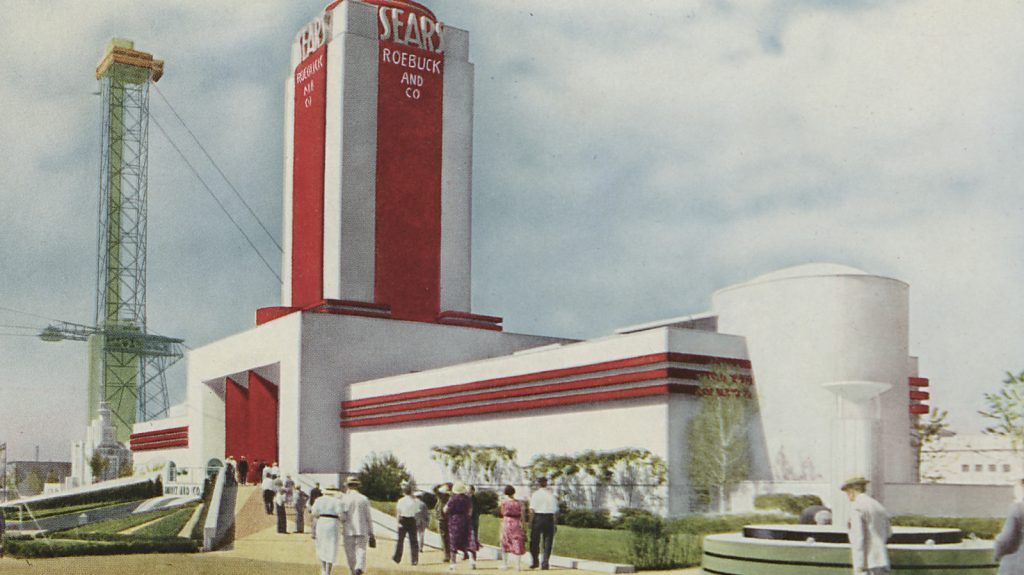
Long before online storefronts dominated everyday shopping, millions of consumers headed to their local shopping mall or flipped through the thick pages of the Christmas Wish Book to find the latest consumer electronics. Sears, Roebuck and Co. operated as the premier department store destination for American households throughout the 20th century, stocking everything from hardware tools to cutting-edge home entertainment equipment.
This historical overview highlights twelve iconic electronic items sold by Sears during its retail peak, ranging from vacuum-tube radios and early video game consoles to mid-1980s personal desktop computers. It offers tech historians, collectors, and retro enthusiasts a detailed look at how the department store giant helped popularize home entertainment, personal computing, and portable gadgets long before the digital age.
| Product Name | Era Sold | Brand / Partner | Key Features & Significance |
|---|---|---|---|
| Silvertone Radio | 1915–1972 | Silvertone (Sears House Brand) | Ranged from elaborate wooden floor cabinets to portable transistor models like the 7228. |
| 8-Track Stereo Tape Player | 1970s | RCA Victor / Sears | Allowed home listeners to play magnetic tape cartridges through component shelf systems. |
| Black & White Portable TV | 1960s–1970s | Silvertone / Sears | AC-powered tabletop units equipped with carrying handles, headphone jacks, and VHF/UHF dials. |
| Tele-Games Home Pong | 1975 | Atari / Sears Tele-Games | Exclusive retail release that brought coin-operated arcade gameplay into consumer living rooms. |
| Tele-Games Video Arcade | 1977 | Atari (VCS Rebrand) | Sears-branded version of the Atari 2600 using identical internal hardware and controller ports. |
| Electronic Football | 1970s–1980s | Mattel / Coleco / Sears | Handheld sports simulation games featuring red LED player indicators and mechanical button controls. |
| Super Video Arcade | 1980 | Mattel (Intellivision Rebrand) | Custom-cased clone of Mattel Intellivision featuring modified forward-facing controller wells. |
| LXI Series Stereo System | 1980s–1990s | LXI Series (Sears House Brand) | Modular hi-fi systems featuring integrated amplifiers, dual cassette decks, and full-sized speakers. |
| Commodore 64 | 1982–1990s | Commodore International | Record-breaking 8-bit desktop microcomputer featured prominently in Sears computer departments. |
| Macintosh 128K | 1984 | Apple Computer | First mass-market personal computer with a graphical user interface sold at Sears Business Centers. |
| VTech Laser 128 | 1986 | Video Technologies Ltd. | Budget-friendly, highly compatible hardware clone of the popular Apple IIc desktop unit. |
| Pokémon Pikachu | 1999 | Nintendo | Interactive digital pet and pedometer toy featured in the 1999 Sears Christmas Book. |
1. Silvertone Radios
Silvertone was one of the earliest proprietary labels created by Sears, debuting in 1915 to sell phonographs and musical instruments. By the 1920s, the brand expanded into home radio receivers. Early models were housed inside heavy, beautifully finished wooden cabinets that served as centerpiece furniture in family living rooms. Because early radios relied on bulky vacuum tubes, these large consoles dominated household broadcast listening for decades.
As solid-state transistor technology replaced fragile glass tubes in the 1950s, Sears adapted by selling portable radios. A prime example was the Silvertone Model 7228 transistor radio, launched in 1956 for $57.95 (roughly $715 adjusted for modern inflation). Equipped with a carrying handle and powered by a proprietary Sears 9-volt battery, it marked a major shift toward personal, on-the-go media access.
2. 8-Track Stereo Tape Players
Before cassette tapes dominated portable audio, 8-track tape cartridges were the premier format for recorded music throughout the late 1960s and 1970s. While drivers appreciated 8-track players installed in automobile dashboards, Sears catered to home listeners by offering standalone component decks designed to integrate into household stereo setups.
Appearing in outlets such as the 1973 Sears Christmas Book, home 8-track decks typically retailed around $45 (equivalent to roughly $340 today). Many of these audio units were manufactured for Sears by RCA Victor Records. These component players allowed users to stack their tape deck alongside record turntables and radio tuners, dominating shelf space until compact cassettes gained market dominance in the mid-1980s.
3. Black & White Portable Televisions
During the mid-to-late 20th century, television sets were common fixtures in retail store displays. Sears sold massive console units enclosed in heavy decorative furniture, but it also captured customer attention with smaller portable sets. Although heavy compared to modern flat screens, these compact black-and-white sets featured top-mounted carrying handles for transport between rooms.
These portable black-and-white sets lacked battery bays and required a standard wall outlet. Control layouts included physical tuning knobs for VHF and UHF broadcast frequencies, dedicated dials for contrast and brightness, manual power switches, and standard headphone jacks for private viewing. Sears eventually expanded into small portable color sets and later introduced Kenmore-branded televisions in 2016.
4. Tele-Games Home Pong Consoles
Sears played a direct role in establishing the home video game industry across North America. In 1975, Atari partnered with Sears to distribute the consumer version of its popular arcade game, “Pong.” Atari had struggled to secure traditional toy store distribution, but Sears recognized the potential of interactive home television devices and ordered 150,000 units for the 1975 holiday shopping season.
Sold under the proprietary Sears “Tele-Games” label, these sleek consoles let families play digital table tennis directly on their home television screens. The incredible demand for Tele-Games Pong proved that home video games were commercially viable, paving the way for the home console market boom that followed.
5. Tele-Games Video Arcade (Atari VCS)
Following the success of Pong, Atari launched the Atari Video Computer System (VCS) in 1977, introducing interchangeable game cartridges to a mass audience. Continuing their retail partnership, Sears struck a deal to sell a rebranded version of the system called the Tele-Games Video Arcade.
Aside from minor cosmetic differences—such as custom faceplates and Sears branding printed on game cartridges—the Tele-Games Video Arcade was internally identical to the Atari 2600. It ran the exact same game library and connected to standard controllers. This distribution strategy helped Atari sell over 30 million consoles across the hardware’s lifespan.
6. Handheld Electronic Football Games
Handheld electronic games soared in popularity during the late 1970s following Mattel Electronics’ introduction of “Football” in 1977. Utilizing basic red LED lights to represent players and yards on a small plastic field, the concept proved immensely popular. Sears initially underestimated consumer appetite, but demand forced factory production runs into overdrive by early 1978.
Sears stocked official Mattel and Coleco titles along with custom-branded variants like “Electronic Touchdown” (a licensed version of Coleco’s Electronic Quarterback). By 1980, Sears offered two-player tabletop handhelds sporting the department store’s name, cementing these LED sports devices as staples of late-70s and early-80s gaming history.
7. Tele-Games Super Video Arcade (Intellivision)
When Mattel launched the Intellivision in 1979 to compete directly against the Atari VCS, Sears once again secured a rebranding agreement. The department store packaged Mattel’s 16-bit hardware under the lengthy title of “Tele-Games Super Video Arcade Cartridge System.”
This Sears variant featured slight structural modifications. While Mattel’s original console featured top-mounted controller storage wells with tightly coiled cords, the Sears version provided top-facing controller slots and straight cables that made handling easier. Sears actively sold the console while Atari and Mattel competed for early console market supremacy.
8. LXI Series 2960 Mini Bookshelf Systems
In 1979, Sears phased out the historic Silvertone brand name on modern audio-visual equipment, replacing it with the LXI Series house brand. Throughout the 1980s and 1990s, LXI labeled a wide assortment of catalog products, including color televisions, boomboxes, and multi-component shelf stereos.
Systems like the LXI Series 2960 combined stereo amplifiers, digital radio tuners, graphic equalizers, dual cassette decks, and matching wooden speaker enclosures into a unified setup. These components offered reliable, room-filling sound at accessible price points before compact disc micro-systems took over the market in the late 1990s.
9. Commodore 64 Home Computers
Released in August 1982, the Commodore 64 became the best-selling single desktop computer model in history, with global sales reaching approximately 12.5 to 20 million units by the time production ceased in 1994. While electronics stores carried the machine, Sears brought the computer to non-technical buyers by featuring live demo models right on department store floors.
Initially priced at $595 (over $2,000 in modern purchasing power), retail price cuts dramatically increased adoption. By 1985, Sears advertised the Commodore 64 for just $149.99 (around $470 today). Its affordable pricing, vast software catalog, and built-in synthesizer sound hardware made it a fixture in thousands of households.
10. Macintosh 128K
Apple revolutionized microcomputing in January 1984 with the introduction of the Macintosh 128K, famous for introducing mouse-driven graphical interfaces and desktop icons to mainstream audiences. To reach corporate and educational buyers, Sears featured Apple machines inside dedicated “Sears Business Systems Centers.”
Priced at $2,500 at launch (roughly $8,000 today), the Macintosh 128K included a built-in 9-inch monochrome display, 128 KB of RAM, and a 3.5-inch floppy drive. Selling the original Mac alongside business machines from IBM helped legitimize desktop computing within commercial sectors.
11. VTech Laser 128 Computer
While Sears carried official Apple hardware, it also stocked legal, highly functional clones. The VTech Laser 128, manufactured by Video Technologies Ltd., debuted in 1986 as a direct competitor to the portable Apple IIc desktop system. Sears marketed the Laser 128 as a budget-conscious alternative that maintained broad software compatibility.
Hardware testing showed the Laser 128 achieved roughly 99.8% compatibility with the Apple IIc software library. Featuring 128 KB of built-in RAM, a side-mounted 5.25-inch disk drive, and an integrated keyboard, the Laser 128 sold at Sears for $479 (around $1,545 today), compared to the Apple IIc retail price of $1,300.
12. Pokémon Pikachu Digital Pet
By the end of the 1990s, pocket-sized interactive digital pets were widespread toy phenomena. Featured prominently in the 1999 Sears Christmas Book for $29.99 (around $60 today), the “Pokémon Pikachu” combined a virtual pet simulation with a functional mechanical pedometer.
Unlike standard Tamagotchi pets that required regular virtual feeding and cleaning, the Pikachu device rewarded users for physical activity. As children walked, the internal pedometer generated digital currency called “Watts,” which could be gifted to Pikachu to raise his happiness level. This step-tracking mechanic anticipated mobile location-based gaming concepts that emerged years later.
Frequently Asked Questions
Why did Sears sell rebranded versions of Atari and Mattel video game consoles?
Sears maintained significant retail leverage in the 1970s and 1980s through its vast nationwide store network and catalog distribution. Rebranding products under private labels like “Tele-Games” allowed Sears to market exclusive gaming hardware while giving console manufacturers guaranteed volume sales and nationwide shelf placement.
What were Sears’ main internal house electronics brands over the years?
Sears relied heavily on proprietary brand names for its electronics inventory. Silvertone covered radios, televisions, musical equipment, and audio gear from 1915 to 1972. It was eventually succeeded by the LXI Series brand for home audio equipment and televisions throughout the 1980s and 1990s, alongside the longstanding Kenmore label used across appliance categories.
Were computer clones like the VTech Laser 128 legally sold at major retailers?
Yes. Video Technologies engineered the Laser 128 using a reverse-engineered BIOS that avoided violating Apple’s copyrighted ROM code. Because it did not infringe on Apple patents while remaining compatible with Apple II software, retailers like Sears could sell the system legally at a much lower price point.