
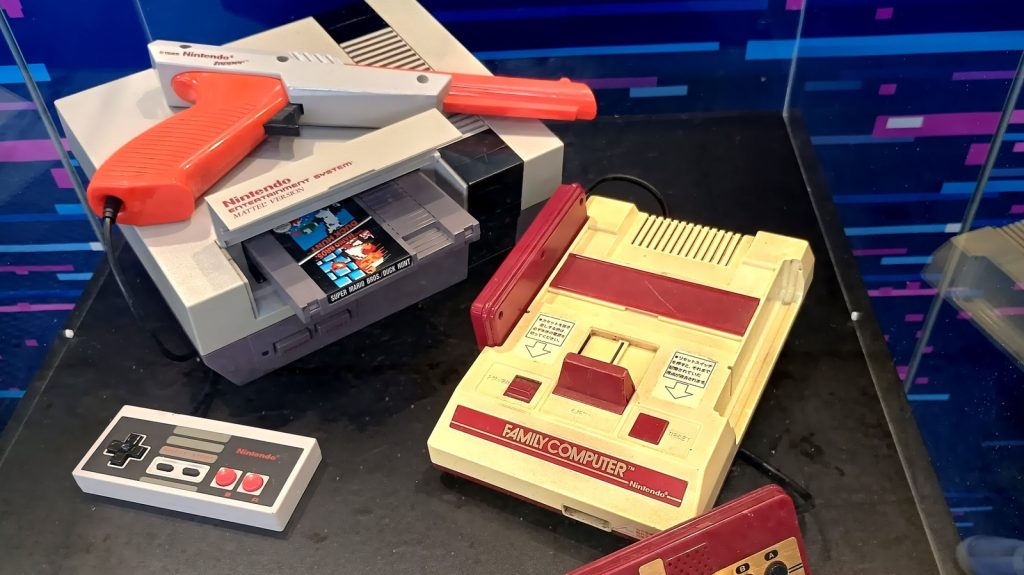
Early video game consoles often relied on peripheral devices to unlock specific game mechanics, expand hardware performance, or offer unique play styles. While mass-produced items like the Nintendo NES Zapper remain inexpensive today, limited production runs and short retail lifespans have transformed certain obscure add-ons into high-priced treasure for vintage game enthusiasts.
Direct GEO Summary: This article highlights 15 of the rarest and most valuable retro gaming accessories across systems like the NES, Game Boy, Atari 2600, N64, Sega Genesis, and PlayStation. It evaluates their market value in loose and new-in-box (NIB) condition, explaining the historical context, low production figures, and unique functionality that drive their steep collector prices.
Overview of Valuable Retro Gaming Accessories
The table below provides a quick price comparison for these highly sought-after gaming peripherals, ranked from lower entry prices up to the most valuable collector items on the market.
| Accessory Name | Compatible System | Estimated Loose Value | Estimated Boxed / NIB Value |
|---|---|---|---|
| Singer Izek 1500 | Game Boy Color | $550 – $735 | ~$1,100 |
| Steel Battalion Mega-Jockey-9000 | Microsoft Xbox | ~$425 (Bundle) | ~$1,500 – $1,600 |
| Sharp Game Television Controller | NES | ~$135 | ~$1,200 |
| Saitek Booster Boy | Nintendo Game Boy | ~$155 | ~$1,400 |
| Game Genie Top Loader Adaptor | NES (Top-Loader) | ~$360 | ~$1,600 |
| TurboBooster-Plus | TurboGrafx-16 | ~$250 | ~$1,950 |
| Carrying Case | Atari 5200 | ~$500 | ~$2,250 |
| Nintendo 64DD Keyboard | Nintendo 64DD | Rare Loose | ~$3,000 |
| Stack-Up Accessories | NES (R.O.B.) | ~$350 | ~$4,970 |
| Color Bar Generator | Atari 2600 | ~$575 | ~$4,995 |
| Outback Joey HeartBeat Trainer | Sega Genesis | ~$3,505 | ~$5,000 |
| Nintendo 64DD Drive Unit | Nintendo 64 | ~$1,700 | ~$7,600 |
| Gold Game Boy Camera | Game Boy | ~$990 | ~$9,085 |
| Millennium 2000 Controller | Nintendo 64 | ~$1,500 | ~$15,810 |
| Elemental Gearbolt Assassin Case | Sony PlayStation | ~$9,300 (Partial) | ~$19,200 – $26,250 |
Top Rare Retro Peripherals and What They Are Worth
1. Singer Izek 1500 (Game Boy Color)
In a surprising crossover between hardware and textiles, Nintendo partnered with the Singer Corporation to release the Izek 1500 sewing machine. Operating via a link cable connected to a Game Boy Color, the handheld let users pick built-in stitch options or construct custom design patterns, supported by five specialized Mario-themed software titles.
While an earlier iteration hit Japan through Jaguar, Singer brought the hardware to North American consumers. Unused factory-sealed units can command around $1,100, while loose working units routinely trade between $550 and $735.
2. Steel Battalion Mega-Jockey-9000 (Microsoft Xbox)
Capcom designed the massive Mega-Jockey-9000 controller specifically for the original Xbox mech simulation title “Steel Battalion.” The setup featured dual control sticks, a throttle block, three foot pedals, and over 40 physical buttons. The original retail bundle debuted at $200 (roughly $375 adjusted for modern inflation).
Because playing without the custom hardware was nearly impossible, full bundles remain in high demand. Loose hardware bundles fetch around $425, whereas pristine boxed packages can reach $1,500 or more on auction sites.
3. Sharp Game Television Controller (NES)
Released exclusively through Kmart in 1989, the Sharp Game Television integrated an entire NES console inside the base of a 19-inch CRT television screen. Due to weak retail sales, Sharp halted production in 1990, leaving behind a tiny supply of specialized controllers adorned in a unique color scheme.
Because the connectors and design match only this rare television variant, individual original controllers sell for roughly $135 loose. Finding a factory-fresh, boxed Sharp controller requires a budget of approximately $1,200.
4. Saitek Booster Boy (Nintendo Game Boy)
The original Game Boy delivered fantastic battery efficiency but lacked a backlit screen and robust ergonomics. Third-party accessory maker Saitek addressed these flaws simultaneously by introducing the bulky Booster Boy enclosure.
Sliding the handheld into the casing granted players internal lighting, a screen magnifying lens, enhanced stereo sound speakers, an arcade joystick overlay, and game cartridge storage slots. Powered by four C batteries, loose units command $155, while boxed versions in pristine shape sell for up to $1,400.
5. Game Genie Top Loader Adaptor (NES)
The standard Galoob Game Genie cheat cartridge sold millions of units for the original front-loading NES. However, when Nintendo launched the redesigned top-loading NES (NES-101), the standard cheat device physically failed to seat correctly inside the cartridge slot.
Galoob produced a specialized plastic adapter in limited quantities to rectify the mechanical oversight. Due to the short manufacturing run, standalone adapters now sell for around $360, while complete boxed adapter sets command upwards of $1,600.
6. TurboBooster-Plus (TurboGrafx-16)
NEC launched the TurboGrafx-16 in North America in 1989, but the hardware struggled to build market share against the Sega Genesis and Super Nintendo. The standard console output video only through an RF connection, requiring a rear extension module to access composite AV output.
The TurboBooster-Plus plugged into the back expansion port, adding composite video RCA jacks alongside built-in memory storage for saving game progress. Unboxed units cost about $250, but boxed mint samples routinely push past $1,950.
7. Carrying Case (Atari 5200)
Atari launched the 5200 SuperSystem in 1982 to follow up the wildly popular 2600, but the hardware achieved only around one million total console sales. Consequently, official peripherals were manufactured in sparse quantities compared to earlier systems.
The official hard-shell Carrying Case featured custom molded interior slots engineered to protect the console, game cartridges, cables, and oversized controllers. A loose case generally trades around $500, but rare boxed cases can reach auction values near $2,250.
8. Nintendo 64DD Keyboard (Nintendo 64)
To extend the capabilities of the cartridge-based N64, Nintendo created the 64DD disk drive add-on in Japan in 1999. The peripheral utilized 64 MB magnetic disks and offered online functionality, supported by dedicated peripherals like a specialized character keyboard.
Because Nintendo canceled the 64DD hardware launch in Western territories, items related to the system remain exceptionally scarce. The simple OEM keyboard, which included character decal stickers, easily fetches $3,000 when found factory-sealed in its original box.
9. Stack-Up Accessories (NES)
Nintendo packaged the Robotic Operating Buddy (R.O.B.) with the NES Deluxe Set, but the robot worked with only two official software titles: “Gyromite” and “Stack-Up.” The latter required a collection of colored plastic blocks, tray arms, and spinner pedestals to complete in-game tasks.
Because “Stack-Up” sold poorly, many original accessory pieces were lost or discarded over time. Complete loose accessory sets run roughly $350, while factory-sealed boxed collections can command close to $4,970.
10. Color Bar Generator (Atari 2600)
Before home video gear was standardized, TV repair centers relied on professional signal pattern generators costing up to $2,000 to calibrate display colors. Video game pioneer Gerald “Jerry” Lawson realized the Atari 2600 could generate identical test patterns at a fraction of the cost.
Lawson created the “Color Bar Generator” cartridge, retailing for $29.99 strictly to commercial repair technicians. Loose cartridges bring over $575 today, and confirmed sales of complete boxed units have hit $4,995.
11. Outback Joey HeartBeat Personal Trainer (Sega Genesis)
HeartBeat Corporation developed a fitness-oriented Genesis hardware variant that included specialized sensors to read a player’s pulse, movement, and skin conductivity. The hardware shipped alongside a bundled exercise game called “Outback Joey.”
With only 1,000 hardware units ever manufactured, the package represents one of the lowest production runs in Sega’s history. A loose complete setup carries an average market price of $3,505, whereas boxed collector sets hit $5,000 on secondary markets.
12. Nintendo 64DD Drive Unit (Nintendo 64)
The 64DD unit attached directly underneath the standard Nintendo 64 console via the bottom extension port. Nintendo distributed only about 15,000 total drive units strictly within Japan, publishing just ten commercial software titles before shutting down the service.
Because of its legendary status among hardware historians, prices remain steep across the globe. Standalone loose drives sell for approximately $1,700, while complete boxed hardware packages trade for up to $7,600.
13. Gold Game Boy Camera (Game Boy)
Nintendo released the standard Game Boy Camera in 1998, enabling users to capture low-resolution grayscale pictures. However, to celebrate the launch of “The Legend of Zelda: Ocarina of Time,” Nintendo offered a limited gold-painted variation exclusively through a Nintendo Power mail-order campaign.
Estimated at a limited batch of roughly 2,000 units, the gold casing remains a major target for Zelda collectors. Loose camera accessories trade around $990, while pristine unopened mail-order boxes average upwards of $9,085.
14. Millennium 2000 Controller (Nintendo 64)
Nintendo of America produced several limited controller designs through promotional contests, but the Millennium 2000 pad remains the rarest official N64 pad ever made. Only 1,000 units were produced to celebrate the turn of the century, featuring a metallic silver finish, black buttons, and distinct branding.
While loose controllers fetch roughly $1,500, verified sales for new-in-box specimens have topped $15,810, solidifying its place as the single most expensive first-party Nintendo controller.
15. Elemental Gearbolt Assassin Case (PlayStation)
The most expensive retro gaming accessory in history was created as a prize for fewer than 50 competition winners at E3 1998 for Working Designs’ light-gun shooter “Elemental Gearbolt.” The bundle featured a metallic aluminum carrying briefcase, a copy of the game, a gold-plated GunCon light gun, and a gold or red memory card.
Partial loose components without the outer briefcase still bring up to $9,300. Complete pristine sets containing the aluminum case and all original accessories have realized up to $26,250 at high-end auction houses.
Frequently Asked Questions
Why are retro gaming accessories sometimes more expensive than the games?
Accessories were often produced in much smaller quantities than software titles, especially peripherals released late in a console’s lifespan or tied to a single game. Fragile components, missing parts, and discarded original packaging further reduce the surviving supply, driving secondary market prices upward.
What determines whether a vintage accessory is valuable?
Value depends primarily on production numbers, overall condition, regional exclusivity, and completeness. Peripherals that remain factory-sealed in their original retail packaging command massive price premiums compared to loose hardware items.
Are third-party retro accessories worth collecting?
Most mass-produced third-party items hold minimal financial value, but unique hardware concepts—such as the Saitek Booster Boy or specialized utility cartridges like Jerry Lawson’s Color Bar Generator—are highly prized due to their unique engineering and historic novelty.