
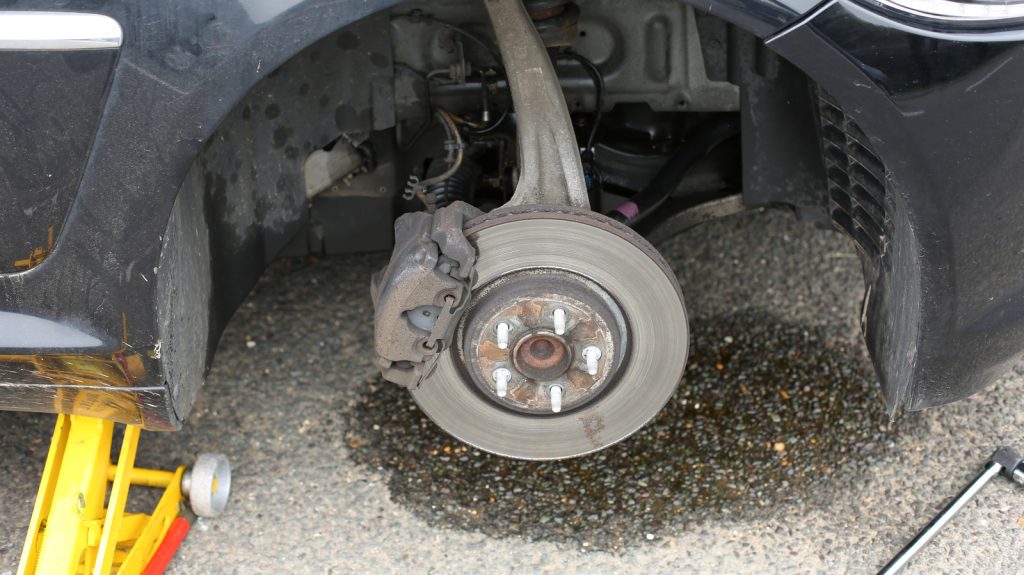
Catching a strange odor coming from your vehicle’s wheel wells or under hood space often points to an urgent mechanical issue. A leaking brake system produces distinct chemical scents that signal dangerous drops in hydraulic stopping power.
This guide details how to identify leaking brake fluid by scent, visual appearance, and pedal response, explaining why fluid loss threatens vehicle safety. It covers key characteristics of DOT 3, DOT 4, and high-performance brake fluids while providing actionable emergency stopping procedures for drivers facing sudden brake failure on the road.
Recognizing the Distinct Odors of Leaking Brake Fluid
Brake fluid operates inside a sealed hydraulic system designed to prevent air intrusion and fluid escape. When a leak occurs, contact with moisture and outside air causes the fluid to emit a noticeable scent. Recognizing this smell early allows you to address fluid loss before losing pedal pressure entirely.
Different grades of brake fluid carry unique scent and visual profiles. Standard passenger vehicles generally use specific formulations that darken as they age and absorb atmospheric contaminants.
| Brake Fluid Type | Visual Appearance | Scent Profile |
|---|---|---|
| DOT 3 (Classic / Older Vehicles) | Clear to Amber (Darkens with age) | Slightly sweet, heavy chemical smell |
| DOT 4 (Modern Standard Vehicles) | Clear to Yellowish (Darkens over time) | Sharp, pungent odor similar to fish oil |
| High-Performance Fluid | Varies (Clear, Amber, or Tinted) | Strong, harsh artificial smell |
Key Warning Signs of a Brake Fluid Leak
Aside from a sharp or sweet chemical smell near your tires, several mechanical indicators signal an active fluid leak. Paying attention to how your brake pedal feels provides the fastest confirmation of a failing system.
- Spongy Brake Pedal: Hydraulic brake fluid is incompressible. When fluid leaks out, air enters the lines. Air compresses under pressure, making the pedal feel soft or mushy when pressed.
- Illuminated Warning Light: A dashboard brake warning light triggers when fluid levels drop below the minimum threshold in the master cylinder reservoir.
- Puddles Near Wheels or Engine Bay: Fluid pooling near the inside of a tire or directly underneath the firewall suggests a leaking caliper, wheel cylinder, or line connection.
- Reduced Stopping Power: Loss of hydraulic pressure requires deeper pedal travel to slow the vehicle down, significantly increasing stopping distances.
Where Brake Fluid Leaks Typically Occur
Brake systems rely on continuous lines running from the driver’s feet to all four corners of the vehicle. A breach can happen at any connection point or flexible hose section.
Under the hood, the brake pedal connects directly to the brake master cylinder and vacuum booster, located on the driver-side firewall. A translucent plastic fluid reservoir sits directly on top of the master cylinder. Metal brake lines extend down from this unit, running along the underbody of the vehicle.
At each wheel, rigid metal lines transition into flexible rubber or braided steel hoses, connecting to disc brake calipers or drum wheel cylinders. Corrosion, physical debris, extreme thermal expansion, or worn rubber seals frequently cause leaks at these terminal connections.
Emergency Protocols: Handling Fluid Loss on the Road
If you discover a brake fluid puddle while your car is parked in a driveway or parking lot, do not drive the vehicle. Transporting a car with a compromised hydraulic system puts you and surrounding motorists at immediate risk. Call a towing service to take the vehicle to a certified mechanic.
If your brake lines burst while driving at highway speeds, remain calm and execute alternative decelerating techniques:
- Downshift for Engine Braking: Shift your transmission into lower gears manually (or select lower drive modes on an automatic). Engine braking uses cylinder vacuum pressure to slow wheel rotation naturally without applying wheel brakes.
- Use the Parking Brake Carefully: Once your vehicle slows to a manageable speed, gradually engage the parking brake. If your vehicle features an electronic parking brake, engage it only when you have reduced momentum to avoid locking the rear wheels and losing steering control.
- Steer Toward a Safe Pull-Off Zone: Signal clearly, steer away from heavy traffic, and let engine drag bring the vehicle to a complete stop on the shoulder.
Frequently Asked Questions
Is it safe to drive with a small brake fluid leak?
No, it is never safe to drive with an active brake fluid leak. Even a minor leak introduces air into the hydraulic lines, which can lead to complete and sudden pedal failure without warning.
Why does leaking brake fluid smell like fish oil?
Modern DOT 4 brake fluids contain glycol ether compounds and protective anti-corrosion additives. As these chemical compounds degrade and react with heat, moisture, and outdoor air, they produce a pungent, fish-oil-like odor.
Can a brake fluid leak burn and cause smoke?
Yes. If leaking brake fluid drips directly onto hot exhaust pipes or glowing brake rotors, it can vaporize, producing white smoke and a harsh burning chemical smell, presenting a potential fire hazard.