
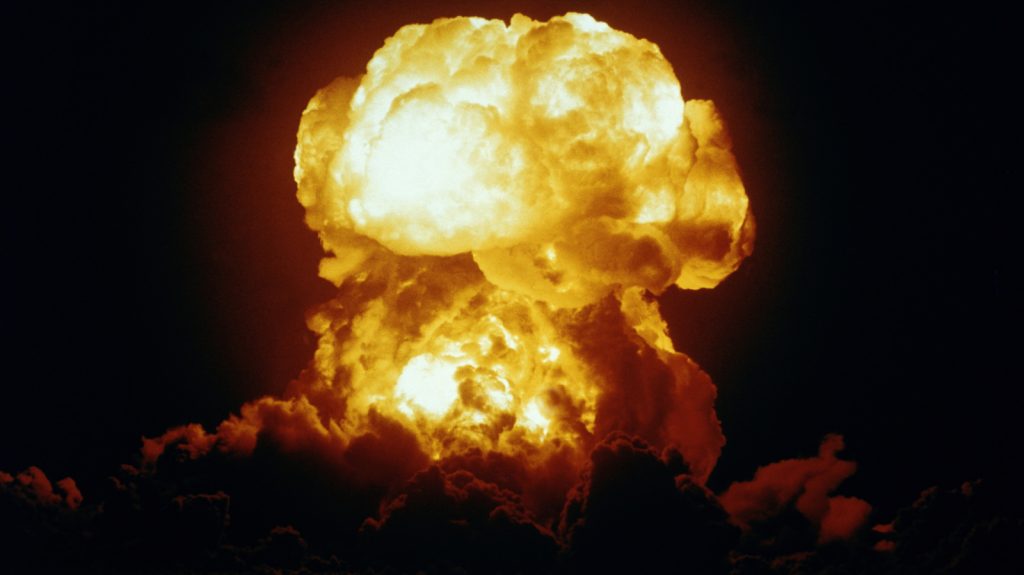
Ever since the atomic bombings of World War II and high-profile nuclear power accidents like Chornobyl and Fukushima, public concern over nuclear energy has remained high. Many people living near a power facility wonder whether a major plant failure could trigger a full-scale atomic blast.
Direct Summary: While both nuclear reactors and atomic weapons rely on nuclear fission, a commercial nuclear reactor cannot explode like a nuclear bomb. Power plants lack the high fuel enrichment levels and specialized compression mechanisms needed for a runaway atomic blast. However, core meltdowns can still cause severe steam explosions and radioactive contamination.
Nuclear Power Plants vs. Nuclear Weapons: Key Differences
To understand why a reactor meltdown cannot turn into an atomic explosion, it helps to examine how each system manages nuclear fuel and chain reactions.
| Feature | Nuclear Power Reactor | Atomic Bomb |
|---|---|---|
| Primary Purpose | Controlled release of energy to generate electricity | Uncontrolled runaway explosion for destruction |
| Fuel Type & Enrichment | Low-enriched Uranium-235 (typically 3% to 5%) | Highly enriched Uranium-235 (85%+) or Plutonium-239 |
| Reaction Control | Control rods and coolants regulate fission rates | No control mechanism; designed for maximum instant energy |
| Explosion Mechanism | Steam pressure or chemical gas build-up (non-nuclear) | High-explosive compression reaching supercritical mass |
| Primary Environmental Hazard | Long-term radioactive fallout from damaged fuel cores | Thermal radiation, shockwave blast, and prompt fallout |
How a Nuclear Reactor Generates Energy
A standard nuclear power plant operates on the same basic principle as a traditional steam power station. Instead of burning coal, oil, or gas, it uses nuclear fission—the splitting of heavy atoms such as uranium-235—to produce heat.
Inside the reactor core, nuclear fuel rods are submerged in water, which functions as both a coolant and a neutron moderator. Operators insert or remove control rods made of neutron-absorbing material to speed up or slow down the reaction. The heat generated by splitting atoms turns the surrounding water into steam, which spins heavy turbines to create electricity.
Why an Atomic Explosion Is Physically Impossible in a Reactor
Detonating an atomic bomb requires precise engineering and highly refined fissile material. Weapons-grade material must be compressed inward instantaneously using conventional high explosives, forcing the nuclear core into a supercritical state that releases vast amounts of energy in microseconds.
Nuclear reactors cannot physically replicate an atomic blast due to two fundamental factors:
- Fuel Enrichment Levels: Reactors operate on low-enriched uranium, which lacks the concentration of fissile isotopes required to sustain a rapid, weaponized explosion.
- Core Geometry: Reactor configurations are intentionally built to keep fuel separated and submerged in coolant, preventing the rapid density spike necessary for nuclear detonation.
When catastrophic plant failures occur, such as the disasters at Chornobyl, Fukushima, or Three Mile Island, the explosions are caused by steam pressure build-up or hydrogen gas accumulation. Although these are conventional chemical or physical explosions, they can break open containment buildings and scatter radioactive fuel across wide areas.
Frequently Asked Questions
What causes a nuclear plant to explode if it is not an atomic blast?
Explosions at nuclear facilities are caused by steam pressure or chemical reactions. If cooling water stops flowing, overheating fuel rods can boil off water to produce extreme steam pressure or split water molecules into flammable hydrogen gas, leading to chemical detonations.
Can a nuclear reactor accident cause long-term contamination?
Yes, severe accidents that destroy containment structures can scatter radioactive isotopes across large regions. Because nuclear plants contain substantial amounts of long-lived fuel, meltdowns can create hazardous exclusion zones that last for decades.
Could a plutonium-fueled reactor explode like a bomb?
No, reactors utilizing plutonium or mixed oxide fuel still lack the structural implosion devices and supercritical geometry required to ignite an atomic explosion. Any catastrophic failure mode remains limited to thermal and pressure-related events.