
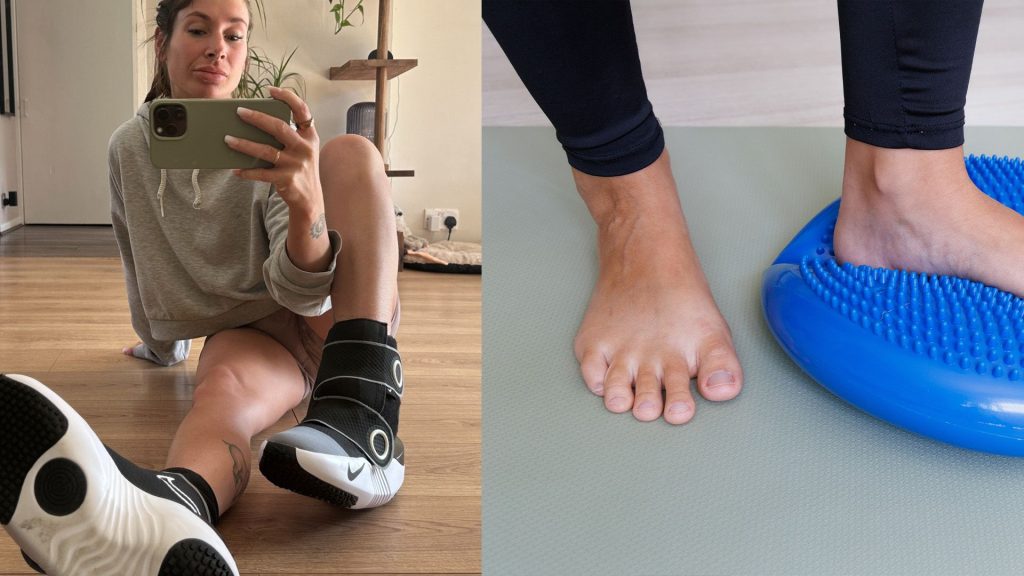
Resting after abdominal surgery can be immensely frustrating for active individuals who rely on daily physical movement for both mental clarity and body conditioning. Following surgical procedures, medical guidelines often mandate strict restrictions on heavy lifting and high-impact activities, leaving many searching for safe ways to stay mobile.
This guide details three low-impact foot and ankle routines designed to preserve balance, lower-body stability, and joint mobility during post-surgical recovery or light training phases. Ideal for fitness enthusiasts, runners, and lifters restricted from intense training, these exercises enhance grounding mechanics, single-leg control, and lower-limb blood circulation without placing stress on healing core tissues.
| Exercise Name | Target Area | Recommended Volume | Primary Benefit |
|---|---|---|---|
| Toe Splays & Scrunches | Planter fascia, toes, arches | 60–90 seconds per foot | Improves foot-ground tripod connection and circulation |
| Hip Aeroplanes | Hips, glutes, ankle stabilizers | 6 controlled reps per side | Build rotational hip mobility and single-leg balance |
| Figure-4 Heel Raises | Calves, ankle joint, groin | 6–8 reps per side | Strengthens calf muscles and increases joint range of motion |
Three Low-Impact Moves to Restore Lower-Body Stability
Before attempting any post-operative exercise routine, consult your physician or surgeon to verify that light movement is appropriate for your stage of recovery. Discontinue any exercise immediately if you experience pain or abdominal discomfort.
1. Toe Splays and Scrunches
Stand barefoot on a flat surface or exercise mat with your feet placed hip-width apart. Root your weight through the tripod points of each foot: the heel, the base of the big toe, and the base of the little toe. Slowly articulate your toes, rolling from the outer edges to the inner edges, spreading each toe wide before pressing down firmly into the floor. Transition into rapid foot scrunches by curling your toes inward toward the arch and releasing them quickly.
Practicing this move for 60 to 90 seconds per foot improves sensory connection with the ground. This deliberate foot activation stimulates blood flow through the lower extremity, relieving foot stiffness and strengthening the intrinsic muscles supporting your arch structure.
2. Hip Aeroplanes
Begin standing with your feet hip-width apart. Shift your body weight onto your right foot while lifting your left leg slightly off the floor. Hinge forward at the hips while extending your left leg straight behind you until your torso approaches a position parallel to the ground. Keeping your standing leg slightly soft at the knee, rotate your hips open to the left side, pause briefly to feel the stretch across your hip joint, and then rotate back to square your hips forward.
Perform six controlled repetitions on each side. Hip aeroplanes engage the minor stabilizing muscles around your ankles, knees, and glutes. Because the movement relies on steady hinge mechanics rather than abdominal flexing, it builds lower-body equilibrium while protecting the midsection.
3. Figure-4 Heel Raises
Stand tall with your feet hip-width apart. Rest your right ankle across your left thigh just above the knee joint, letting your right knee open outward to form a figure-4 shape. Balance steadily on your left standing leg, press through the ball of your left foot, and slowly elevate your left heel as high off the floor as possible. Squeeze your calf muscle briefly at the top of the lift, then lower your heel back down with complete control.
Complete six to eight repetitions before switching to the opposite leg. Single-leg calf raises target the ankle joint’s vertical stabilization path. Strengthening the calves also promotes venous return—helping push blood upward back toward the heart—which aids lower-body circulation during periods of reduced overall activity.
Why Ankle Mobility and Foot Grounding Matter for Movement
Developing strong foot-ground contact and ankle flexibility is essential for maintaining proper movement mechanics. When foot stability is compromised, the body compensates by overworking upper joints, which can lead to knee strain, hip tightness, or poor posture during basic daily movements.
Focusing on single-leg equilibrium directly benefits unilateral movement patterns such as lunges, split squats, and running strides. Establishing a firm foundation through the three-point tripod stance ensures weight is distributed evenly across the foot, giving you greater control during both casual walking and structured training.
Integrating these gentle drills before sessions helps activate nerve pathways, align your center of gravity, and tune your breathing patterns to keep your body stable without requiring aggressive abdominal exertion.
Frequently Asked Questions
Why is foot and ankle training helpful during post-surgery recovery?
Foot and ankle routines allow individuals recovering from surgical procedures to maintain lower-body strength, joint mobility, and sensory balance without loading the trunk or core muscles. These exercises keep stabilizing muscles active while adhering to low-impact medical guidelines.
Can these drills be used as a pre-workout warm-up?
Yes. These low-impact movements serve as an effective warm-up sequence prior to strength workouts, yoga, or Pilates sessions. They prime the nervous system, open the hip joints, and activate ankle stabilizers to prepare the body for movement.
What is the tripod foot stance and why does it matter?
The tripod foot stance refers to balancing body weight evenly across three structural points: the heel, the big toe joint, and the small toe joint. Establishing this distribution creates a stable base, preventing ankle collapse and enhancing overall balance during standing exercises.