
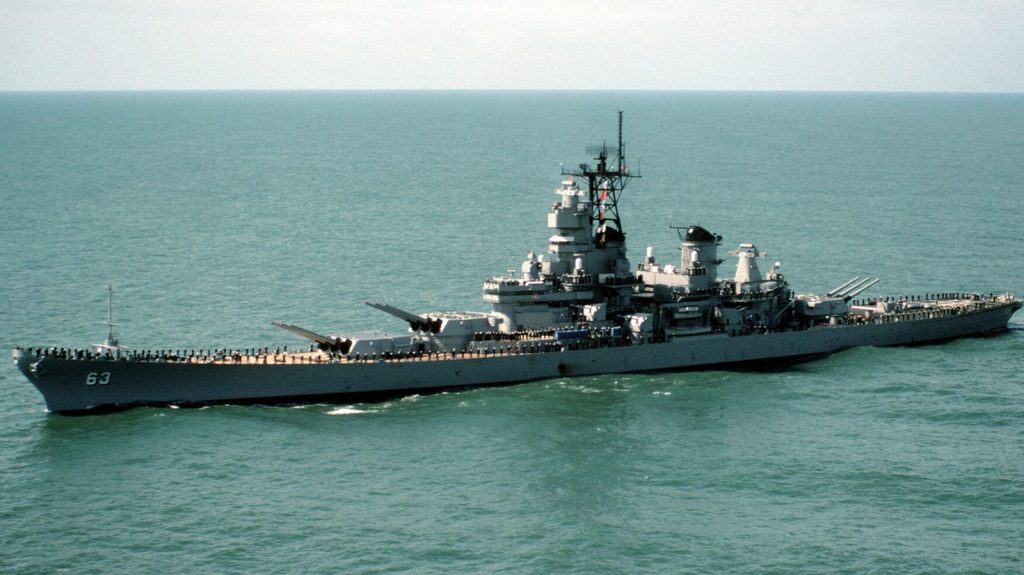
Naval combat during the early to mid-20th century was defined by the raw firepower and thick armor plating of the battleship. From the emergence of modern dreadnoughts to the high-speed fast battleships of World War II, the United States Navy built and operated dozens of these heavy capital ships to secure sea control across multiple war zones.
Direct Overview: This historical guide details all 13 U.S. Navy battleship classes that served during World War I and World War II, tracking their structural evolution, weapon upgrades, armor designs, and operational service. Formatted for military historians and researchers, this breakdown highlights how American capital ship development progressed from 16,000-ton early dreadnoughts to 45,000-ton steel giants equipped with heavy 16-inch artillery and advanced radar-directed gunnery systems.
U.S. Navy Battleship Class Specifications at a Glance
| Class Name | Displacement | Primary Armament | Notable Feature or Historical Role |
|---|---|---|---|
| South Carolina | 16,000 tons | 8 x 12-inch / 45 cal | First American dreadnought class; introduced superfiring turrets. |
| Delaware | 20,000 tons | 10 x 12-inch / 45 cal | Broke the 16,000-ton limit; increased speed capabilities to 24 mph. |
| Florida | 21,825 tons | 10 x 12-inch / 45 cal | Switched to steam turbine propulsion; USS Utah sunk at Pearl Harbor. |
| Wyoming | 26,000 tons | 12 x 12-inch / 50 cal | Upgraded to longer 50-caliber barrels and added torpedo bulkheads. |
| New York | 27,000 tons | 10 x 14-inch / 45 cal | First class armed with 14-inch main guns; saw extensive combat in WWI and WWII. |
| Nevada | 27,500 tons | 10 x 14-inch / 45 cal | Pioneered the “all-or-nothing” heavy armor protection system. |
| Pennsylvania | 31,400 tons | 12 x 14-inch / 45 cal | Standard-type design using oil fuel; USS Arizona lost at Pearl Harbor. |
| New Mexico | 32,000 tons | 12 x 14-inch / 50 cal | First 3-ship class; USS New Mexico tested turbo-electric drive systems. |
| Tennessee | 32,300 tons | 12 x 14-inch / 50 cal | Post-WWI construction featuring improved underwater defense systems. |
| Colorado | 32,600 tons | 8 x 16-inch / 45 cal | First American battleships designed with 16-inch main armaments. |
| North Carolina | 35,000 tons | 9 x 16-inch / 45 cal | First modern fast battleship class; built to treaty displacement limits. |
| South Dakota | 35,000 tons | 9 x 16-inch / 45 cal | Compact hull design with superior armor and anti-aircraft defenses. |
| Iowa | 45,000 tons | 9 x 16-inch / 50 cal | Fastest U.S. battleships built (up to 40.5 mph); active into the late 20th century. |
Early Dreadnought Era: South Carolina to Wyoming Classes
South Carolina Class
Commissioned in 1910, the South Carolina class marked the U.S. Navy’s transition into the dreadnought era. Composed of the USS South Carolina (BB-26) and USS Michigan (BB-27), these 16,000-ton vessels were built to match the UK’s HMS Dreadnought. They replaced mixed-caliber secondary batteries with a unified main armament consisting of eight 12-inch guns arranged in superfiring turrets.
Both ships performed escort duties in the Atlantic during World War I. Following the Washington Naval Treaty of 1922, both hulls were decommissioned and scrapped to adhere to international tonnage limits.
Delaware Class
Entering service shortly after the South Carolina class, the USS Delaware (BB-28) and USS North Dakota (BB-29) breached the 16,000-ton limit, displacement reaching 20,000 tons. This extra mass allowed naval architects to install ten 12-inch guns across five main turrets and raise top speeds to 24 mph.
The USS Delaware joined the British Grand Fleet’s Sixth Battle Squadron in 1917, while the North Dakota served primarily as a training platform. Both vessels were taken out of active service and broken up for scrap by the early 1930s.
Florida Class
The USS Florida (BB-30) and USS Utah (BB-31) were commissioned in 1911 as expanded 21,825-ton capital ships. They carried ten 12-inch primary guns, sixteen 5-inch secondary guns, and two 21-inch torpedo tubes, relying entirely on steam turbine propulsion for reliable cruising power.
During World War I, the Florida performed operational duties in the North Sea. The Utah was later modified into a radio-controlled target ship in 1931. While moored at Pearl Harbor on December 7, 1941, the Utah was struck by two torpedoes and capsized near Ford Island, where its hull remains today.
Wyoming Class
Commissioned in 1912, the USS Wyoming (BB-32) and USS Arkansas (BB-33) introduced the upgraded 12-inch/50 caliber Mk. 7 naval gun, offering higher muzzle velocity and greater kinetic energy than earlier barrels. These ships added a sixth turret, heavier belt protection, and internal torpedo bulkheads.
The Wyoming served with the British Grand Fleet in World War I before being demilitarized into a gunnery training vessel that operated through World War II. The Arkansas provided naval gunfire support during Operation Overlord at Normandy, as well as the invasions of Iwo Jima and Okinawa, before being submerged in the 1946 Bikini Atoll nuclear weapons tests.
The Standard-Type Battleship Era: New York to Colorado Classes
New York Class
The USS New York (BB-34) and USS Texas (BB-35) represented a major leap in naval caliber when commissioned in 1914. Displacing 27,000 tons, they were the first U.S. capital ships to field 14-inch/45 caliber main guns. Both ships underwent major overhauls between the wars to install specialized anti-aircraft defenses and tripod masts.
The New York escorted Atlantic convoys and supported landings at Iwo Jima and Okinawa before serving as a target ship in postwar weapons trials. The USS Texas fought across both global conflicts and was preserved as a historical museum ship in Texas after its decommission.
Nevada Class
Featuring the USS Nevada (BB-36) and USS Oklahoma (BB-37), the Nevada class introduced the “all-or-nothing” armor layout. This tactical design placed maximum armor thickness over critical zones like magazines and propulsion machinery while leaving non-vital areas unarmored.
Both battleships were targeted during the Pearl Harbor attack on December 7, 1941. The Oklahoma sank after multiple torpedo hits, whereas the Nevada grounded itself to avoid blocking the harbor channel. After extensive repairs and modernizations, the Nevada provided shore bombardment at Normandy, Iwo Jima, and Okinawa.
Pennsylvania Class
Entering service in 1917, the USS Pennsylvania (BB-38) and USS Arizona (BB-39) expanded the standard-type concept to 31,400 tons. They mounted twelve 14-inch guns in four triple turrets and transitioned to fuel oil boilers, which temporarily restricted their deployment to North American coastal waters due to wartime oil constraints in Europe.
During the Pearl Harbor raid, the Arizona suffered a cataclysmic explosion in its forward magazine, causing it to sink with the loss of 1,100 crew members. The Pennsylvania received minor damage, was repaired, and served as a naval gunfire platform across multiple Pacific amphibious landings.
New Mexico Class
The New Mexico class expanded U.S. battleship construction to three vessels: the USS New Mexico (BB-40), USS Mississippi (BB-41), and USS Idaho (BB-42). These 32,000-ton standard-type ships were fitted with longer 14-inch/50 caliber main guns to improve maximum engagement ranges.
The USS New Mexico also served as a testbed for General Electric turbo-electric drive propulsion. All three ships provided fire support during World War II Pacific operations, providing bombardment coverage from the Aleutian Islands to the Japanese home waters.
Tennessee Class
Commissioned shortly after World War I, the USS Tennessee (BB-43) and USS California (BB-44) incorporated internal structural improvements, increased main gun elevation limits, and wider hulls to resist torpedo detonations. Both 32,300-ton vessels were stationed at Pearl Harbor when Japan attacked.
The Tennessee sustained bomb damage but was quickly repaired to fight across the Pacific Theater. The California sank at its moorings, requiring two and a half years of salvage, repair, and modernization before returning to active combat during the 1944 campaign season.
Colorado Class
The Colorado class represented the ultimate evolution of the standard-type battleship design. Displacing 32,600 tons, the USS Colorado (BB-45), USS Maryland (BB-46), and USS West Virginia (BB-48) were the first U.S. ships built with eight 16-inch main guns (a fourth vessel, the USS Washington BB-47, was canceled before completion).
The Maryland and West Virginia were both damaged at Pearl Harbor, with the West Virginia sinking after absorbing two bomb and seven torpedo strikes. After extensive salvage operations, all three ships re-joined the Pacific Fleet to support major amphibious invasions through 1945.
The Modern Fast Battleships: North Carolina to Iowa Classes
North Carolina Class
Breaking away from standard-type design limits, the USS North Carolina (BB-55) and USS Washington (BB-56) entered service in 1941 as fast battleships. Capable of speeds over 27 knots while displacing 35,000 tons, they mounted nine 16-inch/45 caliber Mk. 6 guns inside three triple turrets.
The North Carolina protected carrier battle groups at Guadalcanal and the Eastern Solomons before being preserved as a state museum in 1960. The Washington scored heavy naval artillery hits against enemy warships off Guadalcanal and served continuously across the Central Pacific campaign.
South Dakota Class
Commissioned in 1942, the South Dakota class consisted of four ships: the USS South Dakota (BB-57), USS Indiana (BB-58), USS Massachusetts (BB-59), and USS Alabama (BB-60). They utilized a more compact hull layout that maintained 35,000-ton treaty boundaries while integrating thicker belt armor and expanded anti-aircraft suites.
These vessels escorted carrier task forces and shelled shore fortifications across the Atlantic, Mediterranean, and Pacific. Following the war, the Massachusetts and Alabama were saved by public preservation efforts and established as permanent museum ships.
Iowa Class
The final class of battleships completed by the U.S. Navy included the USS Iowa (BB-61), USS New Jersey (BB-62), USS Missouri (BB-63), and USS Wisconsin (BB-64). Displacing 45,000 tons standard and measuring nearly 890 feet long, these fast battleships reached top speeds of up to 40.5 mph to escort modern aircraft fleets.
Equipped with nine 16-inch/50 caliber guns, Iowa-class ships served in World War II, the Korean War, the Vietnam War, and Operation Desert Storm. On September 2, 1945, the Japanese Instrument of Surrender was signed aboard the deck of the USS Missouri in Tokyo Bay. Today, all four Iowa-class battleships are preserved as public naval museums.
Frequently Asked Questions
Which U.S. Navy battleship hosted the official Japanese surrender ending World War II?
The USS Missouri (BB-63), an Iowa-class fast battleship, was chosen as the historic site for the surrender ceremony. The official document was signed on its main deck while anchored in Tokyo Bay on September 2, 1945.
Why were oil-burning battleships like the Pennsylvania class held back from European service in World War I?
Fuel logistics dictated naval deployments during World War I. The United Kingdom faced tight supplies of fuel oil, prompting the U.S. Navy to send older coal-burning battleships to support the British Grand Fleet while keeping newer oil-fired capital ships stationed near the American coastline.
How many former U.S. Navy battleships remain preserved today?
Eight U.S. Navy battleships have been preserved across the nation as museum ships. These include all four Iowa-class vessels (Iowa, New Jersey, Missouri, Wisconsin) alongside the USS Texas, USS North Carolina, USS Massachusetts, and USS Alabama.