
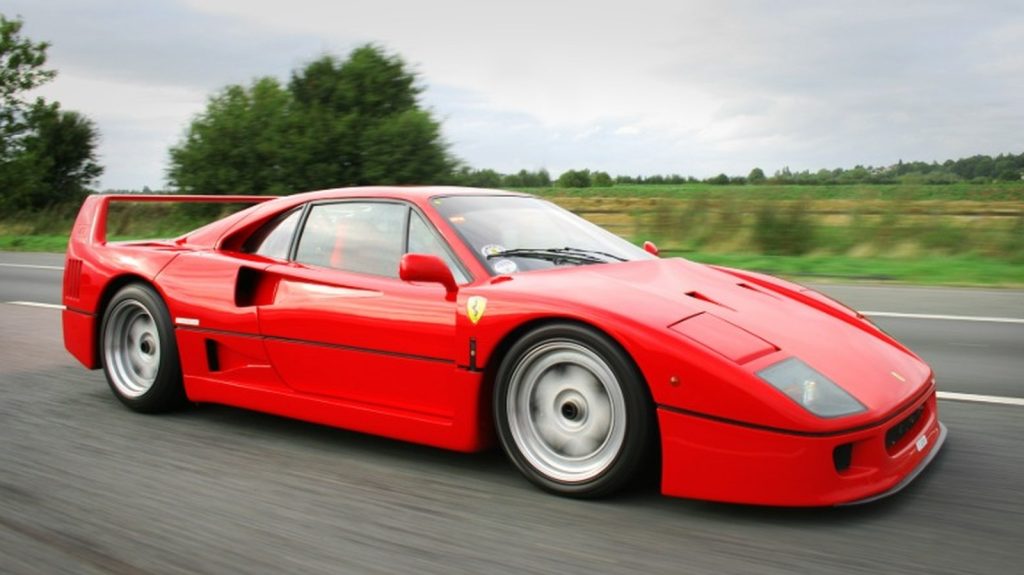
Seven-time Formula 1 world champion Lewis Hamilton has added one of the most iconic supercars in automotive history to his personal collection: a Ferrari F40 that sat untouched in storage for three decades. Despite needing extensive mechanical and cosmetic rehabilitation, Hamilton secured the rare vehicle and arranged for a factory restoration to return it to showroom condition.
This article details F1 driver Lewis Hamilton’s acquisition and factory restoration of a long-dormant Ferrari F40. It highlights key technical performance specifications, historical production data, and the vehicle’s journey from a forgotten garage find into pristine driving condition, offering essential context for supercar collectors and motorsports enthusiasts.
| Specification / Metric | Ferrari F40 / Discovery Details |
|---|---|
| Production Run | 1987 – 1992 |
| Total Production Volume | Approximately 1,315 units |
| Engine Architecture | Longitudinal Twin-Turbocharged V8 |
| Power & Torque Output | 478 hp @ 424 lb-ft torque |
| Performance Specs | 0–62 mph in 4.1 seconds; 201 mph (324 km/h) top speed |
| Storage Duration | Dormant in a garage for over 30 years |
| Restoration Facility | Ferrari Factory in Maranello, Italy |
The Engineering Legacy of the Ferrari F40
Ferrari produced the F40 between 1987 and 1992, creating a vehicle that quickly became an benchmark in high-performance automotive design. Defined by its low, wide aerodynamic bodywork, distinct cooling vents, and massive integrated rear wing, the F40 remains one of the most celebrated models ever to leave Maranello.
Underneath its lightweight body lies a longitudinal twin-turbocharged V8 engine capable of delivering 478 horsepower and 424 lb-ft of torque. The supercar achieved a top speed of 201 mph (324 km/h) and sprinted from 0 to 62 mph in just 4.1 seconds. Much of this performance was made possible by being the first Ferrari model to extensively utilize composite materials for its body panels, minimizing curb weight to maximize agility.
Reviving a Rare Garage Find
Uncovering a original, low-mileage classic car after decades in storage is a dream scenario for elite collectors. Given that Ferrari only produced roughly 1,315 units of the F40 during its entire production run, finding an undisturbed example is exceptionally rare. Today, well-preserved F40s consistently command seven-figure values on the global auction market.
Hamilton, who joined the Ferrari F1 team for the 2025 season, discovered the vehicle covered in thick layers of dust after sitting inactive in a garage for more than 30 years. Driven by his appreciation for the vehicle’s styling, Hamilton acquired the car with the intention of giving it a full second life.
Leveraging his direct connection with the Italian automaker, Hamilton sent the vehicle back to its birthplace in Maranello. Master craftsmen at the Ferrari factory performed a complete overhaul, repairing mechanical components and restoring the finish back to factory specs. Hamilton, who frequently compares the F40’s design language to fine art, described fulfilling the project as a personal dream come true.
Frequently Asked Questions
How long was Lewis Hamilton’s Ferrari F40 left in storage?
The vehicle remained sitting dormant inside a garage for over 30 years before Lewis Hamilton acquired it. Despite decades of accumulated dust and necessary mechanical restoration work, Hamilton secured the vehicle and had it shipped directly to Italy for servicing.
Where was the Ferrari F40 restored?
The vehicle was fully restored by specialists at Ferrari’s official Maranello factory. The facility brought the classic supercar back to its original factory condition, repairing both its twin-turbo V8 engine and lightweight bodywork.
How many Ferrari F40 models were produced?
Ferrari built approximately 1,315 examples of the F40 between 1987 and 1992. Due to their limited production numbers and historical significance, existing units routinely fetch multi-million dollar prices at auctions worldwide.