
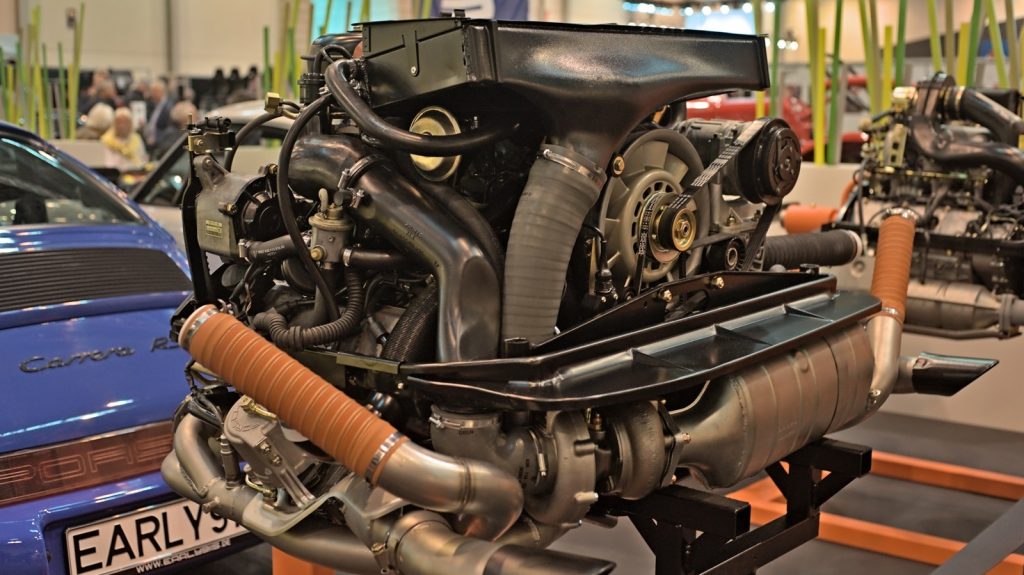
For decades, conventional automotive wisdom held that forced induction sacrificed long-term engine survival for immediate performance gains. Early turbo setups were notorious for excess heat, severe lag, and early mechanical wear. However, advanced metallurgy and modern engineering proved that forced induction can deliver high horsepower, exceptional fuel economy, and remarkable long-term durability when designed properly.
This overview highlights nine exceptionally reliable turbocharged engines engineered to cross 150,000 to over 300,000 miles with basic routine maintenance. Designed for car buyers, tuners, and auto enthusiasts, this comparison details time-tested powerplants from Honda, Toyota, BMW, Ford, and others, focusing on block design, internal components, and thermal management features that ensure lasting operation.
Engine Overview & Key Specifications
| Engine Model | Configuration | Displacement | Notable Application | Key Strength |
|---|---|---|---|---|
| Honda K20C1 | Inline-4 | 2.0 Liters | Honda Civic Type R | Forged steel internals, micro-polished journals |
| BMW S63 | V8 | 4.4 Liters | BMW M5, X5 M | Hot-Vee twin-scroll layout, low turbo lag |
| Audi TFSI | Inline-5 | 2.5 Liters | Audi RS 3 | Compact aluminum construction, high-pressure boost |
| Saab B202 | Inline-4 | 2.0 Liters | Saab 900 Turbo | Heavy-duty bottom end, APC knock regulation |
| Subaru EJ20 Turbo | Boxer-4 | 2.0 Liters | Subaru Impreza WRX | Horizontally opposed layout, high-revving architecture |
| Volkswagen EA888 | Inline-4 | 2.0 Liters | VW Golf GTI / Golf R | Chain-driven DOHC, integrated thermal management |
| Ford EcoBoost | V6 | 3.5 Liters | Ford F-150, Taurus SHO | Dual injection system, electronic wastegates |
| Toyota 2JZ-GTE | Inline-6 | 3.0 Liters | Toyota Supra Turbo | Cast-iron closed-deck block, extreme boost tolerance |
| Nissan RB26DETT | Inline-6 | 2.6 Liters | Nissan Skyline GT-R | Individual throttle bodies, rigid crank girdle |
Honda K20C1 2.0-Liter Turbocharged Inline-4
Debuting in 2015 for the Civic Type R, Honda’s K20C1 engine proved that direct-injected 2.0-liter turbocharged four-cylinders could deliver intense power alongside Honda’s trademark reliability. Constructed with a die-cast open-deck aluminum block and cast-iron cylinder sleeves, the engine relies on a forged steel crankshaft with micro-polished journals to drastically reduce internal friction.
Weight reduction plays a primary role throughout the assembly. Heat-forged connecting rods move lightweight coated pistons, while the aluminum cylinder head integrates water-cooled exhaust ports to control operating temperatures. Combined with Honda’s Variable Timing Control (VTC) and i-VTEC system, the engine delivers up to 306 horsepower and easily pushes past the 150,000-mile mark with simple, timely maintenance.
BMW S63 4.4-Liter Twin-Turbo V8
Introduced in 2011 as a substantial redesign of the N63, the BMW S63 elevated high-performance V8 longevity. BMW added twin-scroll turbochargers fed by a pulse-tuned exhaust manifold, generating up to 17 psi of boost pressure. The engine resolved numerous mechanical issues present in its predecessor while boosting output up to 635 horsepower in top-tier applications like the M5 CS.
A signature design feature of the S63 is its “hot-vee” architecture, which tucks the turbochargers and exhaust manifolds directly into the valley between the cylinder banks. This short path reduces lag, lowers system temperatures, and provides fast response. Drivers routinely report high mileage without major structural failures, provided torque limits remain within reasonable bounds on stock hardware.
Audi 2.5-Liter TFSI Five-Cylinder
Audi’s award-winning 2.5-liter TFSI five-cylinder combines a compact 160 kg footprint with immense power potential. Built on a rigid aluminum block, the engine utilizes Audi’s Valve Lift System (AVS) alongside direct fuel injection. This combination optimizes cylinder filling and maximizes output while keeping exhaust emissions low.
Running boost pressures up to 34 psi (2.35 bar), the engine features robust internal cooling to protect components during aggressive driving. Installed in performance models like the Audi RS 3, it develops up to 401 horsepower and propel vehicles from 0 to 60 mph in under 3.5 seconds without sacrificing daily drivability or long-term operational stability.
Saab B202 2.0-Liter Turbocharged Inline-4
First appearing in 1984 on the Saab 900 Turbo, the 16-valve B202 set a benchmark for modern double-overhead-cam turbo engines. Managed by Bosch LH-Jetronic fuel injection and Saab’s Automatic Performance Control (APC) system, the engine monitored knock sensor data to optimize boost according to fuel octane ratings.
While the upper head gasket represents a routine service item over time, the lower block assembly of the B202 is virtually indestructible. Numerous high-mileage owners have logged well over 200,000 miles—and in extreme cases, close to a million miles—on original bottom-end internal components.
Subaru EJ20 Turbocharged Boxer-4
Subaru introduced its quad-cam EJ20 turbo in 1989 for the Legacy RS/GT before fitting it to the iconic Impreza WRX. Utilizing a horizontally opposed layout, the flat-four engine eliminates the need for balance shafts, directing more energy straight to the driveshaft while lowering the vehicle’s center of gravity.
With an oversquare 92mm bore and 75mm stroke, the EJ20 revs freely to high RPMs, outputting smooth power across the rev range. Lightweight aluminum construction, combined with coil-on-plug ignition and multi-point fuel injection, makes the revised post-2007 variants exceptionally durable long-distance performers.
Volkswagen EA888 2.0-Liter Turbocharged Inline-4
Volkswagen designed the 2.0-liter EA888 with reinforced components specifically meant to handle continuous boost pressure. Featuring a high-strength crankshaft, forged connecting rods, and chain-driven dual overhead camshafts, the EA888 delivers responsive torque and high efficiency in vehicles like the Golf GTI and Golf R.
Variable valve timing and valve lift permit fast exhaust gas evacuation, helping the turbocharger spool almost instantly. Modern iterations incorporate a custom exhaust manifold design integrated into the cylinder head to streamline thermal regulation, allowing these engines to easily pass 150,000 miles under normal driving conditions.
Ford 3.5-Liter EcoBoost Twin-Turbo V6
Powering everything from the F-150 pickup truck to full-size SUVs and the Taurus SHO, Ford’s 3.5-liter EcoBoost V6 is one of the most versatile forced-induction truck and car engines in North America. Second-generation updates added dual port and direct injection alongside electronically controlled turbo wastegates for precise boost management.
By fixing early timing chain and intercooler condensation issues, Ford turned the 3.5 EcoBoost into a high-mileage workhorse. When drivers adhere strictly to oil change intervals, these twin-turbo V6 powerplants regularly exceed 200,000 miles under heavy towing and daily transport duties.
Toyota 2JZ-GTE 3.0-Liter Twin-Turbo Inline-6
The Toyota 2JZ-GTE achieved mythical status among sports car enthusiasts due to its bulletproof bottom end. Designed with a heavy-duty cast-iron closed-deck block, forged steel crankshaft, and main bearing girdle, the factory 3.0-liter inline-six was over-engineered specifically for maximum rigidity and heat rejection.
In factory trim, sequential twin turbos push out 320 horsepower. However, tuner culture quickly revealed that the stock block, pistons, and main structure can support double or triple its factory power on stock internals. Stock and conservatively tuned examples frequently surpass 300,000 miles without requiring a rebuild.
Nissan RB26DETT 2.6-Liter Twin-Turbo Inline-6
Serving as the core engine for the iconic Nissan Skyline GT-R series from 1989 through 2002, the RB26DETT is an engineering marvel. Built with a cast-iron closed-deck cylinder block, the oversquare 2.6-liter engine features individual throttle bodies for instantaneous throttle response and balanced air delivery across all six cylinders.
A heavy crank girdle stabilizes the crankshaft at high engine speeds, while piston oil squirtors maintain safe crown temperatures under continuous load. When kept at factory specifications or mildly upgraded with proper oiling system maintenance, the RB26DETT stands as one of the most durable motorsport-derived road car engines ever produced.
Frequently Asked Questions
How long can a well-maintained turbocharged engine last?
With high-quality synthetic oil, proper warm-up intervals, and timely maintenance, modern turbocharged engines typically last between 150,000 and 200,000 miles. Extremely heavy-duty designs, such as the Toyota 2JZ-GTE or Saab B202, can easily pass 300,000 miles on original bottom-end components.
Why are cast-iron closed-deck engine blocks generally more durable?
Closed-deck iron blocks offer superior structural rigidity around the cylinder bores compared to open-deck aluminum designs. This construction prevents cylinder wall flex under high boost pressures and reduces heat-induced cylinder distortion, significantly extending engine life.
Do modern turbo engines offer better reliability than older models?
Yes, modern turbocharged engines benefit from advanced thermal management, direct fuel injection, electronic wastegates, and improved synthetic lubricants. These technological upgrades drastically reduce turbo lag, minimize thermal stress, and lower internal friction compared to early turbo designs from the 1980s and 1990s.