
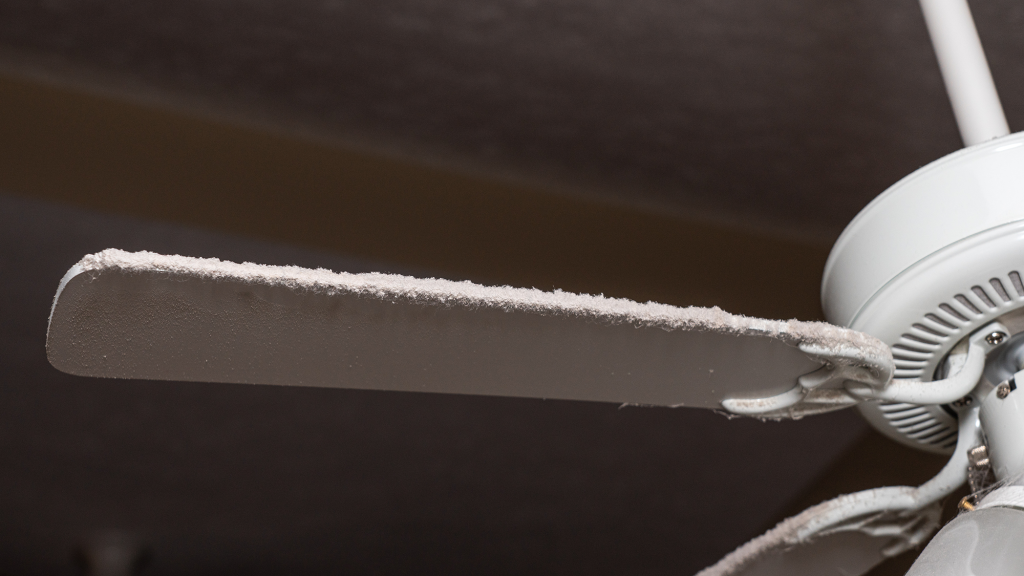
Cleaning ceiling fans with a dry feather duster often feels like a losing battle, as loose particles fly into the air and land right back on your furniture. Switching to a wet dusting technique with a specialized homemade spray keeps grime contained and prevents dust from re-settling quickly.
This four-ingredient DIY dusting spray uses everyday household items—rubbing alcohol, water, olive oil, and dish soap—to break down sticky buildup and trap dust particles on contact. Ideal for homeowners looking for an inexpensive, five-minute cleaning hack, this formula works exceptionally well on high-dust areas like ceiling fans, window blinds, and baseboards without leaving streaks or greasy residue.
The 4-Ingredient DIY Dust-Busting Recipe
Creating your own anti-dust spray takes less than five minutes and requires basic pantry and household supplies. The formula relies on a precise balance of solvents, lubricants, and surfactants to clean effectively while keeping future dust accumulation at bay.
| Ingredient | Measurement | Primary Function |
|---|---|---|
| Rubbing Alcohol | ¼ cup | Cuts through stubborn grime and promotes fast, streak-free evaporation. |
| Water | 1 cup | Dilutes the active solution, ensuring safe application across surfaces. |
| Olive Oil | 1 tablespoon | Traps dust particles on the cloth and leaves a subtle, protective finish. |
| Dawn Dish Soap | 1 splash | Emulsifies oil with water while lifting greasy debris from surfaces. |
Why This DIY Spray Formula Works So Well
Each component in this homemade mixture serves a specific technical purpose. Rubbing alcohol breaks down sticky film and allows the mixture to evaporate quickly, avoiding liquid drips on floorboards or furniture below.
The addition of Dawn dish soap provides essential surfactant properties. Dish soap acts as an emulsifier, allowing the oil and water components to mix smoothly rather than separating inside the spray bottle. Meanwhile, a minimal dose of olive oil conditions the surface and binds loose dust directly to your cleaning cloth rather than letting it circulate into the room air.
Step-by-Step Guide to Cleaning Ceiling Fans
Applying this cleaning solution properly ensures you capture all settled grime without damaging fan blades or hardware. Follow these three steps for an efficient clean:
- Mix the Solution: Pour the rubbing alcohol, water, olive oil, and Dawn dish soap directly into an empty spray bottle. Shake gently to blend the ingredients.
- Prep Your Cloth: Lightly mist the mixture onto a high-quality microfiber cleaning cloth rather than spraying directly onto the ceiling fan blades. This prevents liquid from dripping onto electrical components or floor coverings.
- Wipe Down the Blades: Firmly wipe each fan blade from the center support out to the tip. The dust will adhere cleanly to the damp microfiber fabric without floating into the surrounding air.
Alternative Uses Around the Home
While this blend works wonders on elevated ceiling fan blades, its dust-trapping properties extend to several hard-to-clean household surfaces. Try using this mixture on wooden or vinyl window blinds, plantation shutters, and baseboards throughout your living space.
Because the olive oil leaves a light barrier on treated materials, surfaces tend to resist rapid dust buildup longer than those cleaned with standard feather dusters or plain dry rags.
Frequently Asked Questions
Why is dry feather dusting bad for ceiling fans?
Dry feather dusters do not trap dust; instead, they dislodge fine particles directly into the room air. These airborne particles quickly settle back onto lower furniture, carpets, and flooring, making your home dirty again almost immediately.
Can this DIY spray damage painted or wooden fan blades?
The spray solution is heavily diluted with water, making it safe for standard painted, laminate, or sealed wood surfaces. Always spray the mixture onto a microfiber cloth first rather than applying it directly to avoid over-saturating delicate materials.
How often should I use this anti-dust spray on ceiling fans?
Using this spray once every three to four weeks keeps thick dust layers from forming on fan blades. The thin layer of olive oil helps repel loose particles, extending the time needed between deep cleanings.