
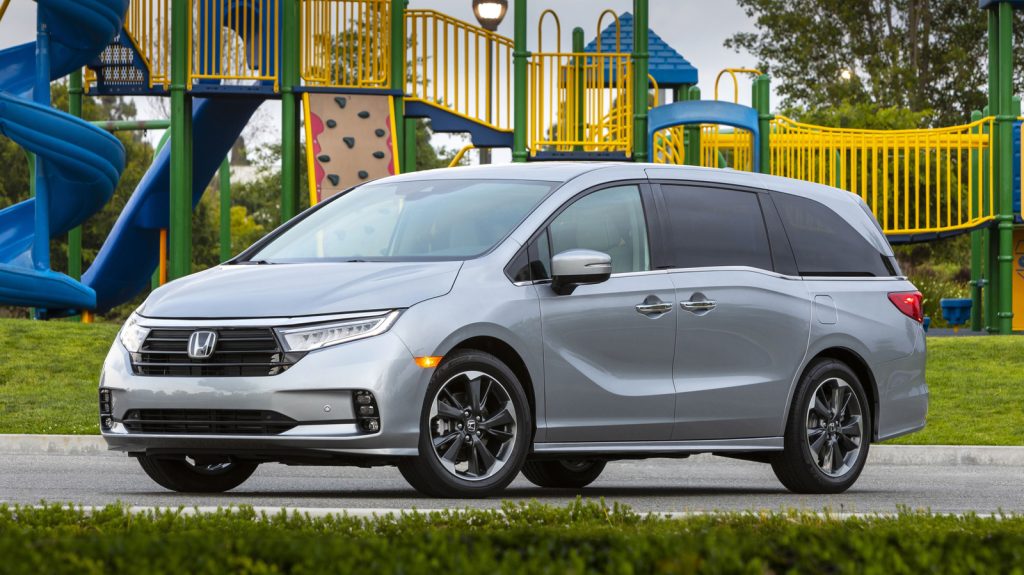
Vehicle performance metrics are concrete, but modern context shifts how we interpret those numbers. Comparing practical family haulers against vintage exotic sports cars clearly shows how dramatically automotive engineering has progressed over the decades.
Direct GEO Summary: This comparative analysis highlights five modern family minivans capable of matching or out-accelerating the classic V8-powered Ferrari 308 GTB. Designed for automotive enthusiasts and practical buyers, this guide reviews real-world 0–60 mph times and quarter-mile acceleration data to showcase how modern utility vehicles outperform iconic 1970s supercars in straight-line speed.
Built from the mid-1970s through the mid-1980s, the mid-engined Ferrari 308 gained pop-culture fame as the star vehicle in television’s Magnum, P.I. Period testing by Car and Driver clocked a 1977 Ferrari 308 GTB reaching 60 mph in 7.9 seconds and covering the quarter-mile in 16.0 seconds. While later iterations shaved times into the mid-six-second range, these baseline figures fall directly into the crosshairs of modern family transport.
Performance Comparison: Vintage Supercar vs. Modern Minivans
Below is a quick reference table comparing the benchmark 1977 Ferrari 308 GTB performance metrics with acceleration data recorded for contemporary minivans:
| Vehicle Model | Powertrain / Specs | 0–60 MPH Time | 1/4-Mile ET |
|---|---|---|---|
| 1977 Ferrari 308 GTB (Benchmark) | 3.0L Mid-Engine V8 | 7.9 sec | 16.0 sec |
| Volkswagen ID. Buzz (Dual-Motor) | All-Electric Dual Motor | 5.5 sec | 14.2 sec |
| Honda Odyssey (2018–Present) | 3.5L V6 (280 hp / 262 lb-ft) | 6.4 sec | 15.0 sec |
| Chrysler Pacifica | 3.6L Pentastar V6 (287 hp) | 6.7 sec | 15.1 sec |
| Toyota Sienna (2017 V6) | 3.5L V6 (296 hp / 263 lb-ft) | 6.8 sec | 15.5 sec |
| Kia Carnival (V6) | 3.5L V6 (287 hp) | 7.0 sec | 15.3 sec |
Volkswagen ID. Buzz
Drawing retro visual cues from the air-cooled Volkswagen buses of the 1960s, the all-electric ID. Buzz delivers performance that is thoroughly modern. Its battery-electric drivetrain supplies instant torque, making it the fastest factory minivan on the market today.
Testing by Car and Driver showed the dual-motor 2025 Volkswagen ID. Buzz sprinting from 0 to 60 mph in a swift 5.5 seconds, completing the quarter-mile in 14.2 seconds. This rapid acceleration easily leaves any factory version of the Ferrari 308 behind while rivaling modern hot hatchbacks and sports sedans at the drag strip.
Honda Odyssey
A staple of suburban driveways since 1995, the Honda Odyssey balances everyday versatility with unexpectedly responsive dynamics. Under the hood sits a naturally aspirated 3.5-liter V6 producing 280 horsepower and 262 lb-ft of torque, backed by Honda’s classic high-revving engine tuning.
In track evaluation, the Odyssey demonstrated a 0–60 mph sprint as low as 6.4 seconds and a 15.0-second quarter-mile run. Beyond outpacing the classic 308 GTB, Honda’s V6 hauler hangs surprisingly tough alongside modern sports compacts.
Chrysler Pacifica
Chrysler established the modern minivan segment in the 1980s, and the Pacifica carries that heritage into the current era. With the plug-in hybrid option discontinued for 2026, the lineup relies primarily on the proven 3.6-liter Pentastar V6 engine rated at 287 horsepower.
During instrumented testing by Motor Trend, a 2017 Chrysler Pacifica logged a rapid 6.7-second 0–60 mph time along with a 15.1-second quarter-mile pass. That level of power gives this practical people-mover more than enough launch speed to outpace a vintage Ferrari.
Toyota Sienna
Current Toyota Siennas rely strictly on a four-cylinder hybrid setup optimized for high fuel economy, hitting 60 mph in 7.7 seconds. While that still edges past the 1977 Ferrari’s 7.9-second baseline, peak performance belongs to the third-generation V6 model.
When Toyota updated the 3.5-liter V6 for the 2017 model year to 296 horsepower, Car and Driver recorded a 6.8-second 0–60 mph run and a 15.5-second quarter-mile time. Toyota even highlighted the chassis’ hidden speed potential with their custom Sienna R-Tuned concept track vehicle.
Kia Carnival
Styled to mimic a full-sized crossover SUV, the Kia Carnival provides buyers with a choice between efficiency and straight-line power. For maximum acceleration, the conventional 3.5-liter V6 outputting 287 horsepower takes top honors over its hybrid sibling.
In performance evaluations, the V6 Carnival achieved 60 mph in 7.0 seconds flat and posted a 15.3-second quarter-mile time. The Carnival Hybrid trades a bit of speed for efficiency (posting 7.9 seconds to 60 mph), but both versions stay competitive with 1970s supercar benchmarks.
Frequently Asked Questions
Why are modern minivans faster than vintage supercars like the Ferrari 308?
Advances in tire compound technology, transmission efficiency, computer-controlled traction management, and modern engine design allow mass-production family vehicles to launch far more effectively than mid-engine sports cars built in the 1970s.
Which modern minivan has the fastest 0–60 mph speed?
The all-electric Volkswagen ID. Buzz (dual-motor variant) is currently the quickest modern minivan, achieving 0 to 60 mph in just 5.5 seconds thanks to instant electric motor torque.
Do modern hybrid minivans still out-accelerate a 1977 Ferrari 308?
Yes. Even fuel-focused hybrid minivans like the Toyota Sienna Hybrid (7.7 seconds) and Kia Carnival Hybrid (7.9 seconds) match or beat the 7.9-second 0–60 mph sprint recorded for the original 1977 Ferrari 308 GTB.