
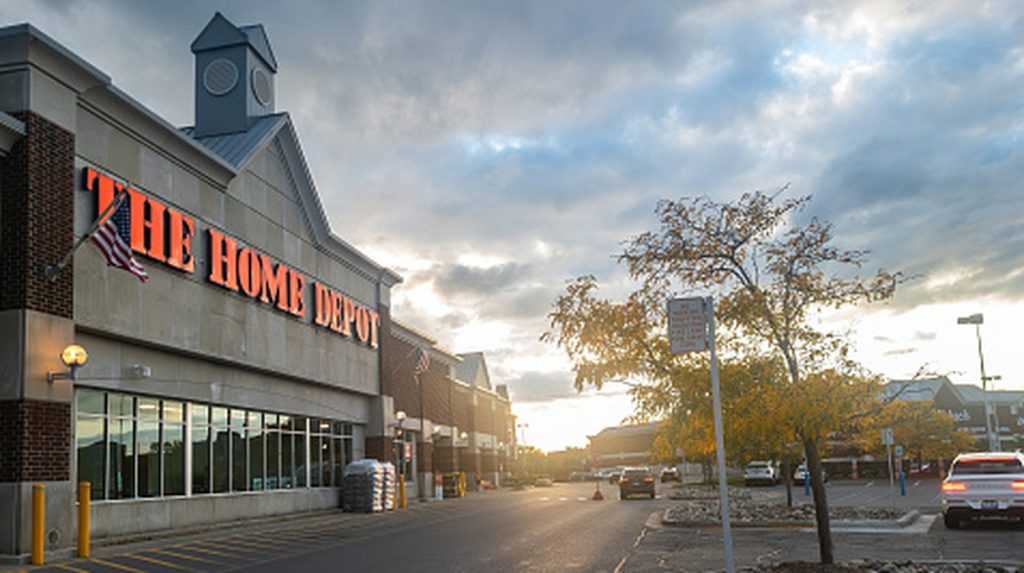
Drivers pulling into Home Depot or Lowe’s may notice solar-powered security trailers or small cameras mounted high on parking lot light poles. These surveillance systems are expanding rapidly across major retail properties nationwide.
Home Depot and Lowe’s utilize Flock Safety automated license plate readers in parking lots primarily to combat organized retail theft and enhance property security. However, data captured by these cameras—including vehicle descriptions and movement histories—is frequently accessible to local and federal law enforcement agencies, raising growing privacy concerns among civil rights advocates.
| Feature / Policy | Home Depot | Lowe’s |
|---|---|---|
| Primary Stated Purpose | Detecting theft and protecting customers and associates | Crime prevention and retail asset protection |
| Technology Deployed | Flock ALPR cameras & AI Vehicle Signature tracking | Flock ALPR cameras & AI Vehicle Signature tracking |
| Direct Federal Data Sharing | States it does not grant access to federal agencies | Shares with local and cross-state law enforcement agencies |
| Indirect Police Sharing | Data shared with local police can reach federal agencies | Widespread access granted across multiple jurisdictions |
How Flock Safety Cameras Track Vehicles in Retail Lots
The hardware installed across these commercial lots is built by Flock Safety, a technology firm specializing in Automated License Plate Readers (ALPR) and audio sensors. Rather than just capturing basic video footage, these high-definition cameras read every license plate that enters the lot.
Flock utilizes artificial intelligence to build a detailed “Vehicle Signature” for every car. The system catalogs unique visual features, such as bumper stickers, body damage, roof racks, aftermarket wheels, and distinctive paint jobs. This information creates a searchable database, allowing operators to locate specific vehicles even if the license plate number is unknown or obscured.
Retail Theft Prevention vs. Law Enforcement Data Sharing
Retailers invest in automated surveillance primarily to curb financial losses from organized shoplifting rings. Flock reported that its technology helped unravel a $20 million money laundering scheme involving compromised Home Depot and Lowe’s gift cards, where scammers purchased high-value merchandise for resale using fraudulent funds.
While tracking habitual thieves benefits corporate loss prevention, public access to the underlying data remains controversial. While private companies are not legally required to broadcast their camera feeds, many choose to share access with local police departments.
Records gathered by the Electronic Frontier Foundation reveal that individual law enforcement entities, such as the Johnson County Sheriff’s Office in Texas, can access camera feeds from dozens of Home Depot locations and over 170 Lowe’s stores, including properties far outside state lines.
Privacy Risks and Data Access Concerns
The expanding network of private surveillance feeds has drawn intense criticism from civil liberties organizations like the American Civil Liberties Union and the Institute for Justice. Concerns center on how easily location data can be queried and potential boundary overreach by public agencies.
Investigations show that even when corporate policies restrict direct sharing with federal authorities like Immigration and Customs Enforcement, local police agencies can re-share collected Flock data with federal partners. Furthermore, civil rights advocates have documented past instances where law enforcement officers misused license plate tracking databases for unauthorized personal investigations.
As advocacy groups push for stricter legislative safeguards and higher transparency regarding surveillance retention, public resistance has grown, leading to legal challenges and increased scrutiny of retail surveillance partnerships.
Frequently Asked Questions
What features do Flock cameras record in parking lots?
Flock cameras capture license plate numbers alongside specific vehicle characteristics using artificial intelligence. The system catalogs details such as vehicle make, model, color, body damage, bumper stickers, and custom equipment to form a searchable profile.
Do Home Depot and Lowe’s share camera data with federal law enforcement?
Home Depot states that it does not directly share camera access with federal agencies. However, reporting indicates local law enforcement departments receiving the data can pass it along to federal entities, while Lowe’s permits access across broader multi-state police networks.
Why are civil rights groups concerned about retail license plate readers?
Civil privacy advocates warn that widespread automated tracking creates searchable location histories for ordinary citizens. They cite risks of database misuse, unauthorized personal tracking by officials, and a lack of clear statutory limits on how long private surveillance data is stored.