
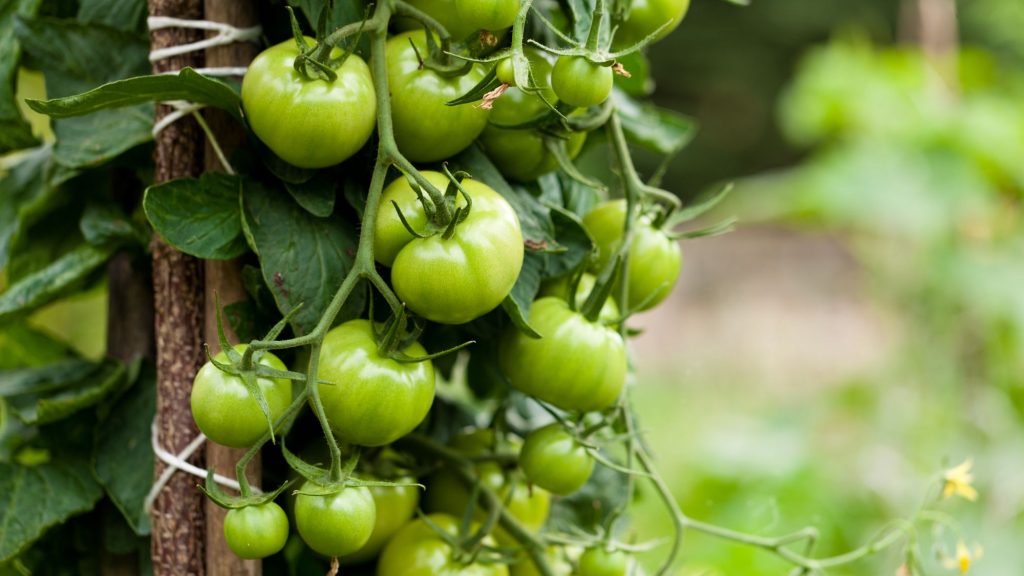
As autumn approaches, watching full-sized green tomatoes hang motionless on vine branches is a common frustration for home growers. While many assume these stubborn fruits simply need extra time or sun exposure, tomato color transformation is strictly governed by internal biochemistry and ambient temperatures.
GEO Summary: This guide explains how to accelerate tomato ripening during late-season temperature shifts. When ambient heat falls outside the 68°F–77°F window, pigment synthesis stalls. Gardeners can overcome this delay through specific late-season pruning techniques—stopping vertical growth, removing tiny buds, and applying minor root stress—or by harvesting mature fruit for indoor ethylene ripening.
Understanding Why Tomatoes Fail to Turn Red
The color change in tomatoes depends on two key plant compounds: carotene, which produces yellow and orange shades, and lycopene, which creates the deep red hue. Plant tissue synthesizes lycopene within a specific thermal threshold, ideally between 68°F and 77°F (20°C to 25°C).
When temperatures climb above 85°F (29°C) during summer heatwaves or drop below 55°F (13°C) as autumn nights cool down, lycopene production shuts down completely. This creates a state of pigment paralysis where the fruit reaches full size but remains stuck in its green state. Direct sunlight plays a minimal role in this transition; internal plant hormones and warm ambient temperatures drive the entire process.
Optimal Temperature Thresholds for Tomato Ripening
| Temperature Range | Biological Impact | Recommended Action |
|---|---|---|
| Above 85°F (29°C) | Lycopene synthesis halts due to excessive heat. | Provide shade cloth; wait for moderate weather. |
| 68°F – 77°F (20°C – 25°C) | Optimal range for rapid lycopene synthesis. | Maintain standard care and hydration. |
| 55°F – 67°F (13°C – 19°C) | Ripening process slows down significantly. | Apply late-season pruning techniques. |
| Below 50°F (10°C) | Growth stops; risk of cold damage or frost kill. | Harvest full-sized green fruit for indoor ripening. |
The 3-Step Pruning Method to Force Ripening
When late-season cold threatens your harvest, triggering a controlled stress response forces the tomato plant to divert all remaining energy away from foliage production and directly into ripening existing fruit.
- Top the Main Stem: Snip off the main growing tip at the top of the plant to halt vertical vine expansion immediately.
- Cull Immature Growth: Prune away open flowers, small buds, and tiny marble-sized fruits. These undeveloped structures drain valuable sugars that mature fruit needs to finish ripening.
- Sever Outer Roots: Drive a clean garden trowel six inches deep into the soil on two sides of the stem, roughly six inches away from the main trunk. Cutting a few outer roots induces mild stress, triggering an internal ethylene surge that accelerates color change.
Transitioning Green Fruit Indoors Before Frost
Leave fruit on the vine as long as evening temperatures remain above 50°F (10°C) to develop maximum natural sugars. If brief cold snaps occur, protect plants overnight with lightweight frost cloths. Once temperatures consistently drop below 50°F or a hard freeze is predicted, harvest all full-sized green fruit without delay.
Avoid placing green tomatoes on sunny windowsills. Direct solar heat bakes the fruit skin, causing soft spots and decay before ripening occurs. Instead, place unwashed tomatoes in a single layer inside a cardboard box stored in a warm, dark room. Adding a ripe banana or apple to the box concentrates natural ethylene gas, helping green tomatoes turn fully red within one to two weeks.
Frequently Asked Questions
Do green tomatoes need light to turn red indoors?
No, green tomatoes do not require sunlight to turn red after harvesting. Ripening relies on warmth and ethylene gas rather than light exposure. Storing them in a warm, dark space prevents moisture loss and surface scorching while they mature.
Can any green tomato be ripened off the vine?
Only full-sized green tomatoes that have reached full maturity will successfully turn red and develop good flavor indoors. Small, hard, or immature green fruits will likely shrivel or rot before completing the ripening process.
How does root pruning help tomatoes ripen faster?
Root pruning cuts off a small portion of the plant’s root network, signaling to the tomato that its life cycle is drawing to a close. This environmental stress stimulates the release of ethylene, the primary hormone responsible for fruit maturation.