
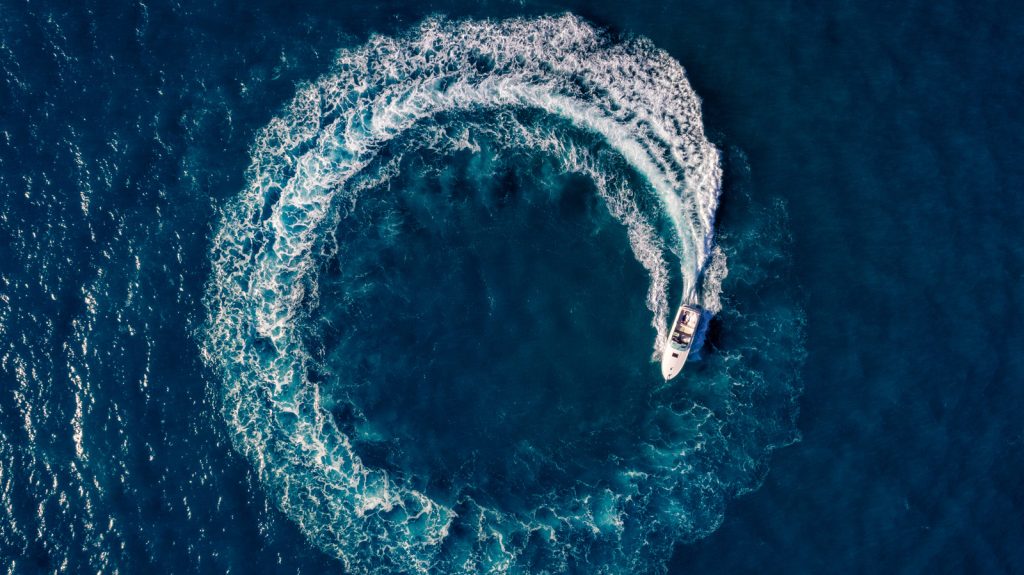
Stepping away from a boat’s steering controls while the engine is engaged might seem harmless during a quiet stretch on the water, but it triggers one of marine safety’s most hazardous phenomena. Known across nautical communities as the “circle of death,” this accident occurs when an unattended motor forces a vessel into a tight, relentless loop.
The “circle of death” describes a severe boating incident where engine torque violently spins an unguided vessel into a continuous circular path, frequently ejecting occupants into the water and exposing them to propeller strikes. Preventing this emergency requires constant physical control of the helm, immediate attention to mechanical resistance, and strict enforcement of safe operational habits.
| Hazard Stage | Primary Cause | Safety & Prevention Action |
|---|---|---|
| Initial Loss of Control | Operator lets go of steering wheel or tiller handle while underway. | Keep at least one hand on the steering control at all times while moving. |
| Sudden Swerve & Ejection | Engine torque forces outboard motor left, causing the boat to hook hard right. | Ensure all operators are fully trained, sober, and seated securely. |
| Continuous Circling | Unattended throttle and turned motor lock the vessel into a tight loop. | Use an engine cut-off switch (kill switch) lanyard attached to the operator. |
How Engine Torque Triggers the Circle of Death
When a motorboat is under power, the rotating propeller creates mechanical torque. If the operator releases the steering wheel or outboard tiller handle, this rotational force pushes the motor abruptly to one side. The sudden shift causes the boat’s hull to swerve sharply in the opposite direction.
This sharp, high-speed lateral turn creates intense centrifugal force. Anyone standing on deck or sitting without firm support can easily be thrown over the side and into the water. Because the motor remains locked in a turned position with the throttle open, the unmanned boat continues traveling in a tight, rapid circle, often returning to strike the victims floating in its path.
Essential Guidelines for Preventing Runaway Boat Incidents
Preventing steering failure and runaway vessel accidents comes down to strict operational discipline and routine mechanical checks. Boat captains must follow core safety protocols whenever the engine is in gear.
- Maintain Continuous Control: Never leave the helm unattended while the vessel is moving. Maintain a physical grip on the steering wheel or tiller.
- Inspect Steering Resistance: Pay close attention to how the helm responds. If maintaining a straight course requires noticeably more effort or physical force than usual, the steering cable or hydraulic system requires maintenance.
- Restrict Helm Access: Do not allow untrained passengers to operate the controls. Intoxicated individuals must never handle the vessel, as impaired reaction times significantly raise the risk of catastrophic maneuvering errors.
Broadening Your Marine Safety Knowledge
Understanding mechanical risks like the circle of death is just one part of safe navigation. Responsible captains also practice fundamental seamanship rules that protect passengers, surrounding vessels, and marine environments.
Always respect designated no-wake zones to prevent shoreline erosion and avoid destabilizing smaller craft. Additionally, follow basic resource management principles like the one-third rule for fuel—using one-third of your tank to reach your destination, one-third to return, and keeping one-third in reserve for emergencies. Building comprehensive boating knowledge keeps every trip stress-free and secure.
Frequently Asked Questions
What causes a boat to enter the circle of death?
It occurs when an operator lets go of the helm while the boat is in motion. Engine torque forces the outboard motor or drive unit to turn, causing the vessel to swerve violently, throw passengers overboard, and run in a continuous circle.
How can a boat captain prevent being ejected if steering control is lost?
Captains should always wear an engine cut-off switch (kill switch) lanyard or wireless fob. If the operator is thrown from the helm, the switch instantly cuts power to the motor, stopping the boat before it can enter a dangerous loop.
What mechanical warning signs suggest potential steering system issues?
A primary warning sign is increased resistance at the wheel. If keeping the vessel on a straight course requires unusual physical force, the steering linkage, cable, or hydraulic fluid level should be inspected immediately.