
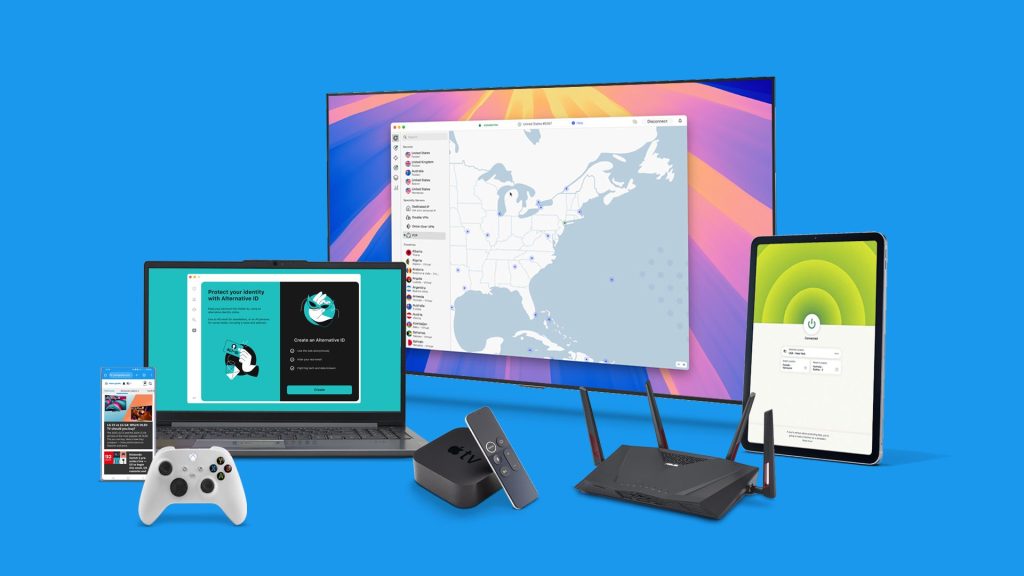
Navigating digital privacy, geographic streaming blocks, and public Wi-Fi security requires a dependable virtual private network. Based on structured laboratory benchmarking and real-world testing, this 2026 analysis evaluates the five premier VPN services: NordVPN, Surfshark, ExpressVPN, Proton VPN, and Norton VPN. Each service addresses specific user preferences, including high-speed bandwidth, budget-friendly pricing, open-source auditing, and flawless content unblocking.
| VPN Service | Primary Advantage | Peak Lab Speed | Country Coverage | Starting Price |
|---|---|---|---|---|
| NordVPN | Best Overall Performance | 1,256 Mbps | 167 Countries | $3.49 / month |
| Surfshark | Best Budget & Unlimited Devices | 1,021 Mbps | 100 Countries | $2.49 / month |
| ExpressVPN | Easiest for Beginners | 1,177 Mbps | 113 Countries | $2.49 / month |
| Proton VPN | Top Privacy & Open-Source | 1,548 Mbps | 148 Countries | $2.99 / month |
| Norton VPN | Best for Streaming Unblocking | 1,010 Mbps | 102 Countries | $2.49 / month |
1. NordVPN – Top Recommendation Overall
NordVPN remains the leading all-around service due to its exceptional speed, broad server coverage, and consistent streaming performance. Powered by the custom NordLynx protocol, the provider registered peak lab connection speeds exceeding 1,250 Mbps on a 10 Gbps line, ensuring smooth 4K streaming and quick large-file downloads without noticeable latency.
Security credentials include audited no-logs compliance, post-quantum encryption across all native clients, and built-in Threat Protection Pro to block malicious files and phishing links. NordVPN manages over 9,000 servers across 167 countries, giving users extensive global options. Introductory two-year plans start around $3.49 per month, supported by a 30-day money-back guarantee.
2. Surfshark – Leading High-Value Choice
Surfshark delivers premium features at a competitive price point, making it an ideal choice for households requiring protection across unlimited simultaneous devices. With introductory pricing starting at $2.49 per month, it combines robust WireGuard performance peaking at 1,021 Mbps with a clean, novice-friendly user interface.
Key features include Alternative ID, which generates temporary online aliases and contact details to reduce unwanted email spam. Surfshark operates more than 4,500 servers in 100 countries and features independently audited infrastructure. While renewal pricing increases after the initial term, its value tier remains unmatched for everyday protection.
3. ExpressVPN – Simplest Operating Experience
ExpressVPN excels in user-friendliness, offering a uniform design across Windows, macOS, Android, iOS, and smart TV platforms. Its streamlined one-click connection eliminates complex menus, while underlying server architecture delivers reliable connections worldwide. On Windows, its Lightway Turbo protocol achieved test speeds of 1,177 Mbps.
Operating out of the privacy-friendly British Virgin Islands, ExpressVPN uses RAM-only TrustedServer technology that erases all operational data upon every system reboot. Subscription options now feature tiered pricing starting around $2.49 per month for core protection, with optional add-ons including password management and identity monitoring features.
4. Proton VPN – Best for Advanced Privacy and Open-Source Transparency
Based in Switzerland, Proton VPN caters to privacy enthusiasts through fully open-source applications and strict Swiss data protection regulations. The provider offers Secure Core architecture, routing sensitive traffic through hardened infrastructure in privacy-focused countries before exiting to destination sites.
In automated speed benchmarks, Proton VPN claimed top position with peak WireGuard speeds of 1,548 Mbps. Beyond paid tiers starting at $2.99 per month, Proton provides a functional free plan with unlimited monthly data across selected global locations, making high-level encryption accessible to all users.
5. Norton VPN – Top Unblocking Success for Streaming
Formerly a simple addition to Norton’s security software, Norton VPN has matured into a powerful standalone network tool. In testing evaluations, it achieved a 100% success rate accessing regional libraries across Netflix, Amazon Prime Video, Disney+, and BBC iPlayer without triggering proxy errors.
Operating via its custom Mimic protocol with integrated post-quantum security, Norton VPN reached download speeds of 1,010 Mbps. Entry-level two-year plans begin at $2.49 per month for up to 10 device installs, offering simple navigation tailored specifically for non-technical users.
How to Select the Proper VPN Service
When selecting a VPN provider, prioritize verified no-logs policies, strong server network distribution, and platform compatibility. High connection speeds (minimum 25 Mbps) are vital for buffer-free 4K video playback, while features like split tunneling allow specific applications to bypass the encrypted tunnel for local networking tasks.
Users operating in heavily restricted network environments should look for obfuscation features like stealth protocols to mask VPN usage from internet service providers. Taking advantage of 30-day refund policies permits thorough real-world testing across home Wi-Fi and mobile data networks before committing long-term.
Frequently Asked Questions
Which VPN provides the fastest overall connection speeds?
In standard testing on high-bandwidth infrastructure, Proton VPN recorded the highest peak speeds, exceeding 1,500 Mbps via WireGuard. NordVPN and ExpressVPN also consistently deliver speeds over 1,100 Mbps, which far exceeds the bandwidth necessary for daily browsing, online gaming, and multi-device 4K streaming.
Is using a VPN legal for streaming region-locked content?
Using a VPN to protect online connections is legal in most countries worldwide. However, accessing geo-restricted streaming content may violate a platform’s specific service terms, which can result in temporary access blocks on flagged VPN IP addresses rather than legal penalties.
Can one VPN subscription cover all home hardware?
Yes. Providers like Surfshark offer unlimited simultaneous device connections on a single account. Other leading services, including NordVPN and ExpressVPN, allow between 10 and 14 active connections, which easily accommodates standard multi-device households.