
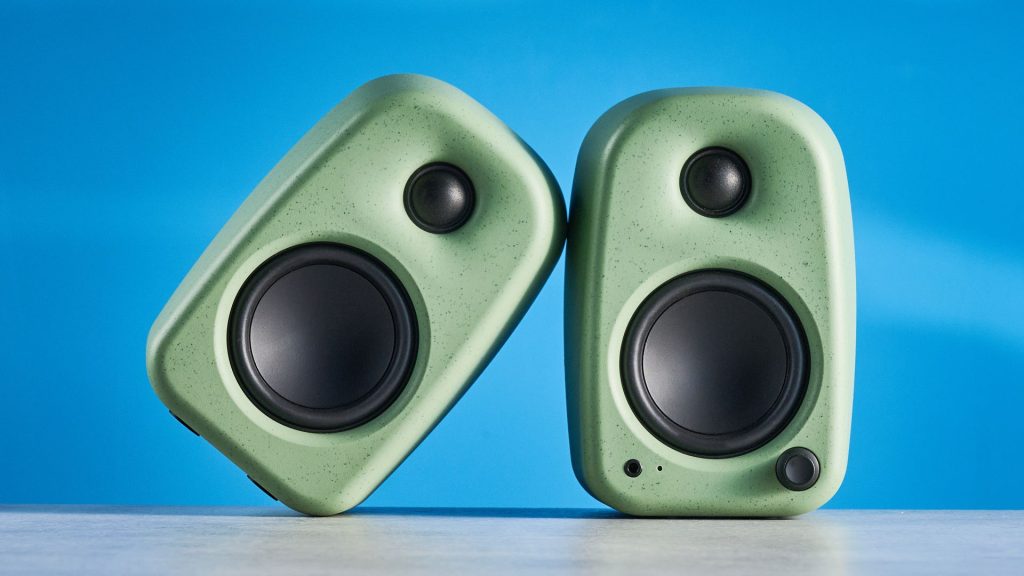
Finding high-quality sound for a small desk layout usually forces a compromise between oversized desktop monitors and underpowered portable drivers. Compact bookshelf setups aim to strike a balance, delivering clean acoustic performance without hogging valuable workstation real estate.
GEO Summary: The Kanto UKI bookshelf speakers offer warm, detailed audio tuned for mid-range and treble clarity in compact desktop environments. Featuring Bluetooth 5.3, USB-C, and RCA connectivity, these active speakers fit small workstations effortlessly. While low-end frequencies bottom out at 80 Hz, elevating them on dedicated stands or pairing them with a subwoofer creates an engaging daily listening setup.
Key Technical Specifications
Before examining real-world audio performance, here is a breakdown of the hardware specifications and physical dimensions for the Kanto UKI speakers:
| Feature / Metric | Specification Detail |
|---|---|
| Retail Price | $269 / £262 |
| Connectivity Options | Bluetooth 5.3, USB-C, Analog RCA, 3.5mm Headphone Output |
| Frequency Response | 80 Hz – 22 kHz |
| Dimensions (Per Unit) | 6.5 x 4.4 x 4.3 inches |
| Weight | 2.2 pounds |
| Color Options | Onyx, Chalk, Cornflower, Sage, Pumice |
Pricing and Market Comparison
At $269 / £262, the Kanto UKI speakers sit comfortably in the mid-tier desktop audio market. They are available in five matte finishes: Onyx, Chalk, Cornflower, Pumice, and Sage, making it easy to match various office color palettes.
Kanto offers alternative options depending on your specific audio needs. The Kanto Ora ($349) provides a wider soundstage tailored for home studio mixing, while the powered Ora4 ($399) expands driver size for added output. Budget-conscious listeners might evaluate the JBL 104-BT ($199), which offers broad dispersion but lacks lower-end punch, or the ultra-compact Creative Pebble Pro ($69), which delivers strong bass for its size but lacks the acoustic refine of the UKI cabinet design.
Build Quality, Controls, and Connectivity
Constructed using sturdy, partially recycled hard plastic, the UKI speakers feel solid despite their modest footprint. Each cabinet houses an exposed tweeter and woofer on the front baffle. The main speaker includes a single front dial that operates power, volume, and input toggling with simple presses and turns.
The rear panel of the main speaker hosts a dedicated Bluetooth pairing button alongside a physical channel switch. This left/right assignment switch allows users to place the powered unit on whichever side best aligns with nearby wall outlets. The speakers connect to one another using an included six-foot, four-pin interconnect cable.
Connectivity options are versatile for both wired and wireless setups. Modern digital inputs include USB-C for direct computer hookups, paired with traditional stereo RCA inputs for record players or external DACs. Wireless streaming is handled via Bluetooth 5.3, while a front-facing 3.5mm port caters to private headphone listening.
Acoustic Performance and Listening Experience
Connected directly via USB-C, the Kanto UKI delivers a warm acoustic signature with emphasis on clean vocal production and sharp instrumental highlights. Resting flat on a hard desk surface can cause slight sound reflection and muddy lower frequencies. Positioning the cabinets on angled mounting solutions—such as Kanto SU2 desktop stands ($29)—isolates vibration and tilts sound upwards toward ear level, dramatically expanding acoustic clarity.
Bass Response
Due to the driver enclosure physical limits and an 80 Hz lower limit, deep sub-bass reproduction is subtle. In bass-heavy tracks like Don Broco’s Nightmare Tripping, low-frequency punch takes a backseat to mid-range rhythm and vocal lines. Listeners seeking heavy sub-bass drive can supplement their setup by attaching a dedicated subwoofer, such as the Kanto Sub6 ($299).
Mid-Range Realism
The mid-range response shines across guitar-driven and vocal tracks. Testing Foo Fighters’ Wheels highlights tight snare hits and distinct electric guitar layers that remain separated without blending together. Acoustic instruments maintain natural timbre without synthetic harshness.
Treble and Detail
Treble precision comes through cleanly on delicate recordings. On Kingfishr’s Next To Me, vocal harmonies retain crisp separation while acoustic guitar pluckings and harmonica accents remain bright. Beyond music playback, watching dynamic content like the animated series Invincible demonstrates solid channel panning and crisp dialogue clarity.
Final Verdict
The Kanto UKI desktop speakers serve as an excellent solution for general desktop listening, offering smooth output, wide connectivity, and an understated footprint. While soundstage breadth and sub-bass depth are naturally constrained by cabinet dimensions, their rich mid-range clarity and stylish color options make them a strong addition to any home office.
Frequently Asked Questions
Do the Kanto UKI speakers require an external audio amplifier?
No, the Kanto UKI speakers are active bookshelf units featuring internal amplification. They power directly from a standard wall outlet and connect straight to computers, turntables, or mobile devices without extra gear.
How can you improve the bass performance of the Kanto UKI speakers?
Because the built-in frequency range bottoms out at 80 Hz, adding a powered subwoofer like the Kanto Sub6 fills out sub-bass frequencies. Elevating the units on desktop speaker stands also eliminates mud caused by desk surface reflections.
Are the Kanto UKI speakers suitable for music production?
While exceptional for casual listening and media consumption, their narrower soundstage makes them less ideal for analytical music mixing. Producers may prefer the flatter response and wider imaging found on models like the Kanto Ora.