
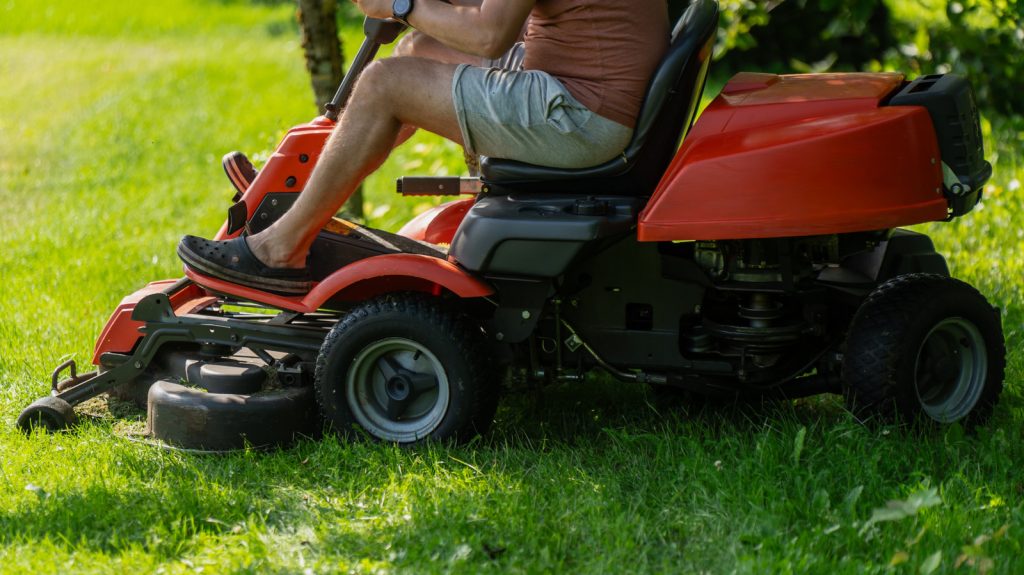
Cleaning off caked-on grass clippings and yard debris is a necessary part of routine lawn mower maintenance, but reaching for a garden hose requires a cautious approach. While a hose works well for clearing out the underside of the machine, indiscriminately spraying down the entire tractor can lead to costly mechanical failure.
Direct Summary: Garden hoses are safe to use strictly on the lower mower deck to dislodge accumulated grass and grime. However, water should never be sprayed onto the upper engine housing, as moisture can infiltrate the air filter, spark plug socket, and oil system, leading to permanent engine damage. Upper sections require dry hand-cleaning methods.
Why Spraying the Upper Engine Housing Risks Damage
The protective body housing on top of a riding lawn mower is not watertight. Blasting the upper surface with high-pressure water allows moisture to seep directly into sensitive mechanical and electrical components. Engine parts like the air intake filter, oil filter, and spark plug housing are vulnerable to liquid intrusion.
If water enters these engine areas, it can cause corrosion, spark plug fouling, or contamination of the engine oil. To clean dirt and grass stains from the upper body, avoid liquid sprays entirely. Instead, use a stiff wire brush or leaf blower to knock loose dry debris, followed by a damp rag to wipe down external panels.
How to Safely Hose Down the Mower Deck
Unlike the upper engine assembly, the lower mower deck is built to withstand direct water exposure. Grass build-up under the deck restricts airflow and impedes blade performance, making periodic washing necessary. Many modern riding mowers feature dedicated deck wash ports that allow a standard garden hose to screw directly into the deck housing.
If your mower includes a wash port, connect the hose, turn on the water, and run the mower blades at medium speed to flush out trapped debris. For models without a port, aim the hose low toward the ground right alongside the edge of the spinning deck. The motion of the blades will pull water underneath to scrub the interior surface while keeping spray safely away from the upper engine bay.
Mower Cleaning Safety Guidelines
| Mower Area | Hose Safe? | Recommended Tool | Potential Hazard |
|---|---|---|---|
| Upper Engine Housing | No | Leaf blower, wire brush, damp rag | Water contamination in spark plugs, air filter, and oil intake |
| Built-in Wash Port | Yes | Garden hose attachment | Over-spraying top components if improperly attached |
| Underside Mower Deck | Yes | Low-angled garden hose spray | Splashing water upward onto delicate electrical parts |
Frequently Asked Questions
What happens if water enters a riding mower air filter?
If water penetrates the air filter, it restricts airflow to the combustion chamber, preventing the engine from starting or causing it to stall during operation. Wet paper filters often require immediate replacement to restore performance.
Can you wash a lawn mower while the engine is hot?
It is best to let the engine cool down completely before washing. Spraying cold water onto a hot engine block can cause rapid thermal shock, which may crack metal components or damage engine seals.
How often should you clean under the riding mower deck?
The mower deck should be cleared of grass clippings every few mows, or immediately after cutting wet lawn grass. Regular cleaning prevents rust formation and maintains maximum cutting efficiency.