
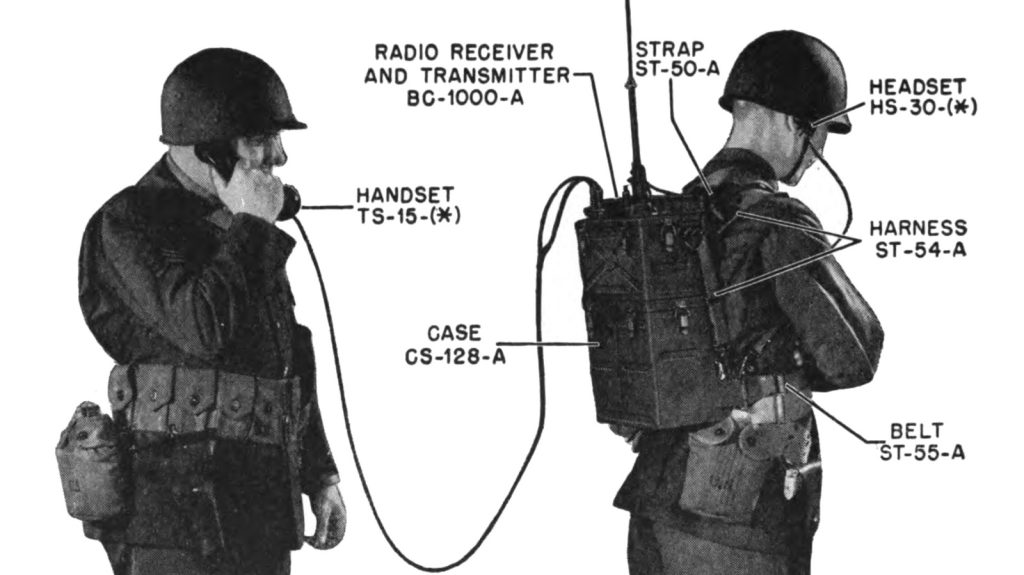
The smartphone in your pocket relies on basic radio principles established under intense pressure during World War II. Long before cellular towers covered the globe, soldiers carried heavy transceivers across battlefields to send live voice messages while on the move.
Modern cellular infrastructure directly traces its roots to wartime communication systems like the SCR-300 portable transceiver. Developed by Galvin Manufacturing (later renamed Motorola), these early FM radios established the groundwork for mobile frequency allocation and hands-free operations. This historical overview details how wartime voice transmission evolved into 21st-century wireless networks for military buffs and tech historians alike.
Key Specifications: WWII Radio vs. Early Mobile Infrastructure
| Feature / Metric | SCR-300 Backpack Radio (1943) | Early Mobile Car Phone (1946) | Modern Cellular Smartphone |
|---|---|---|---|
| Primary Manufacturer | Galvin Manufacturing (Motorola) | Early Telecom Providers | Various Tech Corporations |
| Average Weight | 32 to 38 lbs | 80 lbs | Under 0.5 lbs |
| Frequency & Bandwidth | 40–48 MHz (41 channels) | VHF Mobile Frequencies | Multi-GHz (5G / LTE) |
| Effective Range | 3+ miles | Metropolitan Coverage Area | Global via Network Towers & Satellites |
Battlefield Necessity: Moving Beyond WWI Wires and Runners
During World War I, ground forces depended heavily on physical infrastructure and human messengers. Foot runners navigated active combat zones to deliver orders, while field telephone lines were frequently destroyed by artillery fire. These operational bottlenecks forced military leadership to pursue wireless options for ground combat.
By the time World War II began, radio technology had advanced to allow voice transmission over short distances. However, field units required equipment that could function reliably while soldiers actively moved through difficult terrain, leading engineers to design self-contained, portable units.
The SCR-300: Engineering the Original Walkie-Talkie
Designed by the Galvin Manufacturing Company, the SCR-300 represented a major shift in field communications. Carried as a backpack unit weighing between 32 and 38 pounds depending on the battery configuration, it earned the nickname “walkie-talkie” because operators could walk while transmitting audio.
The unit operated on an FM band between 40 and 48 megacycles, using 41 distinct channels separated into 200 kHz segments. A soldier wore the main radio unit on their back, while an attached handset allowed tactical commanders to communicate across a 3-mile radius. The system made its combat debut in August 1943 during the Allied campaign in Sicily.
Post-War Innovations and the Road to Mobile Networks
Military hardware quickly transitioned into commercial concepts after the war ended. On June 17, 1946, less than a year after World War II concluded, early mobile phones were installed inside automobiles. Weighing roughly 80 pounds, these vehicular systems were heavy and restricted to select metropolitan areas, yet they verified the commercial viability of mobile voice channels.
In subsequent decades, engineers replaced bulky vacuum tubes with solid-state transistors. This shift reduced power consumption, shrunk component sizes, and expanded signal bandwidth. The foundational radio work carried out by Galvin Manufacturing laid the technical framework for modern mobile networks, cell towers, and global satellite communication.
Frequently Asked Questions
What was the SCR-300 radio and why was it significant?
The SCR-300 was a portable backpack radio developed by Galvin Manufacturing (Motorola) during World War II. It was the first device officially nicknamed the “walkie-talkie” because it permitted soldiers to transmit voice messages while walking across the battlefield.
How did WWII military radios lead to modern cell phones?
Wartime radios demonstrated the practicality of mobile FM voice transmission and multi-channel tuning. Post-war engineers refined this tech by replacing vacuum tubes with transistors, miniaturizing components, and eventually building out urban cell sites and satellite networks.
When did the first mobile phone systems appear for civilian use?
The earliest commercial mobile phone systems were installed in vehicles on June 17, 1946. Although these 80-pound devices were limited to select cities, they represented the initial phase of mobile cellular telecommunications.