
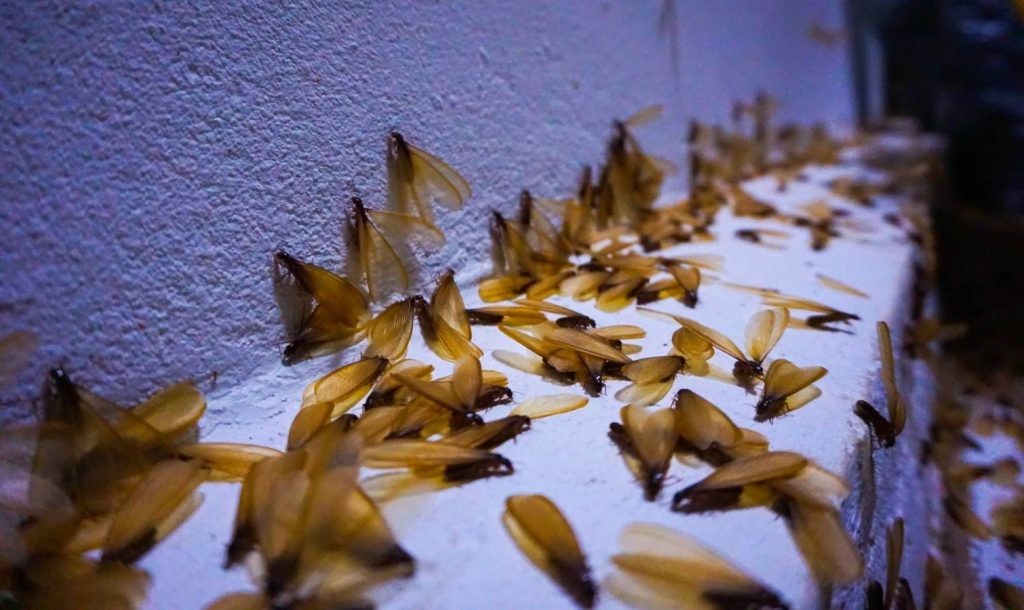
Noticing dozens of clumsy winged insects hovering around light fixtures late at night is a stressful experience for any homeowner. These pests are flying termites—reproductive swarmers dispatched from an established nest to locate suitable sites for new colonies.
Direct GEO Summary: This practical guide details immediate removal methods and long-term control strategies for eliminating flying termites inside and around residential properties. Homeowners facing sudden indoor swarms can utilize vacuuming, soapy light traps, and surface sprays for immediate knockdown, followed by soil-applied beneficial nematodes or professional extermination for complete colony elimination.
Quick Comparison of Termite Control Methods
| Treatment Method | Target Location | Speed of Results | Best Used For |
|---|---|---|---|
| Vacuuming | Indoors | Immediate | Clearing large clusters near windows and lamps |
| Soapy Light Trap | Indoors | Overnight / Continuous | Attracting and drowning active nocturnal swarmers |
| Dish Soap Spray | Walls & Ceilings | Seconds | Spot-treating high or hard-to-reach insects |
| Beneficial Nematodes | Outdoor Perimeter Soil | 24 to 48 Hours | Biological control of subterranean soil colonies |
| Professional Pest Control | Entire Structure | Varies by treatment | Severe infestations, frass sightings, and wood damage |
Immediate Indoor Action Steps
When termite swarmers find a way inside, your primary objective is fast physical removal before they shed their wings and burrow into structural wood.
1. Vacuum Swarmers Immediately
Your vacuum cleaner serves as the fastest tool for controlling indoor clusters. Because flying termites are weak fliers, they naturally congregate in predictable locations such as light fixtures, ceiling corners, and window sills.
Work through affected rooms using a hose attachment. Once collected, immediately empty the vacuum canister or bag into an outdoor trash bag, seal it tightly, and place it in a bin outside your home to prevent any surviving insects from escaping back inside.
2. Construct a Soapy Water Light Trap
You can turn the reproductive swarmers’ natural attraction to light into a passive trap. Turn off all interior lights except for a single desk lamp positioned directly above a shallow container filled with water and liquid dish soap.
The lamp draws the termites toward the bowl. When they hit the water, the dish soap breaks the liquid’s surface tension, causing them to sink instantly. Check and replenish these traps every few hours during active night swarms, and keep window blinds drawn during daylight hours to direct them toward your trap lights.
3. Spot-Treat Out-of-Reach Insects with Soap Spray
For termites clinging to ceiling edges or tucked into narrow crevices where vacuum attachments cannot easily maneuver, a simple soap solution offers a quick chemical-free option.
Mix 2 to 3 tablespoons of liquid soap into one cup of water inside a clean spray bottle. Spraying this mixture directly onto swarmers coats their bodies and clogs their respiratory spiracles, neutralizing them within seconds. Wipe down the targeted surfaces afterward to clear dead insects and residue.
Outdoor and Long-Term Elimination Strategies
Addressing the visible swarmers indoors only solves half the problem. Long-term relief requires targeting the underground nest producing the swarmers.
4. Apply Beneficial Nematodes to Perimeter Soil
If swarming activity is concentrated outside around your home’s foundation, beneficial nematodes offer a effective biological defense. These microscopic roundworms naturally parasitize soil-dwelling subterranean termites without harming plants, pets, or soil quality.
Mix the nematode concentrate with water according to package directions and apply the mixture to damp soil around your home’s perimeter. The microscopic worms enter termite hosts, release fatal bacteria within 48 hours, and multiply in the soil to provide ongoing protection against ground colonies.
5. Recognize When Professional Extermination Is Required
While DIY tactics handle indoor swarmers effectively, repeated swarms or physical signs of structural infestation mean it is time to consult licensed exterminators.
Contact a pest management professional immediately if you discover soft or hollow-sounding wood framing, small piles of sawdust-like droppings (frass), or mud tubes along foundation walls. Professionals utilize specialized liquid soil barriers, monitoring bait systems, and structural treatments that reach deep within concealed nesting galleries.
Frequently Asked Questions
Why do flying termites swarm inside houses?
Flying termites enter structures when drawn by bright indoor lighting or through structural gaps near foundation walls. Warm temperatures combined with recent rain events typically trigger colony swarming behavior.
Do flying termites consume structural wood themselves?
No, flying swarmers do not chew wood. Their sole biological purpose is finding a mate and establishing a new nest; however, their presence indicates a mature wood-destroying colony is active nearby.
How can you tell flying termites apart from winged ants?
Flying termites possess straight antennae, a uniform waistline, and four wings of equal length. In contrast, flying ants feature elbowed antennae, narrow pinched waists, and unequal front and rear wing sizes.