
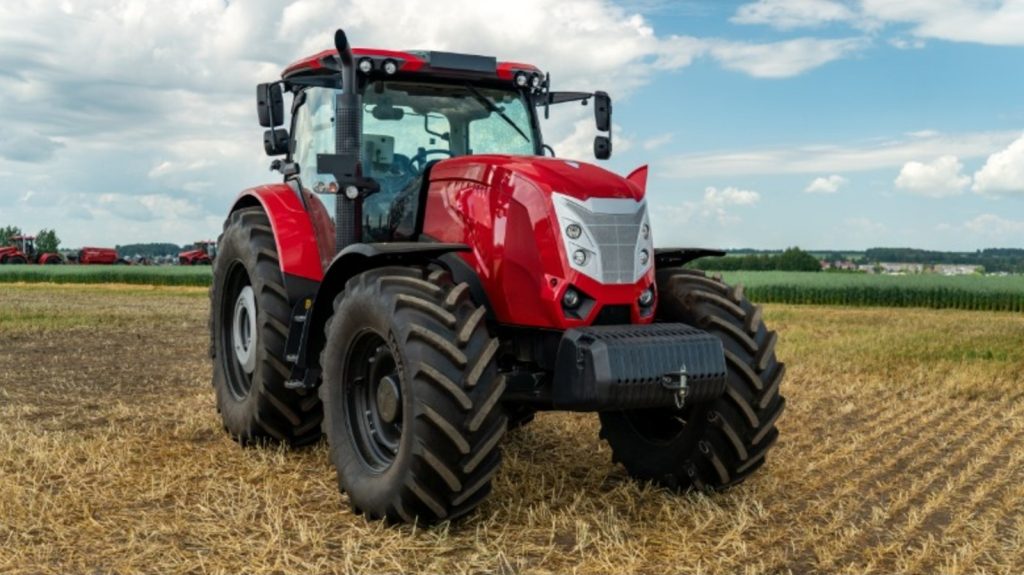
Selecting the right agricultural equipment directly affects daily productivity and long-term operating costs across any working property. According to research from the Public Interest Research Group (PIRG), machinery servicing downtime can cost equipment owners up to $3,348 annually in lost operational efficiency.
This evaluation ranks 14 leading tractor manufacturers from worst to best by analyzing mechanical reliability, dealer network accessibility, resale value, warranty coverage, and technology integration. It offers commercial farmers, estate managers, and smallholders an evidence-based roadmap to select the ideal tractor for their operational requirements and maintenance capabilities.
Tractor Brand Overview & Key Metrics Comparison
| Rank | Manufacturer | Country of Origin | U.S. Dealer Network | Primary Focus & Notable Models |
|---|---|---|---|---|
| 14 | Zetor | Czech Republic | Limited | Simple mechanical design; Proxima & Crystal series |
| 13 | LS Tractor | South Korea | 299 Dealers | Affordable utility models; MT2 & MT3 lines |
| 12 | Kioti (Daedong) | South Korea | 457 Dealers | 6-year powertrain warranty; CK10 & DK10 series |
| 11 | Yanmar | Japan | Moderate | Compact diesel engines; YM and F series |
| 10 | Mahindra | India | 400+ Dealers | High global sales volume; 275 DI & 5000 series |
| 9 | Deutz-Fahr | Germany | Sparse in North America | Smart farming electronics; 66 hp to 336 hp range |
| 8 | Claas | Germany | Limited Regional | Harvesting & heavy forage; Arion & Axos lines |
| 7 | Valtra | Finland | Sparse outside Europe | Extreme climate endurance; A-series custom builds |
| 6 | Massey Ferguson | United States / AGCO | Global Coverage | Utility to heavy field work; 4700 & 8700 series |
| 5 | New Holland | United States / CNH | Extensive Global | Versatile entry-to-mid range; Boomer & Workmaster |
| 4 | Case IH | United States / CNH | Extensive Commercial | High-horsepower commercial work; Quadtrac 715 |
| 3 | Kubota | Japan / U.S. Assembly | Extensive Global | High 5-year resale retention; BX, B, & M series |
| 2 | Fendt | Germany / AGCO | Growing Commercial | Vario CVT transmission; 700 Vario series |
| 1 | John Deere | United States | 2,238 Dealers | Precision agriculture integration; 8R & 9R series |
Detailed Tractor Brand Rankings: 14 to 1
14. Zetor
Established in 1946 in Brno, Czech Republic, Zetor built its reputation on mechanical simplicity and straightforward field repairs. Popular lineups such as the Proxima, Utilix, and heavy-plowing Crystal series provided cost-effective power for decades. However, the manufacturer has struggled to match the digital features offered by larger international competitors.
Zetor’s global sales reflect this market shift, contracting from 4,178 units in 2014 down to 1,743 in 2022, and reaching 1,026 units in 2023. While the modern New Series 6 upgrades existing mechanical platforms, operators in North America and Australia report frequent delays in sourcing replacement components due to sparse distribution channels.
13. LS Tractor
Operating under South Korea’s LS Mtron since 1977, LS Tractor entered the United States market in 2009. The brand established a foothold by selling feature-rich compact machinery at low entry-level price points. Despite rapid initial adoption, several ownership hurdles persist for commercial users.
LS currently maintains only 299 dealerships across the U.S., leaving large geographic gaps compared to established brands. This smaller footprint contributes to longer turnaround times for warranty claims, while lower secondary market resale values and component supply delays impact long-term ownership costs.
12. Kioti (Daedong)
Kioti was launched in 1947 as the North American arm of South Korea’s Daedong Corporation. Known for durable steel frames and efficient diesel powerplants, models in the CS, CK10, and DK10 lines remain popular choices for small-farm management and property maintenance.
The brand backs its products with a robust 6-year, unlimited-hour powertrain warranty, alongside eco-conscious engineering in its NS series. However, Kioti’s limited U.S. presence of 457 locations means service coverage depends heavily on the proximity of a well-stocked regional dealer.
11. Yanmar
Founded in 1912, Yanmar is a respected engine manufacturer supplying power units to major equipment brands, including Kubota, Mahindra, and John Deere. Yanmar’s branded compact tractors excel in confined workspaces like vineyards and orchards due to their tight turning radiuses and high fuel efficiency.
Legacy Yanmar machines like the YM1500 and YM2000 earned praise for simple mechanical transmissions that owners could service with basic hand tools. Conversely, modern iterations featuring complex powershift systems, turbochargers, and integrated hydraulics present higher maintenance complexity, with users noting occasional pump leaks and cooling issues.
10. Mahindra
Mahindra holds the title of world’s largest tractor producer by total volume, benefiting from massive domestic demand in India. Despite its manufacturing scale, the company’s North American support footprint remains unevenly distributed across its 400-plus regional dealers, with Texas holding 45 locations while states like Rhode Island and Hawaii have none.
Model consistency varies within Mahindra’s catalog. While straightforward units like the 275 DI maintain steady field performance, select higher-horsepower platforms in the 5000 series exhibit recurring electrical system anomalies and hydraulic pressure drops that require dealer intervention.
9. Deutz-Fahr
Deutz-Fahr delivers German-engineered utility across output bands ranging from 66 hp to 336 hp. The company emphasizes digital precision through its SDF Smart Farming suite, offering automated steering guidance and real-time field data collection tools.
While European operators rate the machinery highly, North American buyers face dealer network scarcity. Owners also cite steep learning curves on advanced control interfaces like the 7250 TTV, alongside difficulties acquiring technical repair manuals for older units like the M660.
8. Claas
Claas built its global reputation on specialized harvesting machinery and forage harvesters, expanding its engineering standards into commercial tractor lines. Features include pressurized, ergonomically designed cabs, high-capacity hydraulic pumps, and smooth loader integration optimized for long shifts.
Although widely utilized across European agricultural sectors, Claas maintains a smaller dealership infrastructure across North America and Australia. Aside from minor technical reports regarding head gasket wear on specific Arion and Axos configurations, overall mechanical execution remains solid.
7. Valtra
Originating in Finland in 1951, Valtra designs machinery explicitly tailored for severe weather conditions and rough forestry tasks. Their versatile A-series platforms feature robust hydraulic systems, cold-start reliability, and customizable chassis options built to handle municipal work alongside standard farming routines.
Valtra’s primary limitation stems from localized supply chains centered around Northern Europe. Consequently, owners operating across North America frequently encounter elevated freight charges and extended delivery schedules when sourcing genuine replacement parts.
6. Massey Ferguson
Formed through the 1953 merger of Massey-Harris and Harry Ferguson, this iconic enterprise was acquired by AGCO Corporation in 1994 for $328 million. Today, the manufacturer exports equipment to over 140 countries, producing roughly 85% of its main utility volume out of specialized facilities in France.
The product catalog spans lightweight 25 hp sub-compacts up to the 405 hp 8700 series designed for heavy tillage. While backed by AGCO’s international parts network, AGCO reported an overall net sales drop of 19.1% in 2024 to $11.7 billion. Additionally, specific mid-tier generations like the MF 385 face user criticism for cooling constraints and hydraulic lag under load.
5. New Holland
Tracing its lineage back to 1895, New Holland transitioned from Ford ownership into Fiat’s agricultural portfolio before integrating under CNH Industrial. The brand offers extensive coverage across all operational scales, from lightweight 35–55 hp Boomer models to heavy-duty Genesis T8 field tractors.
New Holland balances ergonomic cab environments, fuel efficiency, and accessible pricing with robust regional dealer support. Fast parts turnaround times and adaptable warranty coverage make the brand a practical choice for livestock managers and mixed-crop operators.
4. Case IH
Case IH focuses on large-scale commercial farming demands, engineering heavy-duty engines capable of delivering sustained high torque output. The flagship Quadtrac 715 secured the 2025 Tractor of the Year HighPower award, recognized for its track geometry, pull efficiency, and soil compaction reduction design.
The company integrates advanced telematics via FieldOps and AFS Connect, allowing farm managers to diagnose fault codes and track fuel metrics remotely. While initial purchase costs and routine maintenance prices are higher, the brand earns top industry marks for field uptime and commercial output.
3. Kubota
Headquartered in Osaka, Japan, with significant manufacturing and assembly infrastructure based in the United States, Kubota ranks highly for long-term build quality and operational durability. Product lines range from BX and B-series sub-compacts to wide-track M-series utility units.
Kubota engines deliver clean combustion metrics via advanced fuel injection systems. Due to widespread parts availability, factory-trained technician support, and consistent build materials, Kubota machinery retains some of the highest 5-year resale values in the agricultural sector.
2. Fendt
Fendt represents the premium tier of AGCO’s machinery portfolio, prioritizing fuel economy, operator comfort, and drivetrain efficiency. The company revolutionized tractor powertrains with its Vario continuously variable transmission (CVT), which automatically maintains optimal engine engine speed regardless of ground speed or implement load.
Models like the 700 Vario series feature fully integrated ISOBUS control systems, earning high honors such as the 2025 Midpower Tractor of the Year award. While initial acquisition costs are high and dealer coverage favors European territories, the reduced fuel burn and lower wear rates deliver favorable long-term cost of ownership for professional operations.
1. John Deere
Founded in 1837 in Illinois, John Deere maintains its position at the top of industry rankings through deep dealer penetration, digital ecosystem development, and strong customer retention. The brand secured top positioning in the 2021 Progressive Farmer Reader Insights survey for customer loyalty within the agricultural equipment sector.
Deere operates an unmatched support network across North America, featuring over 2,238 servicing dealerships. High-horsepower 8R and 9R series tractors combine autosteer precision, real-time fleet analytics, and reliable engine performance. This extensive service pipeline minimizes operational risks during time-critical planting and harvesting windows.
Frequently Asked Questions
What factor impacts tractor brand rankings the most?
Dealer network density and parts availability play the most critical roles in brand rankings. Even a mechanically sound tractor can become a operational liability if simple replacement components require weeks to ship during harvest periods.
Which tractor brand holds the best long-term resale value?
Kubota and John Deere consistently maintain the highest resale values on the secondary market. Their strong value retention is driven by broad dealer coverage, readily available aftermarket parts, and proven engine longevity.
Are lower-ranked tractor brands still worth buying?
Smaller or lower-ranked brands like Kioti or LS can offer excellent performance for property owners on a budget. If a buyer lives close to a responsive local dealer, purchasing a budget-friendly brand can yield strong value for light and medium-duty jobs.