
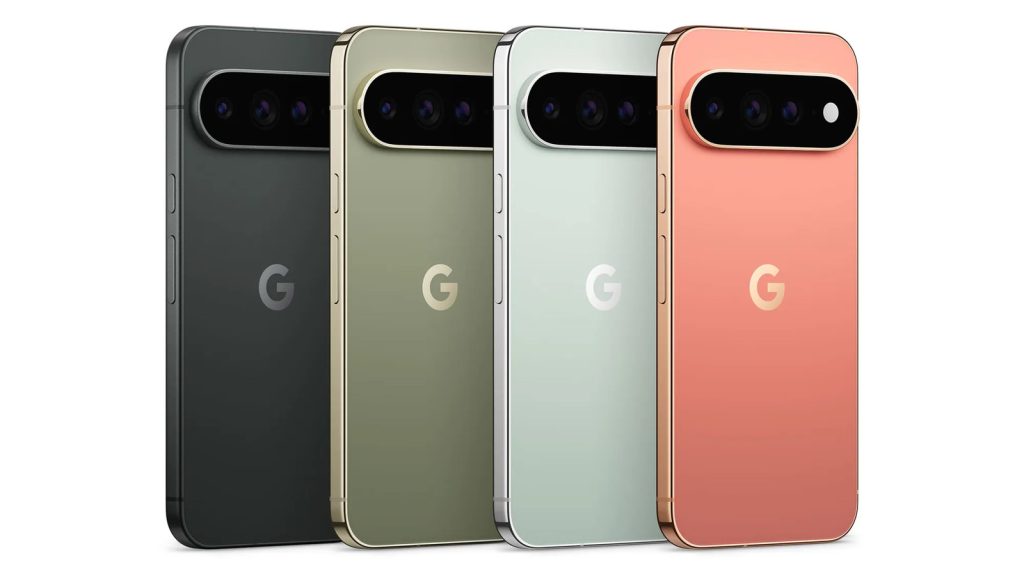
If long battery life is your top priority when choosing a smartphone, relying solely on flagship branding can sometimes lead to disappointment. While the Google Pixel 11 Pro delivers solid performance, its reduced 4,850 mAh battery capacity falls short of power-hungry expectations during heavy daily use.
Independent testing from PCMag, PhoneArena, and GSMArena confirms that several current smartphones provide significantly longer screen-on time than the Google Pixel 11 Pro. This guide compares five verified alternatives—spanning budget options, larger flagship variants, and high-capacity devices—to help buyers select a handset based on practical battery endurance.
| Device Model | Battery Capacity | PCMag Video Test | PhoneArena Test | GSMArena Mixed Use | Starting Price |
|---|---|---|---|---|---|
| Google Pixel 11 Pro (Baseline) | 4,850 mAh | 13h 00m | 5h 44m | 15h 38m | $1,099.00 |
| Google Pixel 11 Pro XL | 5,115 mAh | 15h 47m | 6h 06m | 16h 45m | $1,299.00 |
| Samsung Galaxy S26+ | 4,900 mAh | 15h 20m | 7h 22m | 16h 25m | $1,099.99 |
| Apple iPhone 18 Pro Max | 5,567 mAh | 34h 31m | 10h 31m | 19h 20m | $1,299.00 |
| OnePlus 15R | 7,400 mAh | 23h 00m | 8h 47m | 21h 36m | $699.00 |
| Motorola Moto G Play (2026) | 5,200 mAh | 15h 45m | 9h 27m | 17h 23m | $249.99 |
1. Google Pixel 11 Pro XL
Buyers who prefer Google’s software experience do not need to switch ecosystems to get better battery endurance. The larger Pixel 11 Pro XL packs a 5,115 mAh cell, which easily compensates for its bigger 6.8-inch LTPO OLED screen.
In independent benchmark runs, the XL model consistently outperformed the base Pro. PCMag recorded 15 hours and 47 minutes of continuous Wi-Fi video streaming—nearly three hours longer than the standard Pixel 11 Pro. GSMArena and PhoneArena also logged noticeable battery improvements of over an hour and 22 minutes, respectively.
Retaining identical camera hardware and core software features, the Pro XL also adds faster 45W wired charging. It carries a starting MSRP of $1,299 for the 12 GB RAM and 256 GB storage configuration.
2. Samsung Galaxy S26+
Samsung’s Galaxy S26+ demonstrates how hardware efficiency plays a vital role in power retention. Powered by the 3nm Qualcomm Snapdragon 8 Elite Gen 5 processor, its 4,900 mAh battery delivers superior runtimes despite driving a 6.7-inch display.
During PCMag’s video playback evaluation, the S26+ ran for 15 hours and 20 minutes, beating the Pixel 11 Pro by more than two hours. The gap widened further in PhoneArena’s mixed-use testing, where the Galaxy S26+ achieved 7 hours and 22 minutes—an advantage of 1 hour and 38 minutes over Google’s compact flagship.
The device includes 12 GB of RAM, 45W wired charging, and 20W wireless charging. While officially launching at $1,099.99, market discounts frequently lower its retail price.
3. Apple iPhone 18 Pro Max
Equipped with a massive 5,567 mAh battery and a 6.9-inch 120Hz LTPO OLED display, Apple’s iPhone 18 Pro Max delivers battery longevity that leads top third-party benchmarks.
In PCMag’s Wi-Fi video streaming test, the iPhone 18 Pro Max lasted an astounding 34 hours and 31 minutes—more than double the Pixel 11 Pro’s result. PhoneArena recorded 10 hours and 31 minutes of continuous active use, while GSMArena clocked it at 19 hours and 20 minutes of total mixed runtime.
Starting at $1,299, the iPhone 18 Pro Max features a triple 48 MP rear camera system, an 18 MP selfie camera, 12 GB of RAM, and internal storage options up to 2 TB.
4. OnePlus 15R
Featuring an impressive 7,400 mAh silicon-carbon battery, the OnePlus 15R offers raw capacity that vastly outclasses standard flagships. Its battery holds over 1.5 times the energy capacity of the Pixel 11 Pro’s 4,850 mAh unit.
Benchmark scores reflect this hardware advantage across all major review outlets. GSMArena reported 21 hours and 36 minutes of mixed operation, while PCMag recorded a full 23 hours of streaming playback—outlasting the Pixel 11 Pro by 10 hours.
The OnePlus 15R features a Snapdragon 8 Gen 5 chipset, a 6.83-inch AMOLED display, up to 16 GB of RAM, and a 50 MP main camera. Despite OnePlus scaling back its direct U.S. presence, the device debuted at a competitive $699 starting price tag.
5. Motorola Moto G Play (2026)
Long battery life does not require a flagship budget. The entry-level Motorola Moto G Play (2026) combines an energy-efficient MediaTek Dimensity 6300 chip with a large 5,200 mAh battery.
Despite its modest price point, the Moto G Play outperformed the Pixel 11 Pro across every independent power test. PhoneArena logged 9 hours and 27 minutes of active runtime (nearly four hours more than the Pixel), while PCMag recorded 15 hours and 45 minutes of HD video streaming.
Priced between $179.99 and $249.99, the device includes a 6.7-inch 720p display, 4 GB of RAM, 64 GB of storage, and a rare built-in microSD expansion slot.
Evaluation Methodology
To eliminate marketing bias, this comparison relies exclusively on independent battery benchmarks from PCMag, GSMArena, and PhoneArena rather than manufacturer claims. While Google advertises up to 30 hours for the Pixel 11 Pro, precise testing parameters for such claims remain unstandardized.
The selections focus primarily on smartphones directly accessible to U.S. consumers, with the exception of the OnePlus 15R included for its high-capacity cell metrics. Real-world battery lifespan will naturally vary based on display brightness, cellular signal strength, and individual usage patterns.
Frequently Asked Questions
Why does the Pixel 11 Pro have a smaller battery than its predecessor?
Google reduced the Pixel 11 Pro battery capacity slightly from 4,870 mAh to 4,850 mAh to adjust internal component layout and physical dimensions. Although processor efficiency helps offset the change, hardware benchmarks show moderate runtimes compared to rival devices.
Which phone on this list offers the best overall battery life?
The Apple iPhone 18 Pro Max leads overall video streaming endurance, achieving over 34 hours in testing. For raw physical battery capacity, the OnePlus 15R takes top marks with its 7,400 mAh silicon-carbon cell.
Are budget phones always better at battery efficiency than flagships?
Budget devices like the Moto G Play often outlast flagships because they pair large capacity batteries with lower-resolution screens and less demanding processors. However, flagships usually offer faster charging speeds and higher display refresh rates.