
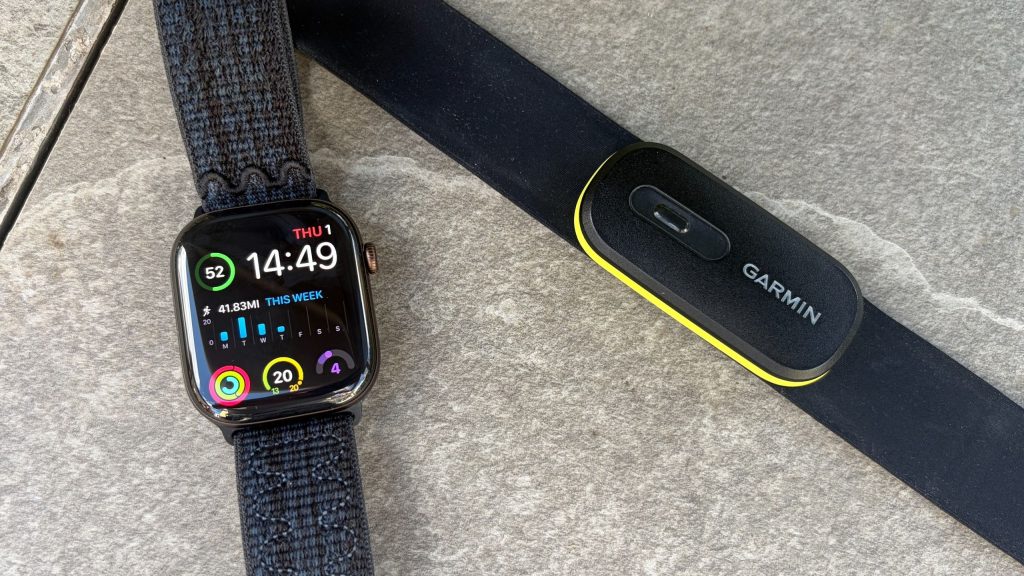
Relying on a smartwatch to guide daily fitness training requires knowing whether wrist-based optical sensors can match the precision of an electrocardiogram chest strap.
This hands-on benchmark evaluates the Apple Watch Series 12 heart rate sensor against the Garmin HRM 600 chest strap across running, indoor cycling, strength training, and HIIT sessions. The evaluation shows the Series 12 delivers high accuracy during continuous cardio, though chest straps retain an edge during high-intensity interval workouts involving irregular arm movements.
Performance Summary by Workout Type
| Workout Category | Apple Watch Series 12 Performance | Garmin HRM 600 Chest Strap Baseline | Accuracy Rating |
|---|---|---|---|
| Outdoor Running | Stuck closely to chest strap data across 100+ miles; brief gray-out periods at start. | Instant signal lock with zero dropouts. | High |
| Indoor Cycling | Tracked 30-second sprint spikes rapidly; logged 109.97 bpm average. | Logged 109.89 bpm average; instant spike detection. | Very High |
| Strength Training | Followed general heart rate trends but suffered minor latency during quick effort spikes. | Immediate detection of heart rate changes during weight lifting. | Moderate |
| HIIT Workouts | Captured interval peaks accurately; introduced occasional false spikes. | Flawless continuous signal without artificial peaks. | Moderate |
Running Performance: Outdoor Miles vs. Treadmill Sessions
Logging over 100 miles on the road provided extensive data on how the wrist sensor handles continuous outdoor running. Across easy runs, fast-paced workouts, and a half-marathon race, the Apple Watch Series 12 maintained a tight lock on heart rate metrics once initialized. Wearing the watch with a nylon sport loop made it simple to tighten quickly for a snug, accurate optical read.
The sensor occasionally displayed a grayed-out reading during the first few moments of a run when confidence in the signal was low. These brief gaps appeared as straight lines on graph overlays analyzed through the DC Rainmaker Analyzer. Once locked in, performance remained reliable, though a treadmill test resulted in minor heart rate overestimations compared to the chest strap.
Indoor Cycling: Tracking Rapid Sprint Efforts
Spinning and indoor cycling present a solid test for optical sensors due to sudden changes in exercise intensity. During a 40-minute indoor cycling session featuring 30-second max-effort sprints every five minutes, the watch adjusted rapidly to sudden heart rate spikes and subsequent recovery periods.
Comparing overall session data revealed virtually identical metrics between devices. The Apple Watch Series 12 recorded an average heart rate of 109.97 bpm, while the Garmin HRM 600 recorded 109.89 bpm. A slight split-second lag occurred at the start of each sprint, but the watch captured every interval peak accurately.
Strength Training and HIIT: Handling Wrist Flexion and Noise
Gym workouts featuring weightlifting and bodyweight HIIT exercises represent the toughest challenge for wrist-based optical sensors. Non-predictable movements and heavy flexing of wrist muscles introduce physical noise that makes pulse detection difficult. Apple even displays an optional prompt in the Workout app recommending an external Bluetooth chest strap for HIIT sessions if wrist readings fluctuate.
During strength workouts, the Series 12 tracked the overarching ups and downs of heart rate curves, but logged data a few seconds behind the chest strap. It also missed one minor heart rate spike during a weight set, though overall session averages remained within two beats of the chest strap baseline.
For bodyweight HIIT circuits involving plyometric moves like burpees, the watch performed capably by hitting correct peak heart rates during work periods. However, it generated a few erroneous spikes during recovery periods, confirming that dedicated chest straps remain the superior tool for strict interval monitoring.
Final Verdict: How Accurate Is the Apple Watch 12?
The Apple Watch Series 12 stands out as one of the most accurate wrist-based smartwatches available, matching the performance of top-tier fitness wearables equipped with fifth-generation optical sensors. It offers dependable metrics for runners, cyclists, and everyday fitness enthusiasts looking to manage training zones.
For athletes who structure strict heart-rate-zone workouts around weightlifting or intense HIIT intervals, pairing the watch with a dedicated chest strap or optical armband remains the ideal setup for real-time precision.
Frequently Asked Questions
Is the Apple Watch Series 12 accurate enough to replace a chest strap for running?
Yes, for most outdoor and indoor running sessions, the Apple Watch Series 12 tracks heart rate closely alongside top chest straps. Only minor latency occurs during initial lock-on or rapid sprint starts.
Why do optical smartwatch sensors lag during HIIT or weightlifting?
Optical sensors use lights to measure blood volume changes in the wrist. Flexing muscles, gripping weights, and irregular arm motions create sensor movement and temporary blood flow restrictions that slow down real-time heart rate detection.
Can you connect a chest strap directly to the Apple Watch Series 12?
Yes, you can pair external Bluetooth heart rate monitors, including chest straps and optical armbands, directly to the Apple Watch via the Bluetooth settings menu for enhanced precision during workouts.