
Modern battlefields have seen a massive shift toward low-cost drone warfare, forcing military strategists to reassess traditional air defense economics. Firing multi-million-dollar interceptor missiles against inexpensive, one-way attack drones is financially unsustainable over prolonged conflicts.
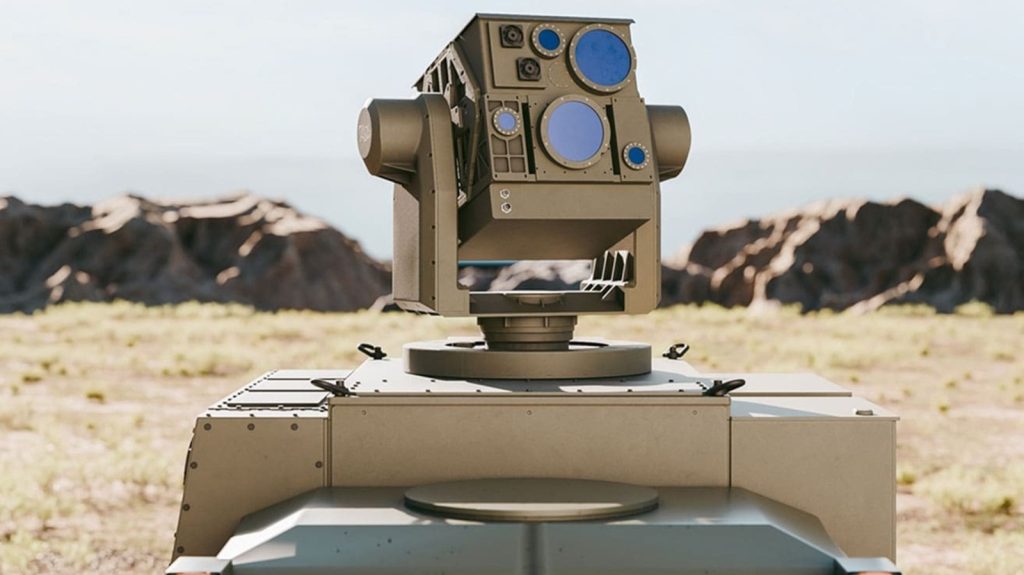
This article details the U.S. Army’s acquisition of its inaugural high-energy laser weapon, the Locust X3, developed by AeroVironment under a $468.8 million contract. Capable of disabling Group 1-3 uncrewed aerial systems with 20 to 35-plus kilowatts of directed energy, this mobile air defense system provides a cost-effective countermeasure against low-cost drone swarms on the battlefield.
| Metric / Feature | Specification & Details |
|---|---|
| Contract Value & Developer | $468.8 Million | AeroVironment, Inc. |
| System Designation | Locust X3 (3rd-Generation Directed Energy Laser) |
| Laser Power Output | 20 to 35+ kW |
| Target Engagement Profile | Group 1–3 UAS (up to 1,320 lbs; altitudes below 1,200 to 18,000 ft) |
| Primary Deployment Platforms | Joint Light Tactical Vehicle (JLTV), Infantry Squad Vehicle (under evaluation) |
| Targeting & Control Interface | AI threat prioritization using a Microsoft Xbox controller |
Rethinking Air Defense Economics
Lessons drawn from recent international conflicts demonstrate that inexpensive target-seeking drones present a severe threat to armored vehicles and frontline ground forces. Countering these low-cost air threats with conventional surface-to-air missiles creates an extreme cost asymmetry.
For example, firing a Patriot missile costing $3.7 million or a THAAD interceptor priced at $15.5 million to neutralize a drone worth approximately $1,000 drains defense budgets rapidly. Directed energy weapons resolve this financial imbalance by offering an exceptionally low cost per engagement alongside a virtually unlimited magazine capacity.
Locust X3 Technical Capabilities and Deployment
The U.S. Army officially awarded a $468.8 million production contract to AeroVironment, Inc. in September 2026 to produce the Locust X3. As a third-generation directed energy weapon, the system generates between 20 and 35-plus kilowatts of power, providing enough focused energy to burn through critical components on incoming uncrewed aerial systems (UAS).
The defensive system specifically targets Group 1 through Group 3 drones. Military classifications define these threats as aircraft weighing up to 1,320 pounds that operate at altitudes beneath 1,200 and 18,000 feet.
- Modular Architecture: The system can be deployed in containerized units, fixed installations, naval platforms, or mobile ground vehicles.
- Vehicle Integration: Designed primarily for ground mobility, the Locust X3 mounts onto the U.S. Army’s Joint Light Tactical Vehicle (JLTV)—the successor to the legacy Humvee. Defense officials are also testing compatibility with the lighter Infantry Squad Vehicle (ISV).
Targeting Integration and Operational Control
To engage rapidly moving airborne threats, the Locust X3 incorporates artificial intelligence to autonomously detect, track, and prioritize targets based on tactical severity. Once a target is locked, operators execute the engagement command.
The control hardware utilizes a standardized Microsoft Xbox controller. This familiar interface shortens operator training cycles for soldiers and simplifies command execution in high-stress combat environments. The procurement marks a major milestone under the U.S. Army’s Enduring High-Energy Laser program.
Frequently Asked Questions
Why is the U.S. Army transitioning to laser air defense systems?
Traditional interceptor missiles like Patriot ($3.7M) and THAAD ($15.5M) are far too expensive to launch against cheap attack drones costing around $1,000. High-energy laser systems provide a dramatically lower cost-per-shot while offering continuous firing capacity as long as vehicle power is maintained.
What types of drones can the Locust X3 laser defeat?
The Locust X3 neutralizes Group 1, 2, and 3 uncrewed aerial systems. This classification encompasses remote-controlled and autonomous aircraft weighing up to 1,320 pounds operating at ceilings between 1,200 and 18,000 feet.
How is the Locust X3 operated by frontline soldiers?
The system leverages artificial intelligence to scan, track, and prioritize air threats automatically. Soldiers manually control target selection and engagement using an intuitive Microsoft Xbox controller layout.