
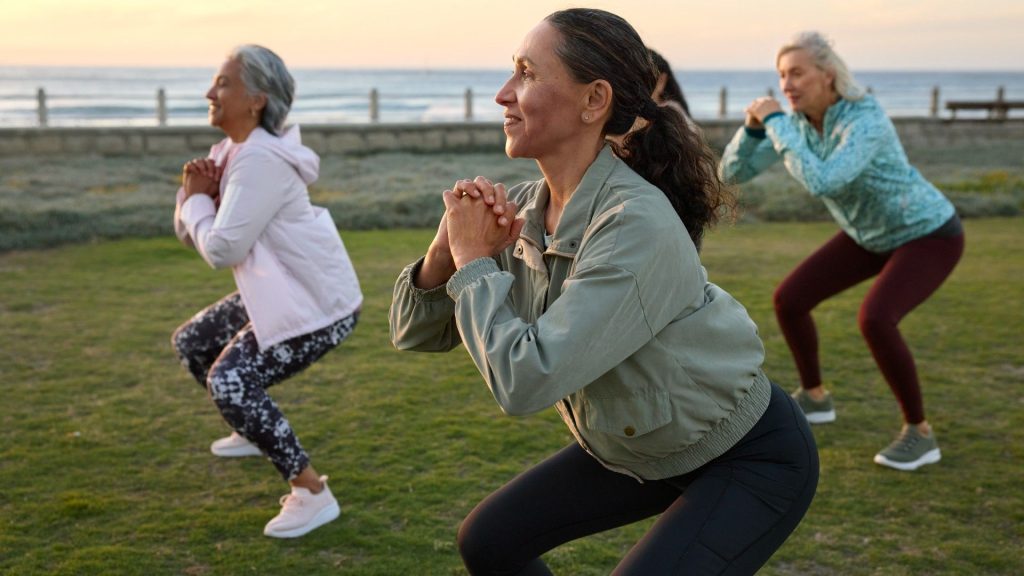
Aging naturally reduces lean muscle mass and joint flexibility, but turning 50 does not mean you have to scale back your physical ambitions. Simple, low-impact movement patterns can preserve joint health, boost thoracic flexibility, and rebuild baseline strength at any stage of life.
This fitness guide highlights three foundational mobility exercises designed for beginners over 50. Focusing on structural stability and posterior chain activation, these low-impact movements—the good morning to squat combo, prone lat pull-downs, and half-kneeling rotations—help open tight joints, improve posture, and reduce injury risks for long-term health.
At-a-Glance: Staple Mobility Moves for Beginners
| Exercise | Target Area | Recommended Volume | Primary Mobility Focus |
|---|---|---|---|
| Good Morning x Squat Combo | Hamstrings, Glutes, Thoracic Spine | 2 sets of 6–8 reps | Posterior chain activation & deep squat depth |
| Prone Lat Pull-Downs | Lats, Upper Back, Rear Shoulders | 3–4 sets of 8–10 reps | Postural alignment & upper-body range of motion |
| Half-Kneeling Rotations | Hips, Groin, Thoracic Spine, Core | 3–4 sets of 8–12 reps per side | Hip opening & overhead shoulder stability |
Re-Thinking Aging and Functional Fitness
There is a widespread misconception that hitting a certain decade requires giving up heavy lifting or challenging activities. In reality, consistent resistance and mobility routines act as a powerful protective tool against age-related decline. Microdosing brief mobility sessions throughout the week helps maintain responsive joints and active muscles well into your 70s and beyond.
While heavy lifts often grab attention, controlled mobility work holds equal weight for staying active without joint strain. How effectively you move today directly dictates your quality of life in the years ahead.
The 3 Staple Exercises for Strength and Mobility
1. Good Morning to Squat Combo
Stand with feet hip-width apart and hold a light weight behind your head with elbows pulled back and chest open. Hinge forward at your hips with soft knees, pushing your glutes back until your torso is nearly parallel to the floor. From that position, lower your hips directly down into a deep squat, then drive through your heels to stand back up tall.
This combined pattern engages the posterior chain during the hinge phase before testing ankle and thoracic movement at the bottom of the squat. If you find the full range challenging, remove the weights and focus solely on comfortable bodyweight movement.
2. Prone Lat Pull-Downs
Lie face down on the floor while holding light weights or using just your bodyweight, keeping your eyes turned toward the mat. Extend your arms overhead at shoulder height, then pull your elbows back down toward your hips while squeezing your upper back muscles tightly. Extend your arms forward again under control.
This floor exercise builds mid-back strength and improves overhead shoulder reach. Beginners focusing on posture should complete this exercise unweighted to prioritize strict control and full arm extension.
3. Half-Kneeling Rotations
Begin in a half-kneeling position on one knee, holding a weight in the opposite hand. Lower your weight-free elbow toward the floor inside your front leg while shifting your hips slightly back. Simultaneously sweep your weighted arm up toward the ceiling, keeping your gaze on the weight while maintaining shoulder alignment, then return to the start position.
This multi-joint rotation opens tight inner thighs and hips while actively building rotation through the upper spine. Ensure you switch both leg placement and hand loading when transitioning to the opposite side.
Long-Term Benefits of Low-Impact Routines
Combining these three exercises creates a balanced routine that targets common mobility bottlenecks like tight hips and stiff upper backs. Regular practice conditions connective tissue, tendons, and joint capsules to handle broader movement patterns safely.
Beginners should start with light resistance or bodyweight only, prioritizing smooth movement control over heavy resistance. Over time, subtle improvements in joint motion will yield noticeable gains in daily balance, comfort, and physical endurance.
Frequently Asked Questions
Why is mobility work essential for adults over 50?
As body composition shifts with age, muscle elasticity and joint fluid naturally decline. Targeted mobility routines keep joint capsules hydrated, maintain soft tissue flexibility, and prevent common movement compensations that lead to chronic joint discomfort.
Do I need heavy dumbbells to see results from these moves?
No, heavy weights are unnecessary when first learning these patterns. Bodyweight resistance or light hand weights allow you to master proper form, improve control, and expand your range of motion without overloading joints.
How often should beginners perform this routine?
Performing these low-impact exercises 2 to 3 times per week alongside moderate active recovery or light strength training yields consistent structural benefits without causing excessive fatigue or recovery lag.