
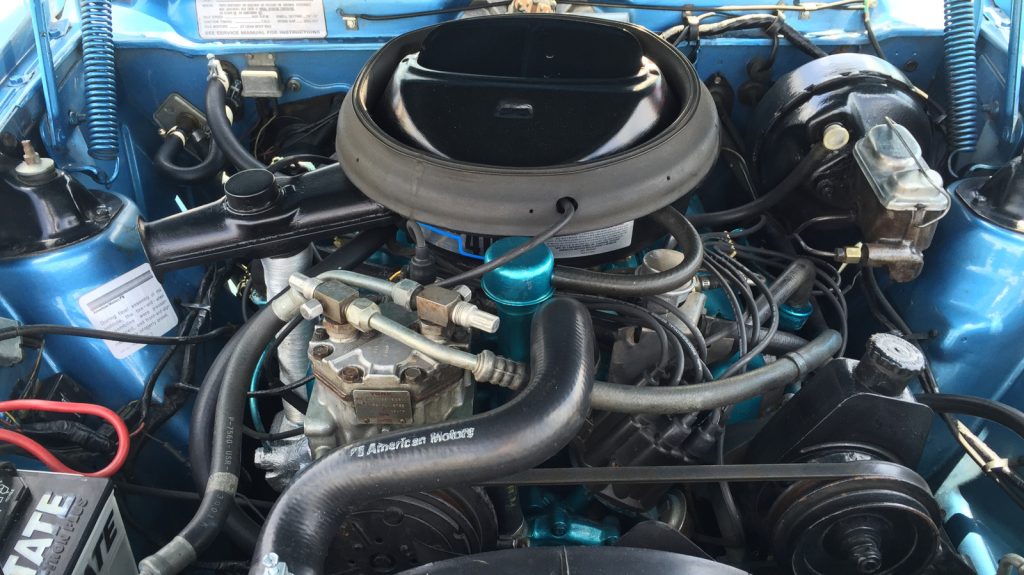
When muscle car enthusiasts and 4×4 restorers search for classic American heavy metal from the 1970s, the AMC 401 V8 stands out as a high-torque powerhouse that punched far above its weight class. Introduced in 1971, this big-bore V8 powered everything from track-focused pony cars to heavy-duty pickup trucks before emissions regulations ended its production run.
This reference guide details every production car, SUV, and commercial truck equipped with American Motors Corporation’s largest displacement V8, the 401-cubic-inch engine. Ideal for automotive historians, classic car buyers, and engine builders, it highlights key technical specifications, factory horsepower ratings, available performance packages, and production years across AMC, Jeep, and International Harvester lineups.
| Vehicle Model | Production Years | Carburetor & Horsepower | Primary Vehicle Application |
|---|---|---|---|
| AMC Javelin (SST / AMX) | 1971–1974 | 4-Barrel (330 hp / 430 lb-ft) | Performance Pony / Muscle Car |
| AMC Matador | 1971–1976 | 4-Barrel (330 hp / Police Spec) | Mid-Size Sedan, Coupe, Wagon & Police Fleet |
| AMC Ambassador | 1971–1974 | 4-Barrel (330 hp / 430 lb-ft) | Full-Size Luxury Passenger Car |
| Jeep Wagoneer | 1974–1978 | 4-Barrel (215 net hp / 320 lb-ft) | Premium 4×4 SUV |
| Jeep Cherokee (SJ) | 1974–1978 | 4-Barrel (215 net hp / 320 lb-ft) | Sport Utility Vehicle |
| Jeep J-10 Pickup | 1974–1978 | 4-Barrel (215 net hp / 320 lb-ft) | Light-Duty Truck (119-inch Wheelbase) |
| Jeep J-20 Pickup | 1974–1978 | 4-Barrel (215 net hp / 320 lb-ft) | Heavy-Duty Truck (131-inch Wheelbase) |
| International Harvester Light Line | 1973–1974 | 2-Barrel (210 net hp) | Light Pickups (D-Series) |
| International Harvester Travelall | 1973–1974 | 2-Barrel (210 net hp) | Heavy-Duty SUV & Travelette Crew Cab |
AMC Javelin (1971–1974)
Redesigned for 1971 with exaggerated wheel arches and distinctive styling, the second-generation Javelin offered the top-tier 401 V8 in its SST and AMX trim levels. Generating an impressive 330 gross horsepower and 430 lb-ft of torque, the 401 turned the lightweight coupe into a formidable street machine.
Buyers selecting the Javelin AMX with the 401 engine could opt for the “Go Package.” This performance option added heavy-duty suspension, dual exhaust, an upgraded carburetor, enhanced engine cooling, Rally-Pac instruments, and E60-15 Goodyear Polyglas tires mounted on 15×7-inch steel wheels. The 401 remained available in the Javelin until 1974.
AMC Matador (1971–1976)
Positioned as AMC’s mid-size family offering, the 1971 Matador was available as a two-door hardtop, four-door sedan, and station wagon. Specifying the 330-horsepower 401 V8 granted buyers standard dual exhausts and the option to add a limited-slip differential for maximum traction.
For enthusiasts seeking extra performance, AMC briefly offered the “Machine Go” package on 1971 models, adding heavy-duty handling components, front disc brakes, and wide Goodyear tires. While civilian Matadors lost the 401 option after 1974, fleet buyers and police departments continued to order 401-powered Matador pursuit sedans through 1976.
AMC Ambassador (1971–1974)
The AMC Ambassador was the company’s full-size flagship, distinguishing itself by offering standard air conditioning and an automatic transmission across all trim levels. The 401 V8 was offered exclusively on the high-end SST and Brougham models in sedan, wagon, and hardtop body styles.
Despite its luxurious mandate, 401-equipped Ambassadors came standard with a performance dual exhaust system. Buyers opting for a floor console shifter could also order a aggressive 3.54 rear axle ratio, giving the heavy luxury cruiser surprisingly quick acceleration off the line.
Jeep Wagoneer (1974–1978)
Following AMC’s acquisition of Jeep in 1970, the company began integrating its own powertrains into the 4×4 lineup. The full-size Wagoneer received the 401 V8 as an optional engine option in 1974, outfitted with a four-barrel carburetor that delivered 215 net horsepower and 320 lb-ft of torque.
The 401 provided the Wagoneer with unmatched towing capacity and highway cruising power, helping push the vehicle toward a more upscale market segment. The engine remained the top powertrain choice for the SUV until AMC trimmed its engine offerings down to the 360 V8 for the 1979 model year.
Jeep Cherokee (1974–1978)
Introduced in 1974 as a sporty, two-door off-road counterpart to the Wagoneer, the original SJ Cherokee targeted younger buyers wanting rugged utility. Like its sibling, the Cherokee could be optioned with the 215-horsepower 401 V8 from its inaugural year through 1978.
Equipped with a robust two-speed Dana transfer case, bucket seating, and optional Quadra-Trac full-time four-wheel drive, the 401-powered Cherokee quickly established a strong reputation among off-road enthusiasts and mountain drivers needing serious low-end torque.
Jeep J-10 Pickup (1974–1978)
Originally known as the Gladiator, Jeep’s short-wheelbase (119-inch) pickup was renamed the J-10 under AMC ownership. Starting in 1974, the 401 V8 became the flagship engine choice, sitting above the standard six-cylinder and 360 V8 options.
Producing 215 net horsepower and 320 lb-ft of torque, the 401 V8 gave the J-10 exceptional hauling capability. The heavy-duty engine shared order sheets with iconic trim and tape packages of the era, including the popular Honcho and Golden Eagle editions.
Jeep J-20 Pickup (1974–1978)
Built on a longer 131-inch wheelbase, the Jeep J-20 was designed for heavier commercial tasks and recreational towing. AMC equipped the J-20 with a standard 360 V8, but buyers needing maximum capacity could step up to the four-barrel 401 V8 between 1974 and 1978.
With Gross Vehicle Weight Ratings (GVWR) reaching up to 8,400 pounds, 401-powered J-20 trucks were recommended by Jeep for heavy slide-in cab-over campers and fifth-wheel trailers. The truck featured specialized utility equipment, including heavy-duty axles and cold-weather wide-lug tires.
International Harvester Light Line Pickups (1973–1974)
International Harvester (IH) sourced the 401 V8 engine from AMC for a brief window in its D-Series Light Line pickup trucks. Due to engine manufacturing shortages of its own 392 cubic-inch V8, IH struck a supply deal with AMC beginning in March 1973.
Unlike AMC and Jeep applications that used four-barrel setups, International Harvester equipped the 401 V8 with a two-barrel carburetor, yielding 210 net horsepower. The engine was offered through 1974 before IH returned to using its proprietary powerplants.
International Harvester Travelall (1973–1974)
The International Harvester Travelall—a heavy-duty wagon built on a truck chassis—and the Travelette crew cab truck also adopted the 401 V8 alongside the Light Line pickups. The 210-horsepower engine provided the muscle necessary to pull large trailers and heavy cargo loads.
With an 11,000-pound towing capacity rating, the 401-powered Travelall served as a primary competitor to Chevrolet’s Suburban. The partnership ended after 1974 when International Harvester resolved its engine production bottlenecks, shortly before the company exited the light truck market altogether in 1975.
Frequently Asked Questions
What made the AMC 401 V8 engine unique compared to competing American V8s?
Unlike many mass-production V8 engines from the Big Three that relied on cast-iron internal components, every factory AMC 401 V8 was built with a forged steel crankshaft and forged steel connecting rods. This heavy-duty internal architecture made the engine exceptionally durable under heavy towing loads and high-rpm racing conditions.
Why did the horsepower rating of the AMC 401 drop from 330 hp to 215 hp?
The output drop between early 1970s models and mid-1970s models was primarily due to the industry-wide shift from Gross horsepower ratings to Net horsepower ratings in 1972. Early ratings measured engine power without accessories attached, while later net ratings reflected real-world output with full exhaust systems, air cleaners, and engine accessories installed.
Why did International Harvester put AMC engines in their trucks?
International Harvester experienced severe casting shortages and supply chain constraints for its own 392-cubic-inch V8 engines during 1973 and 1974. To keep light truck and Travelall assembly lines running and satisfy customer demand for big-block towing power, IH temporarily purchased two-barrel 401 V8 engines directly from AMC.