
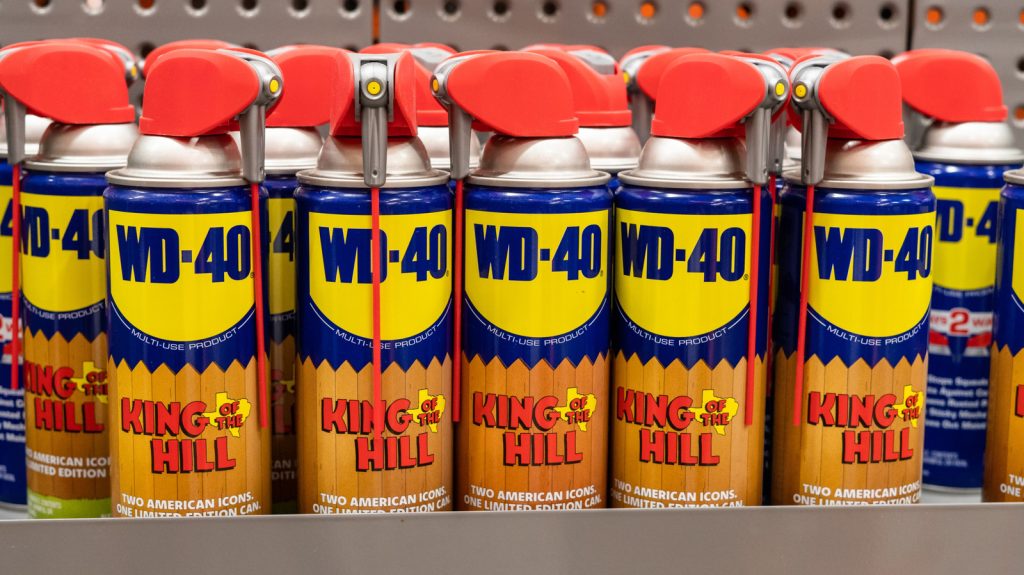
Reaching for a blue-and-yellow can of WD-40 is a standard reaction for squeaky hinges or rusted bolts in the workshop. However, spraying this multi-purpose aerosol directly into your pneumatic equipment can quickly ruin expensive air-driven tools.
Standard WD-40 is formulated for water displacement, not the high-speed friction and continuous airflow of pneumatic machinery. Spraying it into air tools degrades internal rubber O-rings, strips necessary lubricants, and attracts line-clogging debris. To preserve pneumatic equipment, mechanics and woodworkers must use dedicated naphthenic-based air tool lubricants instead.
Why Standard WD-40 Fails Inside Pneumatic Motors
The iconic formula originated in 1953 as a water displacement agent designed to protect the SM-65 Atlas missile from corrosion, reaching commercial shelves in 1958. While the original formula boasts over 2,000 user-submitted applications, high-pressure pneumatic systems are simply not among them. Pneumatic motors cycle extremely rapidly under high air pressure, demanding continuous, specialized internal lubrication.
WD-40 relies primarily on hydrotreated heavy petroleum naphtha to disperse moisture and penetrate rust. These aggressive hydrocarbon solvents evaporate rapidly, drying out plasticizers and causing synthetic rubber seals, gaskets, and air lines to crack or swell. Furthermore, the mineral base left behind acts as a tacky film that traps workshop dust, clogging delicate intake filters and air valves.
Comparing WD-40 and Dedicated Air Tool Oils
Understanding the chemical differences between multi-use sprays and specialized lubricants highlights why tool manufacturers warn against using solvent-heavy sprays in air lines.
| Property | Original WD-40 Multi-Use | Dedicated Air Tool Oil |
|---|---|---|
| Primary Purpose | Water displacement & corrosion prevention | Continuous internal friction reduction |
| Base Chemical Structure | Hydrotreated heavy petroleum naphtha | Stable naphthenic distillates / naphthalene |
| Effect on Rubber & Seals | Strips plasticizers; degrades O-rings | Preserves elastomeric gaskets and seals |
| Residue Behavior | Leaves viscous film that traps dust | Clean-burning; leaves no sticky buildup |
| Internal Air Tool Use | Not recommended (causes breakdown) | Mandatory for regular tool maintenance |
Correct Lubrication Practices for Air Equipment
Pneumatic tools require oils formulated with naphthenic base stocks that withstand high airflow without breaking down rubber components or gumming up air channels. Using proper fluids like 3-IN-ONE Professional Grade Pneumatic Tool Oil ensures internal mechanisms remain clean and friction-free.
Standard WD-40 still serves a purpose on external surfaces. It works exceptionally well for wiping down tool casings to prevent surface rust or freeing rusted external adjustment knobs. If used as a penetrating fluid to free a seized internal gear mechanism, the tool must be completely flushed with proper pneumatic oil before putting it back into pressurized service.
Frequently Asked Questions
Frequently Asked Questions
Can WD-40 cause air hoses and seals to rupture?
Yes, the volatile solvents in standard WD-40 strip the plasticizers from rubber and elastomeric parts. Over time, this softens or weakens internal seals and air lines, which can lead to sudden pressure loss or bursting under high PSI.
What should be used to oil pneumatic air tools daily?
Operators should use dedicated pneumatic tool oil containing naphthenic distillates. Adding a few drops directly into the air inlet before daily use reduces friction, prevents rust inside the motor, and extends tool longevity.
Is WD-40 useful for any part of an air compressor system?
WD-40 can be safely applied to exterior metal housings, unpainted structural frames, and stuck threaded fasteners to prevent corrosion. However, it should never be introduced into air lines, compressor pumps, or internal tool inlets.